Episodes
| Series | Episode | Title | First Broadcast | Repeated | Comments |
|---|---|---|---|---|---|
| Auld Lang Syne | 20161227 | 20171229 (BBC7) 20171230 (BBC7) 20221230 (BBC7) 20161231 (R4) 20191231 (R4) | It's gone from being an 18th century song about impotence to one of the best known songs all over the world. Most of us have sung Auld Lang Syne at some point in our lives on New Year's Eve, but how many of us know more than a few of the words and anything of its origin and meaning? ~Soul Music hears the stories behind the song, how it went from being a reflective melancholic Scottish air about the parting of the ways, to the jaunty tune we know today. There are also stories of love, sorrow, hope and joy, emotions that are especially heightened at this time of year. Producer: Maggie Ayre Stories of love, loss and joy associated with Auld Lang Syne. | ||
| Bruch's Violin Concerto | 20220618 | 20260130 (BBC7) 20260131 (BBC7) 20250728 (R4) |  Violinists from around the world, a journalist and an Archers legend explain why Bruch's Violin Concerto in G minor holds particular significance for them. A Violin Concerto in G minor, Opus 26, became the best-known work of the German composer Max Bruch. Originally written in 1866 it went through many revisions before finally being completed in 1867. It was performed extensively but having sold both the publishing and the manuscript Bruch died in relative obscurity in 1920. The Concerto would continue to be played around the world and the second movement in particular, the Adagio, became a much-loved favourite. Journalist Claire Read describes how much her Mother loved the piece after Claire learned and performed it in school, and how she would listen to it whilst being treated for cancer. Ukrainian violinist Kostia Lukyniuk recalls playing it with an orchestra in his home town aged 11, and how music still gives him strength as he plays for those battered by the Russian invasion of his home country. The second movement brings back fond memories for Archers actor June Spencer who listened to it with her husband and their friends on a veranda in Minorca. Leader of the Welsh National Opera David Adams was inspired to take-up the violin after listening to a recording of David Oistrakh playing this piece, and later performed it at the Fishguard Festival. It was a favourite of his Mum's and that recording was played at her funeral. The Carnegie Hall was the setting for violinist Shlomo Mintz's most treasured performance and he describes how it feels to play those soaring melodies. Curator Robinson McClellan at The Morgan Library & Museum in New York explains how the manuscript of this concerto made its way from Germany to the USA, and why this work would later become a source of resentment for this 'establishment' composer. Studio Manager: Ilse Lademann Produced for BBC Audio in Bristol by Toby Field. Stories of what Bruch's popular violin concerto means to people around the world. Violinists, a journalist and an Archers legend explain why Bruch's Violin Concerto in G minor means so much to them. From 2022. | ||
| David Bowie, Life On Mars? | 20210109 | 20231229 (BBC7) 20260109 (BBC7) 20260110 (BBC7) 20220604 (R4) |  Musicians and fans talk about the wistful beauty and the philosophical intent of David Bowie's song, ‘Life on Mars?'. Life on Mars was released on David Bowie's Hunky Dory album in 1971. Two years later it came out as a single in its own right. Famous for its exploration of disillusionment and alienation, there is no one single definitive story behind it. But that is perhaps the song's beauty and the secret behind its appeal - that its cryptic lyrics are open to interpretation, and can mean different things to different people. Musicians and fans talk about what Life on Mars? means to them, and its lasting emotional impact, in this special programme remembering Bowie's birthday on January 8th 1947 and commemorating his death on January 10th 2016. And what does the question mark in the song's title mean? With contributions from: Musician Dana Gillespie whose autobiography is Weren't Born A Man Bowie author Chris O'Leary Scientist Abigail Fraeman of NASA's Mars Mission Artist Bridget Griggs The Reverend Steve Stockman Screenwriter Ashley Pharoah (Life on Mars) Producer: Maggie Ayre for BBC Audio Bristol The enigmatic beauty of Bowie's classic song 'Life on Mars? Special programme made to mark Bowie's birthday on January 8th 1947 and commemorating his death on January 10th 2016. | ||
| Ne Me Quitte Pas | 20220611 | 20241115 (BBC7) 20241116 (BBC7) 20230724 (R4) |  Ne Me Quitte Pas is a song about begging someone not to go - and of promising the world to them, if they'll only stay. From Haiti to New York, Provence to Glasgow - in versions by Nina Simone, Dusty Springfield and Scott Walker - we hear stories of what Jacques Brel's song has meant to people around the world. With contributions from France Brel, Johane Celestin, Alastair Campbell, Brendan McGeever, Peter Hawkins and Malaika Kegode. Producer: Mair Bosworth A BBC Audio production for BBC Radio 4, first broadcast in June 2022. From Haiti to New York, Paris to Glasgow... stories of what Jacques Brel's song has meant to people around the world. From 2022. Ne Me Quitte Pas is a song about begging someone not to go; of promising the world to them, if they'll only stay. From Haiti to New York, Provence to Glasgow... in versions by Nina Simone, Dusty Springfield and Scott Walker... we hear stories of what Jacques Brel's song has meant to people around the world. Produced by Mair Bosworth for BBC Audio | ||
| Once In A Lifetime | 20201230 | 20231103 (BBC7) 20201229 (R4) | Stories from people about how ‘Once In A Lifetime', Talking Heads' existential hit from 1980, touched their lives. Talking Heads emerged out of the post punk scene of the late 1970s. 'Once In A Lifetime' is the iconic single taken from their album Remain In Light. With its looped synthesizer and Afrobeat inspired by Fela Kuti it seemed to pre-empt the consumerism and ennui of the 1980s. Writer Ian Gittins interviewed David Byrne and later wrote his book Once In A Lifetime. He says David Byrne had in mind people of a certain middle class existence who seemingly breeze through life with ease when he wrote the lyrics. They may get to middle age or reach a crisis point and ask 'How did I get here?' For a song that invites us to question our lives it has a suprisingly emotional core that encourages people to be grateful and make positive changes in their lives where necessary. For Glaswegian Gerry Murphy that meant becoming more present for his family after serious illness forced him to reconsider the amount of time he devoted to his career. He went on to write a book about his experience - And You May Find Yourself: A Guided Practice To Never Fearing Death Again. Ian Peddie was inspired by the song to leave his dead end existence in Wolverhampton in the mid 1980s to 'find himself in another part of the world' following his dreams. Kelly Waterhouse says the song symbolises gratitude for all the things she takes for granted and sometimes struggles with in her life as a busy working mother. And singer Angelique Kidjo recorded her own version of Once In A Lifetime in 2018 after coming full circle with the song from her arrival in Paris in 1983 after fleeing the dictatorship in her home country of Benin. She heard the song at a student party and recognised the Afrobeats adopted by David Byrne and Brian Eno that made her feel both joyful and homesick at the same time. Producer: Maggie Ayre Talking Heads' breakout hit from 1980 explored by people whose lives the song touched Writer Ian Gittins interviewed David Byrne and later wrote his book Once In A Lifetime. He says David Byrne had in mind people of a certain middle class existence who seemingly breeze through life with ease when he wrote the lyrics. They may get to middle age or reach a crisis point and ask How did I get here? For a song that invites us to question our lives it has a surprisingly emotional core that encourages people to be grateful and make positive changes in their lives where necessary. Stories from people revealing how Talking Heads' existential hit from 1980, touched their lives. From 2020. | ||
| Sailing By | 20250101 | 20250628 (R4) 20250630 (R4) | 
After Cyrilene Tollafield's parents left Barbados for the UK, Cyrilene heard 'Sailing By' whilst cuddling up to her grandmother and her cousins during hurricane warnings. Writer Henrietta McKervey spent a night in Fastnet lighthouse and listened to 'Sailing By' as she drifted off to sleep. Having spent years of his life out at sea, Captain Harry McClenahan marvels at how the piece mirrors the rises and falls of the sea. Chris Binge would interrupt his dad whilst he was composing at the piano in his music room, the air thick with cigarette smoke, and says whenever people find out who his father was it's 'Sailing By' that they know. Helen Harrison conducted the piece at a concert in Blackpool and at the piano she unpacks the musicality and orchestration of the piece. The best part of Jane Heiserman's day is the hour in the evening when she and her adult son, who has autism and lives at home, study together. 'Sailing By' became a firm favourite of theirs when they were looking for music as part of a module on the Intertropical Convergence Zone. She says it brings a sense of calm to their day and serves as confirmation that everything is going to be alright. With recordings of 'Sailing By' by The Perry/Gardner Orchestra, Helen Harrison, Dave Spooner (Ronald Binge's Grandson) and Baked A La Ska. Producers: Maggie Ayre and Toby Field Technical Producer: Ilse Lademann Editor: Emma Harding Soul Music is a BBC Audio Bristol production for BBC Radio 4. Stories about a piece of light music which became interwoven with the Shipping Forecast. Personal stories about 'Sailing By' by Ronald Binge, which was chosen by the BBC as the musical interlude to be played every night before the Shipping Forecast. Cyrilene Tollafield remembers 'Sailing By' as source of comfort as she cuddled her Grandmother in Barbados. Writer Henrietta McKervey says the music has a lullaby quality which helped her during a night spent on Fastnet, and Captain Harry McClenahan describes it as a 'painting of the sea'. Ronald Binge's son Chris remembers his Dad composing at the piano and says whenever he talks to people about him, people always know 'Sailing By'. | ||
| Smalltown Boy, By Bronski Beat | 20210714 | 20260522 (BBC7) |  This disco classic tells a powerful story: that of a young, gay man leaving his homophobic small town for the freedom of the big city. Released in 1984, Smalltown Boy continues to resonate and has become an anthem for the LGBTQ+ community. The track appeared on their album 'The Age of Consent' which drew attention to the inequality between the ages at which heterosexual people and homosexual men were legally able to have sex. Taking part in the programme: Shaun Dellenty, an ex primary school leader and author who developed an award winning LGBT+ training programme 'Celebrating Difference-Inclusion For All' which he now delivers to students and staff around the world. Paul Flynn, journalist and author of 'Good As You, 30 Years of Gay Britain'. Diane Anderson-Minshall, CEO and Editorial Director of Pride Media. Colin Crummy, freelance journalist Neil Brand, pianist, composer, writer and broadcaster Adam Carver aka Fatt Butcher, drag artist, creative producer, and community organiser. Archive: The audio of Jimmy Somerville is taken from the BBC archives Music:: various versions of Smalltown Boy by Jimmy Somerville, and Bronski Beat. Also covers by Dido, and Orville Peck. Produced by Karen Gregor for BBC Audio in Bristol. An '80s disco classic that tells a powerful story. Producer: Karen Gregor for BBC Audio in Bristol The '80s disco classic that tells a powerful story The lasting impact of the 80s disco classic where a young gay man escapes small town homophobia for big city freedom. From 2021. | ||
| Take Me Home, Country Roads | 20210804 | 20240913 (BBC7) 20220911 (R4) |  Country roads, take me home To the place I belong Written by Bill Danoff and Taffy Nivert with and for their friend John Denver, the song went on to be covered by Ray Charles, Toots and the Maytals, Olivia Newton John and many more. A song about the longing for home and the desire to be back with the people you love, 'Country Roads' has become one of the official state songs of West Virginia but it also speaks to people from around the world and across political divides. It's a song about togetherness, belonging, homesickness, the immigrant experience and the hold that the landscape of your 'home place' can have on you. Featuring contributions from Bill Danoff, Sarah Morris, Jason Jeong, Ngozi Fulani, Lloyd Bradley and Alison Wells. And from Molly Sarl退, Alexandra Sauser-Monnig and Amelia Meath of the band Mountain Man. Produced by Mair Bosworth for BBC Audio in Bristol From West Virginia to West Jamaica, stories of what the song means to people. Take Me Home, Country Roads' was written by Bill Danoff and Taffy Nivert with and for their friend John Denver. Produced for BBA Audio in Bristol by Mair Bosworth. Stories of what the song 'Take Me Home, Country Roads' means to people. From West Virginia to West Jamaica, stories of what 'Take Me Home, Country Roads' means to people the world over. From 2021. | ||
| The Parting Glass | 20210728 | 20241101 (BBC7) 20241102 (BBC7) 20230102 (R4) |  But since it falls unto my lot That I should rise And you should not I'll gently rise and softly call Goodnight and joy be to you all The Parting Glass was written in Scotland and has criss-crossed the Irish Sea, becoming a popular song among Celtic peoples around the world. Folk singer Karine Polwart, talks of its fragile beauty as a song that can be a rousing drinking song at the end of the night but equally a poignant farewell at a funeral. For Alaskan Fire Chief Benjamin Fleagle, there was no more fitting song to honour his mentor and colleague at his Fire Department when he passed away over a decade ago. Alissa McCulloch 'clung' to the song when she heard the Irish singer Hozier sing a version of it at the start of the pandemic in March 2020. At the time, Alissa was mentally unwell at home in Australia and was admitted to hospital where she listened to the song over and over finding comfort in its timeless beauty. After Canada's worst mass shooting in its history, Pete MacDonald and his sisters recorded an acapella version of the song as a musical tribute to those who lost their lives. It's a tradition in Nova Scotia to sing in the kitchen at parties, wakes and celebrations and they wanted to pay their respects to the dead. Irish singer Finbar Furey has performed the song with his band the Fureys and talks about its appeal not only in Scotland and Ireland but throughout the Scots-Irish diaspora. Producer for BBC Audio in Bristol: Maggie Ayre A folk song from Scotland that has endured through centuries. The Parting Glass, is an old Scots tune perhaps overshadowed by Auld Lang Syne, but it carries powerful associations. From 2021. So fill to me the parting glass... A popular toast at the end of an evening or a heartfelt farewell to a departed or deceased person? The Parting Glass has become synonymous with leaving. It was written in Scotland and has criss crossed the Irish Sea becoming a popular song among Celtic peoples around the world. For Alaskan Fire Chief Benjamin Fleagle there was no more fitting song to honour his mentor and colleague at his Fire Department when he passed away over a decade ago. The song still brings out raw emotion in him. Alissa McCulloch 'clung' to the song when she heard the Irish singer Hozier sing a version of it at the start of the pandemic in March 2020. At the time Alissa was seriously mentally unwell at home in Australia and was admitted to hospital where she listened to the song over and over finding comfort in its timeless beauty. After Canada's worst mass shooting in its history Pete MacDonald and his sisters recorded an acapella version of the song as a musical tribute to those who lost their lives. It's a tradition in Novia Scotia to sing in the kitchen at parties, wakes and celebrations and they wanted to pay their respects to the dead. The Irish singer Finbar Furey has performed the song with his band the Fureys and talks about its appeal not only in Scotland and Ireland but throughout the Scots-Irish diaspora. Song versions: The High Kings The MacDonalds A folk song that has endured through centuries | ||
| We've Only Just Begun | 20210721 | 20250228 (BBC7) 20250301 (BBC7) |  The Carpenters - brother and sister duo Richard and Karen - were one of the most popular groups of the 1970s. His outstanding compositions and her stunning vocals created several massive hits including We've Only Just Begun. Originally written as a TV advert for a bank portraying happy young couples embarking on married life full of hope, they loved it and released it as their third single in 1970. Karen's wistful voice gave the song a melancholy that has long resonated with fans. After her premature death from heart failure due to anorexia nervosa, the song took on an extra poignancy with lyrics like 'so much of life ahead'. Fans tell their stories about the song and how it relates to their own life journeys. For Professor Karen Tongson (named after the singer), We've Only Just Begun is about growing up in the Philippines where The Carpenters epitomised the American Dream. When she emigrated to the USA, the song became a metaphor for the immigrant experience. Nomad and writer Jeff Read remembers his childhood in a poor part of Los Angeles brought up by a single mother who eventually died homeless on the street. The song brings back memories of childhood optimism and his longing for a stable family life. Poet Abigail George recalls seeing a film about Karen Carpenter's life and identifying with the singer's struggles with an eating disorder as she herself had to cope with a difficult family life in South Africa. Retired policeman John Weiss was reminded of the song when he attended the death of an elderly person at a care home. John looked at the deceased man's wedding photos and was struck by the brevity of life. The singer Natasha Khan aka Bat For Lashes always loved The Carpenters and recorded her own version of We've Only Just Begun as part of an album where things don't end well for the young bride. Ironically, her version now features in a commercial for a British bank so the song has come full circle. Randy Schmidt is the author of Little Girl Blue (The Life of Karen Carpenter). Versions of the song featured are by Grant Lee Buffalo Paul Williams The Carpenters with the Philharmonic Orchestra Producer for BBC Audio in Bristol: Maggie Ayre The Carpenters' massive hit about hopes and dreams was originally a TV advert for a bank. Exploring the lasting emotional impact of The Carpenters' massive hit - We've Only Just Begun - a song about hopes and dreams - which was originally a TV advert for a bank. Producer for BBC Audio: Maggie Ayre The Carpenters' massive hit - We've Only Just Begun was originally a TV advert for a bank Exploring the lasting emotional impact of The Carpenters' song ‘We've Only Just Begun', originally a bank TV advert. From 2021. | ||
| SPECIAL | At 25 | 20251227 | 20251229 (R4) |  This hour long special celebrates a quarter of a century of the programme. It is a compilation of some of the diverse pieces of music we've featured throughout the years and the people whose lives have been changed by it. Everything from Satie's Gymnopodies and Vaughn Williams' The Lark Ascending to Wichita Lineman by Glen Campbell and Computer Love by Kraftwerk. The music that accompanies us on our lives' journeys. Stories of birth, childhood, adolescence and the joy and grief of adulthood are expressed through the music that shapes and sustains us through the emotional ups and downs of this thing called life. Producer: Maggie Ayre A special programme marking 25 years of the award-winning series. Special programme marking 25 years of the award-winning series about the music that shapes our lives. | |
| 01 | 01 | Elgar's Cello Concerto | 20001126 | 20150828 (BBC7) 20200421 (BBC7) 20250905 (BBC7) | Cellist Julian Lloyd Webber, Michael Kennedy and Tim Dinsley reflect on the special impact of Elgar's Cello Concerto. Julian Lloyd Webber talks about what it's like to play this work. Tim Dinsley shares the way in which he and his daughter Jo used this music to support them as she was dying. And music writer Michael Kennedy explores why this piece has such an impact on people. Series about music that makes the hairs stand up on the back of our necks. Producer: Rosie Boulton Julian Lloyd Webber, Michael Kennedy and Tim Dinsley reflect on the impact of Elgar. Cellist Julian Lloyd Webber, Michael Kennedy and Tim Dinsley reflect on the special impact of Elgar's piece of music. From November 2000. Cellist Julian Lloyd Webber talks about what it's like to play this work, and Tim Dinsley shares the way in which he and his daughter Jo used this music to support them as she was dying. And Michael Kennedy discusses why this piece has such an impact on people. |
| 01 | 02 | Abide With Me | 20001203 | 20150904 (BBC7) 20200428 (BBC7) 20240823 (BBC7) | An exploration of why Henry F Lyte's words and William H Monk's tune have so much significance for the people of Malawi, a railway chaplain, a miner's daughter and a vicar in India. Series about music that makes the hairs stand up on the back of our necks. Producer: Rosie Boulton A look at why Henry F Lyte's words and William H Monk's tune have so much significance. Exploring why Henry F Lyte's words and William H Monk's tune resonate with so many people from Malawi to India. From 2000. An exploration of Henry F Lyte's words and William H Monk's tune for 'Abide with Me'. Why does it have so much significance for the people of Malawi, a railway chaplain, a miner's daughter - and a vicar in India? The surprising worldwide significance of Lyte and Monk's composition. |
| 01 | 03 | Bridge Over Troubled Water | 20001210 | 20150911 (BBC7) 20200505 (BBC7) 20230922 (BBC7) | An anthem of love and support. Bridge over Troubled Water was released in 1970 and instantly became a hit on both sides of the Atlantic. But for the Simon and Garfunkel partnership things were becoming less harmonious. Presented by Paul Gambaccini. Featuring: Patrick Humphries Giles Smith Nancy Gillio-Terry Victoria Kingston Allan Moore Series about music that makes the hairs stand up on the back of our necks. Producer: Sara Conkey Despite their hit anthem of love and support, Simon and Garfunkel struck some wrong notes. |
| 01 | 04 | The Last Post | 20001217 | 20150918 (BBC7) 20201110 (BBC7) 20201111 (BBC7) 20251107 (BBC7) 20251108 (BBC7) 20211114 (R4) |  The Last Post was the final bugle call for the armed forces before lights out at night. Over the years it has become inextricably linked with death and the act of remembrance. This programme includes Officer AD Bridges describing how he prepared the 12 buglers for the year 2000's Remembrance Day service and John Wyatt, a Japanese Prisoner of War talks of his memories of the piece. Series about music that makes the hairs stand up on the back of our necks. Producer: Rosie Boulton Officer AD Bridges and a former war prisoner reflect on the impact of the final bugle call Officer AD Bridges and former Second World War prisoner, John Wyatt, reflect on the impact of the final bugle call. From 2000. Officer AD Bridges and a former POW reflect on the impact of the final bugle call. |
| 01 | 05 | Silent Night | 20001224 | 20151225 (BBC7) 20151226 (BBC7) | An exploration of one of the world's most popular Christmas carols. |
| 01 | 06 | Beethoven's Ode To Joy | 20001231 | 20150925 (BBC7) 20200512 (BBC7) 20250418 (BBC7) | |
| 01 | 07 | Summertime | 20010107 | 20151002 (BBC7) 20200519 (BBC7) 20230929 (BBC7) 20250606 (BBC7) |  Reflections on the impact of George Gershwin's classic lullaby - Summertime. With: Gershwin's biographer, Rodney Greenberg And opera singers: Harolyn Blackwell Lesley Garrett Series about music that makes the hairs stand up on the back of our necks. Producer: Sara Conkey Rodney Greenberg, Harolyn Blackwell and Lesley Garrett reflect on Gershwin's lullaby. Reflections on Gershwin's lullaby with Lesley Garret and Rodney Greenberg. Rodney Greenberg, Harolyn Blackwell and Lesley Garrett reflect on the impact of George Gershwin's classic lullaby. From 2001. |
| 01 | 08 LAST | You'll Never Walk Alone | 20010114 | 20151009 (BBC7) 20200526 (BBC7) 20220927 (BBC7) 20240830 (BBC7) | Carl Davis and Gerry Marsden reflect on the impact of Rodger & Hammerstein's Carousel solo Carl Davis and Gerry Marsden discuss Rodger & Hammerstein's solo number from 'Carousel'. |
| 02 | 01 | In The Mood | 20010814 | 20151016 (BBC7) 20200602 (BBC7) 20240531 (BBC7) | Alyn Shipton and trombonist Paul Tanner reflect on the impact of the jitterbug super hit. |
| 02 | 02 | The Lark Ascending | 20010821 | 20151023 (BBC7) 20200609 (BBC7) 20221011 (BBC7) | Tasmin Little, Iona Brown and Allan Stephenson reflect on Vaughan Williams's work. |
| 02 | 03 | Ev'ry Time We Say Goodbye | 20010828 | 20151030 (BBC7) 20151031 (BBC7) 20200616 (BBC7) 20241011 (BBC7) |  Anna Blundy, Robert Offord and Colin Murray Parkes reflect on Cole Porter's song. Cole Porter's song of farewell and parting caught the imagination of wartime sweethearts and remains powerful and relevant today. Writer Anna Blundy talks about the significance of this song in her life and her writing. Singer Robert Offord describes the effect of singing it at a memorial concert for Aids victims. Biographer William McBrien tells of the poignancy of this song in Cole Porter's own life. And psychologist Dr Colin Murray Parkes describes the emotions surrounding the act of saying 'Goodbye'. Series about music that makes the hairs stand up on the back of our necks. Producer: Rosie Boulton Anna Blundy, Robert Offord and Colin Murray Parkes reflect on the impact of Cole Porter's song of farewell and parting. From August 2001. |
| 02 | 04 | Zadok | 20010904 | 20151106 (BBC7) 20151107 (BBC7) 20200623 (BBC7) | Simon Halsey reflects on the impact of Handel's Zadok the Priest. |
| 02 | 05 | Over The Rainbow | 20010911 | 20151113 (BBC7) 20151114 (BBC7) 20200630 (BBC7) 20240315 (BBC7) | Reflections on the impact of The Wizard of Oz's 'Over the Rainbow'. The story of the song immortalised by Judy Garland. Lyricist Yip Harburg and composer Harold Arlen had completed the entire score for The Wizard of Oz, but struggled to write this opening number. Ernie and Ena Harburg, Jane Horrocks and Steve Nallon reflect on the impact of Judy Garland's signature song. Series about music that makes the hairs stand up on the back of our necks. Producer: Rosie Boulton Ernie and Ena Harburg, Jane Horrocks and Steve Nallon reflect on the impact of The Wizard of Oz's 'Over The Rainbow'. From 2001. |
| 02 | 06 LAST | Amazing Grace | 20010918 | 20151120 (BBC7) 20151121 (BBC7) 20200707 (BBC7) 20240906 (BBC7) | John Newton's near-death experience at sea prompted his hymn 'Amazing Grace'. A near-death experience in a storm at sea resulted in John Newton 's conversion and, some years later, the writing of Amazing Grace. Judy Collins sang the hymn and made it an unlikely hit in the pop music charts in the early 1970s. Featuring the thoughts of: Bob Zellner Martin Bell Bruce Hindmarsh Marylynn Rowse Series about music that makes the hairs stand up on the back of our necks. Producer: Sara Conkey John Newton's near-death experience prompted his hymn Amazing Grace. With Martin Bell, Judy Collins and Bob Zellner. From 2001. |
| 03 | 01 | Fever | 20021105 | 20151127 (BBC7) 20151128 (BBC7) 20161226 (BBC7) 20161227 (BBC7) 20200714 (BBC7) 20231006 (BBC7) | When bass player Max Bennett heard an unknown sing 'Fever' in a small LA nightclub, he knew he'd found a new song for the singer he worked for - Peggy Lee. Lee's finger-snapping, bass and drums arrangement went on to immortalise the song. The legendary singer's daughter Nicki Foster talks about her mother's life and her unforgettable hit record. Series about music that makes the hairs stand up on the back of our necks. Producer: Sara Conkey Peggy Lee's daughter Nicki Foster talks about her mother's life and her hit record. |
| 03 | 02 | Barber's Adagio For Strings | 20021112 | 20151204 (BBC7) 20151205 (BBC7) 20200721 (BBC7) 20260320 (BBC7) 20260321 (BBC7) |  Leonard Slatkin on the impact of the adagio that became America's 'national funeral music When Samuel Barber wrote his Adagio at the age of 26 he described it as 'a knockout!' but he could never have anticipated that it would become America's 'national funeral music'. Leonard Slatkin talks about conducting it at the Last Night of the Proms after 11 September. Dana Captiano describes hearing it on a road trip across America and George Little describes hearing it as his mother died. Produced by Rosie Boulton Conductor Leonard Slatkin reflects on the potent impact of the adagio that became America's 'national funeral music'. From 2002. |
| 03 | 03 | Moon River | 20021119 | 20151211 (BBC7) 20151212 (BBC7) 20180126 (BBC7) 20180127 (BBC7) 20200804 (BBC7) 20240322 (BBC7) | Henry Mancini and Johnny Mercer's film theme for Breakfast at Tiffany's starring Audrey Hepburn. The song was originally going to be called 'Red River' 'June River' or 'Blue River'. Taking part: Chay Blyth Barry Parris Phil Furia Gerald Clarke Richard Hughes Series about music that makes the hairs stand up on the back of our necks. Producer: Sara Conkey Henry Mancini and Johnny Mercer's film theme for Breakfast at Tiffany's starring Audrey Hepburn. With Chay Blyth. From 2002. |
| 03 | 04 | Kol Nidrei | 20021126 | 20151218 (BBC7) 20151219 (BBC7) 20200811 (BBC7) 20250808 (BBC7) |  Max Bruch's piece for cello is based on Jewish prayer sung at Yom Kippur. Cellists Steven Isserlis and Liam Abramson discuss the impact of playing this music. Poet Tessa Ransford remembers how she chose the piece for her friend's funeral. And Rabbi Albert Friedlander describes listening to this music with Jacqueline du Pre on the last day of her life. Series about music that makes the hairs stand up on the back of our necks. Producer: Sara Conkey Max Bruch's piece for cello is based on Jewish prayer sung at Yom Kippur and played memorably by Jacqueline du Pre. From 2002. |
| 03 | 05 | Somewhere | 20021203 | 20160101 (BBC7) 20160102 (BBC7) 20200818 (BBC7) 20231020 (BBC7) | Leonard Bernstein's hit from West Side Story, that yearns for a better world, has come to have special significance for many. From Mary Wilson of the Supremes who found it a fitting tribute to Martin Luther King, to the mother who sings it at the end of long frustrating days with her beloved autistic son. Plus, Stephen Sondheim and Bernstein's daughter Nina discuss writing the lyric and the relatively bad critical response to it. Also taking part: Mary Dhonau Peter Dhonau Humphrey Burton Steve Nallon Clive Snelling Adrienne Snelling Graham Clarke Series about music that makes the hairs stand up on the back of our necks. Producer: Lucy Lunt Exploring what Leonard Bernstein's song from 'West Side Story' means to different people. Exploring what Leonard Bernstein's song from ‘West Side Story' means to different people. With Stephen Sondheim. From 2002. |
| 03 | 06 LAST | The Pathetique | 20021210 | 20160108 (BBC7) 20160109 (BBC7) 20200825 (BBC7) 20260220 (BBC7) 20260221 (BBC7) |  Biographer Anthony Holden and conductor Vassily Sinaisky explore the cultural impact of Tchaikovsky's final symphony. Series about music that makes the hairs stand up on the back of our necks. Taking part: Gianandrea Noseda David Gregory Producer: Lucy Lunt Anthony Holden and Vassily Sinaisky explore the impact of Tchaikovsky's final symphony. Biographer Anthony Holden and conductor Vassily Sinaisky explore the cultural impact of Tchaikovsky's final symphony. From 2002 Biographer Anthony Holden and conductor Vassily Sinaisky explore the cultural impact of Pyotr Ilyich Tchaikovsky's final symphony. An exploration of the impact of composer Tchaikovsky's final symphony. |
| 04 | 01 | Mad About The Boy | 20040629 | 20160115 (BBC7) 20160116 (BBC7) 20200901 (BBC7) 20240308 (BBC7) 20241220 (BBC7) 20241221 (BBC7) |  Noël Coward wrote Mad about the Boy in 1932 for the review Words and Music to celebrate the powerful appeal of the silent movie star. Most recently it's been taken up as a gay anthem. Sheridan Morley, Sir John Mills, Maria Aitken and Kit Hesketh-Harvey explain why this has become the most recorded number of all Coward's work. Series about music that makes the hairs stand up on the back of our necks. Producer: Lucy Lunt No\u00ebl Coward wrote Mad About the Boy to celebrate the appeal of the silent movie star. Noël Coward wrote Mad about the Boy in 1932 to celebrate the powerful appeal of the silent movie star. From 2004. |
| 04 | 02 | Swing Low Sweet Chariot | 20160122 | 20160123 | An exploration of the spiritual song, from its origins in slavery in America. |
| 04 | 03 | Stand, By Me | 20040713 | 20160129 (BBC7) 20160130 (BBC7) 20200908 (BBC7) 20220911 (BBC7) 20220912 (BBC7) 20250502 (BBC7) |  Singer-songwriter Ben E King talks about writing the classic song in his bedroom on a cheap guitar, It was recorded by Marc Bolan and John Lennon, and was featured in a film. Those reflecting on its lasting emotional power are: Raynold Gideon Bruce Evans Jason Toynbee Steve Brosnihan Alan Clayson Reader: Kerry Shale Series about music that makes the hairs stand up on the back of our necks. Producer: Lucy Lunt Ben E King talks about writing the classic song, and others reflect on its lasting power. Singer-songwriter Ben E King talks about writing the classic song, and others reflect on its lasting emotional power. From July 2004. |
| 04 | 04 | Bach's Concerto In D Minor For Two Violins | 20040720 | 20160205 (BBC7) 20160206 (BBC7) 20200915 (BBC7) 20250815 (BBC7) | So little is known about the life of J S Bach, yet his music opens up a world of imagination. His Concerto in D minor is often described as being like a conversation between two lovers. David Gregory of the City of Birmingham Symphony Orchestra, rock guitarist Steve Hackett, and Terry Waite CBE, are among those moved by the music of the two violins as they imitate, interrupt and overlap each other in one of Bach's most sublime creations. Taking part: Mr and Mrs David Gregory Simon Heighes Fionnaigh McKenzie Lara St John Gillian Teadley Producer Kate McAll Terry Waite and Steve Hackett talk about the impact of Bach's music for two violins. Series about music that makes the hairs stand up on the back of our necks. Terry Waite and musician Steve Hackett talk about the emotional impact of Bach's music for two violins. From July 2004. |
| 04 | 05 | Like A Rolling Stone | 20040727 | 20160212 (BBC7) 20160213 (BBC7) 20200922 (BBC7) 20210525 (BBC7) 20240105 (BBC7) 20250822 (BBC7) |  Bob Dylan's signature tune became the anthem of a generation. It scattered all preconceptions of what a pop 45rpm single could achieve. Robbie Robertson, Al Kooper, Greil Marcus and Paula Radice muse on a song that threw down a challenge and changed lives. Featuring: Bebe Miller CP Lee Michael Gray Bill McGarvey Series exploring famous pieces of music and their emotional appeal. Producer: Lindsay Leonard Robbie Robertson, Al Kooper and Greil Marcus reflect on Bob Dylan's iconic song. Robbie Robertson, Al Kooper and Greil Marcus reflect on Bob Dylan's song that challenged and changed lives. From July 2004. Bob Dylan's signature tune which became the anthem of a generation and scattered all preconceptions of what a pop 45rpm single could achieve. |
| 05 | 01 | Clair De Lune | 20060228 | 20160219 (BBC7) 20160220 (BBC7) 20200929 (BBC7) 20250328 (BBC7) 20250329 (BBC7) |  Featuring: Sioned Williams (Harpist) Heather Couper Richard Langham-Smith Erica Duggan Elodie Lauten Phil Cool Philippe Cassard Series about music that makes the hairs stand up on the back of our necks. Producer: Karen Gregor An exploration of Claude Debussy's music for piano, inspired by a poem about moonlight. An exploration of Claude Debussy's music for piano, which was inspired by a poem about moonlight. With Phil Cool. From February 2006. |
| 05 | 02 | I Vow To Thee My Country | 20060307 | 20160226 (BBC7) 20160227 (BBC7) 20201006 (BBC7) | A hymn that has attracted controversy for its patriotism, I Vow To Thee My Country was born just after the First World War. Ralph Vaughan Williams had the inspirational idea to put together the stirring music from Holst's Jupiter movement and the poem written by American ambassador Sir Cecil Spring-Rice, which was found on his desk when he left office. Featuring: Raymond Head David Burton Bishop of Hulme, Stephen Lowe Martin Linton Battersea Singers Julian Mitchell Dr Martin Neary Producer: Sara Conkey An exploration of the hymn which stirs patriotism and controversy. |
| 05 | 03 | Ol' Man River | 20060314 | 20160304 (BBC7) 20160305 (BBC7) 20201013 (BBC7) 20240614 (BBC7) | Old Man River' flowed out of the 1927 musical 'Show Boat' with music by Jerome Kern and lyrics by Oscar Hammerstein (pictured). It remains with us today as both a political anthem of oppressed people and a song of deep comfort. Sung by a hospital porter it was the last song that market trader Dave Everett heard before he went into surgery and it calmed his fears. Tony Benn recalls hearing the great Paul Robeson singing it at the House of Lords Tea Room. Including interviews with Tony Benn, Paul Robeson Jr and Cleo Laine. Featuring: Hugh Fordin Steve Abrams Ian Bradley Series about music that makes the hairs stand up on the back of our necks. Producer: Nicola Humphries Tony Benn, Cleo Laine and Paul Robeson Jr reflect on the emotional power of Ol' Man River. Tony Benn, Cleo Laine and Paul Robeson Jr reflect on the emotional power of the song from the musical 'Showboat'. From March 2006. |
| 05 | 04 | Widor's Toccata | 20060321 | 20160311 (BBC7) 20160312 (BBC7) 20201020 (BBC7) 20110715 (R4) | Ever since Widor's Toccata was included in two Royal wedding ceremonies in the 1960's, this display of fireworks at the organ has become a firm favourite for married couples to exit the Church by in the UK. Organist Thomas Trotter dissects the music and dispels the myths about playing Widor's Toccata. Organist Daniel Roth explains what it's like to be Widor's direct successor as present day organist at the St Sulpice in Paris. And record producer Simon Cooper talks about hearing a synthesized version of the piece as a 7 year old which switched him on to music for the first time and led him to become a composer himself Featuring: John Berry Dr Francis Jackson Katherine Dienes Series about music that makes the hairs stand up on the back of our necks. Producer: Rosie Boulton Widor's Toccata is a favourite for married couples to exit the church by in the UK. |
| 06 | 01 | New York, New York | 20080108 | 20160318 (BBC7) 20160319 (BBC7) 20201027 (BBC7) 20201028 (BBC7) 20240524 (BBC7) 20080209 (R4) | Andrew Collins and Mark Shenton present the story behind the classic song New York, New York. Songwriting duo John Kander and Fred Ebb wrote the title song for the film. Unfortunately, the star Robert de Niro didn't like it, so they furiously wrote another one. John Kander talks about the story behind the classic song. Featuring: Lorrena Turner Michael Freedland Huw Madoc-Jones Terry Bennett Alun Howells Gareth Valentine Patrick Sasso Rosemary Watts Series about music that makes the hairs stand up on the back of our necks. Producer: Sara Conkey Composer John Kander on the difficulties of writing the famous song, New York, New York. Composer John Kander on the difficulties of writing the song made famous by Liza Minnelli and Frank Sinatra. From January 2008. |
| 06 | 02 | Finlandia | 20080115 | 20160325 (BBC7) 20160326 (BBC7) 20201103 (BBC7) 20201104 (BBC7) 20250801 (BBC7) 20080119 (R4) |  Jean Sibelius's glorious orchestral work was adopted by the Finnish people as a symbol of its fight for independence from Russia, and well over 100 years later it is still regarded as Finland's second national anthem. Its popularity is international, both in orchestral form and also in shorter form as the Finlandia Hymn. Featuring Sibelius's great-grandson Jaakko Ilves and conductor John Storgards. Series about music that makes the hairs stand up on the back of our necks. Producer: Karen Gregor Sibelius's work was adopted as Finland's symbol of its fight for independence from Russia. Sibelius's composition of 1899 was adopted by the Finnish people as a symbol of its fight for independence from Russia. From 2008. |
| 06 | 03 | Tainted Love | 20080122 | 20160401 (BBC7) 20201117 (BBC7) 20201118 (BBC7) 20240517 (BBC7) 20080126 (R4) | Originally a Motown song written by Ed Cobb and recorded by Gloria Jones, Tainted Love became famous on the UK's Northern Soul scene in the late 1970s. It was heard by Marc Almond and Dave Ball who later became Soft Cell, and recorded a classic version. Featuring: Mark Ravenhill Peter Christopherson Ray Harris Russ Winstanley Alan King Mike Thorne Danny McNamara Nev Fountain Producer: Sara Conkey The Motown song that became a 70s Northern Soul scene favourite, and a huge 80s pop hit. The Motown song that became a 70s Northern Soul scene favourite, and a huge 80s pop hit in a version by Soft Cell. From 2008. |
| 06 | 04 | Spem In Alium | 20080129 | 20160408 (BBC7) 20201124 (BBC7) 20201125 (BBC7) 20250711 (BBC7) 20080202 (R4) |  Thomas Tallis's work is one of the most elaborate and spectacular pieces of choral music ever written. Scored for 40 voices, the piece is best sung and heard in the round in order to appreciate an extraordinary sonic experience. Choral conductor Simon Halsey and Michael Morpurgo discuss the music's spine-tingling effect on both performers and listeners. Featuring: Graeme Fife John Davies Clive Stafford-Smith Producers: Rosie Boulton & Melvin Rickarby Thomas Tallis's work is one of the most spectacular pieces of choral music ever written. Conductor Simon Halsey and writer Michael Morpurgo discuss the impact of Thomas Tallis's Elizabethan choral work. From 2008. |
| 07 | 01 | Swan Lake | 20080923 | 20160415 (BBC7) 20240426 (BBC7) 20080927 (R4) | Series exploring famous pieces of music and their emotional appeal. The story behind Tchaikovsky's ballet Swan Lake. Tchaikovsky's famous ballet is based on a children's show he wrote for his nephews and nieces. We hear the story behind the ballet and the impact it's had on those who hear it and dance to it. CONTRIBUTORS Dr. Elena Denzhkina-Campbell Dr. Margaret Reynolds Tom Conlon John Warrack Francesca Allen Jane Hackett Barbara Hughes Sir Roy Strong Matthew Drury, piano Marion Tait Gaylene Cummerfield Matthew Lawrence Scott Ambler Producer: Sarah Conkey The story behind Tchaikovsky's Swan Lake and the impact it has had on audiences. An exploration of the impact of Tchaikovsky's ballet, which he based on a show he wrote for his nieces and nephews. From 2008. |
| 07 | 02 | So What | 20080930 | 20160422 (BBC7) 20201201 (BBC7) 20201202 (BBC7) 20240202 (BBC7) 20090103 (R4) | On 2nd March 1959, Miles Davis and his sextet began recording a new album: 'Kind of Blue'. The first track was 'So What' and the album became the best selling Jazz album of all time. This programme tells the stories of people whose lives have been changed by this piece of music. Featuring: Clemency Burton-Hill Jonathan Eno Estelle Kokot Ashley Kahn Dr Richard Niles Series exploring famous pieces of music and their emotional appeal. Producer: Rosa Boulton The impact of Miles Davis' 'So What' from his record 'Kind of Blue'. In 1959, trumpeter Miles Davis wrote 'So What' for his record 'Kind of Blue', the best-selling jazz album of all time. From 2008. |
| 07 | 03 | Chopin's Ballade No 1 In G Minor | 20081007 | 20160506 (BBC7) 20201208 (BBC7) 20201209 (BBC7) 20081011 (R4) | Chopin's Ballade clearly tells a story, and yet that story differs for each person who hears or plays it. Pianist Peter Donohoe heads a cast of people whose lives have been shaped and changed by hearing and playing this technically demanding, emotionally turbulent piece of music. Featuring: Pete Rosskamm Edi Bilimoria Richard Bielecki Andrew Armstrong Dr Jay B. Hess Joshua Wright Series exploring famous pieces of music and their emotional appeal. Producer: Rosie Boulton How lives were shaped by Chopin's technically demanding, emotionally turbulent music. |
| 07 | 04 | What A Wonderful World | 20081014 | 20201215 (BBC7) 20201216 (BBC7) 20230407 (BBC7) 20081018 (R4) 20180820 (R4) | Louis Armstrong recorded the classic 'What a Wonderful World' in 1967, amidst civil rights demonstrations and protests against the Vietnam War. It was a song written for him. Was it nave or a powerful anthem for peace? Featuring: Prof. Peter Ling Laurence Bergreen Simon Weston Katie Melua Troy Andrews Milan Bertosa Series exploring famous pieces of music and their emotional appeal. Producer: Sara Conkey In 1967, amidst protests and war, Louis Armstrong recorded 'What A Wonderful World |
| 08 | 01 | Allegri's Miserere | 20090901 | 20160513 (BBC7) 20201229 (BBC7) 20201230 (BBC7) 20251017 (BBC7) 20090905 (R4) |  Gregorio Allegri wrote the chord sequence for his Miserere in the 1630s for use during Holy Week in the Sistine Chapel. This is located in the Apostolic Palace, official residence for the Pope in Vatican City It then went through the hands of a 12-year-old Mozart, Mendelssohn and Liszt until it finally reached England in the early 20th century and got fixed into the version we know today. The soaring soprano line that hits the famous top C and never fails to thrill has become a firm favourite for concert audiences around the world. Textile designer Kaffe Fassett, writer Sarah Manguso and conductor Roy Goodman explain how they have all been deeply affected by this beautiful piece of music. With Peter Phillips. Series exploring famous pieces of music and their emotional appeal. Producer: Rosie Boulton An exploration of the impact of Allegri's 17th-century music. An exploration of the impact of Allegri's 17th-century music, originally sung in the Sistine Chapel of the Vatican. From 2009. Allegri wrote the chord sequence for his Miserere in the 1630s for use in the Sistine Chapel during Holy Week. |
| 08 | 02 | The Look Of Love | 20090908 | 20160520 (BBC7) 20210105 (BBC7) 20210106 (BBC7) 20240301 (BBC7) 20090912 (R4) | Series exploring famous pieces of music and their emotional appeal. Hal David discusses writing The Look of Love with Burt Bacharach, for the soundtrack of the spoof 1967 James Bond film Casino Royale. This classic track, sung by Dusty Springfield, provided the musical backdrop for a love scene between Peter Sellers and Ursula Andress. Dusty Springfield's former backing singer, Simon Bell, remembers being on stage at the Albert Hall when Dusty laughed her way through a performance of the song, and musician Jonathan Cohen describes how the samba rhythm underscoring Dusty's smooth vocals combine to make this an enduringly popular love song. It has been covered many times by artists including Isaac Hayes, Gladys Knight and the French singer Mirielle Mathieu. This programme hears from people whose personal memories of love and loss are forever linked with The Look of Love. Contributors: Sue Clarke Wally Welling Trevor Foster First broadcast on BBC Radio 4 in 2010. The story behind this enduring love song and the personal memories forever linked to it. Producer: Karen Gregor From the 1960s film 'Casino Royale' as sung by Dusty Springfield, the song's lyricist Hal David explores its appeal. From 2010. |
| 08 | 03 | Vaughan Williams' Fantasia On A Theme, By Thomas Tallis | 20090915 | 20160527 (BBC7) 20210112 (BBC7) 20210113 (BBC7) 20090919 (R4) | Series exploring famous pieces of music and their emotional appeal. Fantasia on a theme by Thomas Tallis When Vaughan Williams wrote his Tallis Fantasia in 1910, he changed the course of British music. Here at last was a piece of music which was no longer under the Teutonic influence, but which drew on old English hymn tunes and folk idioms for its themes. As the string music builds to a climax, interviewees tell how this music has brought solace and hope in times of tragedy and changed the course of their lives. When composers Herbert Howells and Ivor Gurney heard the premiere of Vaughan Williams' Tallis Fantasia in Gloucester Cathedral in 1910, it's said that they walked the streets of Gloucester all night because of the sheer excitement of possibility that this new piece had awakened in them. This programme tells how the beauty and richness of Vaughan Williams' Tallis Fantasia awakened a life long love of classical music in a nine year old boy at bedtime; how it served as comfort for an artist in despair and how it brought solace to a grieving father Contributors: Michael Kennedy Ian Clarke EM Marshall Rolf Jordan Peter Phillips Harry Atterbury Colin Wood Producer: Rosie Boulton How the beauty and richness of an orchestral fantasia inspired a young boy. |
| 08 | 04 | You've Got A Friend | 20090922 | 20160603 (BBC7) 20210119 (BBC7) 20210120 (BBC7) 20240119 (BBC7) 20090926 (R4) | Series exploring famous pieces of music and their emotional appeal. Written by Carole King and made famous by James Taylor, You've Got a Friend won a Grammy Award in 1971. In this programme people tell how this song has affected their life. Contributors Nick Barraclough Marcella Erskine Estelle Williams Karen Garner Carole King tells the story of her song You've Got a Friend, from her 1971 Tapestry album. Carole King tells the story of her song You've Got a Friend, from her 1971 Tapestry album, celebrating friendship. From September 2009. |
| 08 | 05 | Richard Strauss' Four Last Songs | 20090929 | 20160610 (BBC7) 20210126 (BBC7) 20210127 (BBC7) 20260327 (BBC7) 20260328 (BBC7) 20091003 (R4) |  Series exploring famous pieces of music and their emotional appeal. Richard Strauss was 84 when he completed his last work. It was the Four Last Songs, which, although about death, convey a sense of calm acceptance. It was written of its time in 1948, but it still touches the hearts of many listeners today. As the soprano voice delves ever deeper into the richness of the music, interviewees tell how the Four Last Songs have brought calm and beauty at key moments in their lives. Contributors Alan Yentob Michael Kennedy Gillian Weir Margaret Nelson Jamie Nichols Gabe Meline People describe how Richard Strauss' Four Last Songs have brought solace at key moments. An exploration of the impact of Four Last Songs by Richard Strauss, which deal with the themes of love and death. Producer: Rosie Boulton People describe how Four Last Songs by Richard Strauss have brought solace at key moments. An exploration of the impact of Four Last Songs by Richard Strauss, which deal with the themes of love and death. From 2009. Richard Strauss was aged 84 when he completed his final composition. It was 'Four Last Songs', which, although dealing death, conveys a sense of calm acceptance. Though written in 1948, it still touches the hearts of many listeners today. Featuring: The impact of Four Last Songs by Richard Strauss on listeners at key life moments. |
| 09 | 01 | Praise My Soul | 20100223 | 20160812 (BBC7) 20210202 (BBC7) 20210203 (BBC7) | Series exploring famous pieces of music and their emotional appeal. Based on Psalm 103, this hymn was written by Henry Francis Lyte, who also penned Abide With Me, and is most asssociated with the tune by John Goss - even though the two men never met. Their hymn has become one of the most popular for weddings, and was used at those of the Queen and Prince Philip and Charles and Camilla. Increasingly it is also used at funerals, and the widow of DC Stephen Oake, killed while on duty during an anti-terrorist raid, explains why it's so important to her and her family. It's also the perfect tune for teaching young choristers to sight read music, although these days they often misplace the comma in the line, 'Father like, he tends and spares us'. Contributors John Ridyard Lesley Jenkins Ian Bradley Gordon Giles Daniel Hyde Rob White John Ganjavi Gillian Warson The story of Henry Francis Lyte's hymn that never fails to move a congregation. |
| 09 | 02 | Mendelssohn Violin Concerto | 20100302 | 20160819 (BBC7) 20210209 (BBC7) 20210210 (BBC7) 20100306 (R4) | Series exploring famous pieces of music and their emotional appeal. When Mendelssohn wrote his Violin Concerto in 1844 he could hardly have imagined how famous and well loved it would become. In this programme, people tell how it has played an important part in their lives. Violinist Daniel Hope tells how he got caught practising this concerto secretly locked in the bathroom at school. Harry Atterbury remembers hearing the Mendelssohn for the first time on the night before a Second world War air raid which turned his life upside down. Composer Stephen Pratt describes discovering that his father had played this concerto to cheer fellow soldiers in the jungle in Burma, and explains how this inspired him to write his own violin concerto. To find out more about Stephen Pratt's Violin Concerto, go to: http://www.liverpoolphil.com./1132/rlpo-recordings/stephen-pratt-lovebytes.html The recording of the Mendelssohn Violin Concerto featured in this programme was by violinist Maxim Vengerov with the Leipzig Gewandhaus Orchestra conducted by Kurt Masur. Teldec 4509-90875-2. An exploration of the personal and professional impact of the concerto written in 1844. |
| 09 | 03 | Dido's Lament | 20100309 | 20160902 (BBC7) 20210216 (BBC7) 20210217 (BBC7) 20100313 (R4) | Series exploring famous pieces of music and their emotional appeal. Dido's Lament is a popular name for a famous aria, 'When I am laid in earth', from the opera Dido and Aeneas by Henry Purcell, with the libretto by Nahum Tate. Mezzo soprano Sarah Connolly talks about why she finds the piece, sung by the likes of Janet Baker and Emma Kirkby, so extraordinary, and the skill it takes to perform it. Composer and cellist Philip Shepperd's musical life was transformed when he was part of the rock singer Jeff Buckley's performance of the piece at the 1995 Meltdown Festival. Contributors: Alison Moyet Jeremy summerly Graham Jones Sheryl Sarnet Nicholas Witchell Philip Sheppard Exploring what Henry Purcell's aria means to different people. |
| 09 | 04 | He's Got The Whole World In His Hands | 20100316 | 20210223 (BBC7) 20210224 (BBC7) 20250124 (BBC7) 20250125 (BBC7) 20100320 (R4) |  He's Got the Whole World in His Hands is a spiritual song originating in the USA. But it first caught the public's attention when Laurie London took it to the top of the charts in 1958. In this programme, people describe the place that the song has in their lives. Including the conductor of a choir for refugees and asylum seekers and the minister who led prayers on President Obama's first day in office. There's also a performance from Washington Performing Arts Society's Children of the Gospel Choir. They sang an arrangement of He's Got the Whole World in His Hands made by their conductor and Artistic Director Stanley J Thurston at the National Prayer Service at the Washington National Cathedral on January 21, 2009. President Barack Obama, Vice President Joseph Biden and their families attended this service and the sermon was given by the Reverend Sharon E Watkins. Contributors: John Copley Ian Bradley Amy Mclean Philip Wright Sharon Watkins Mike McGrother Series exploring famous pieces of music and their emotional appeal. Producer: Sara Conkey Exploring what an American spiritual song means to different people Exploring what an American spiritual song, which became a UK chart topper in 1958, means to different people. From 2010. He's Got the Whole World in His Hands is a spiritual song originating in the United States, but it first caught the public's attention when Laurie London took it to the top of the charts in 1958. In this programme, people describe the place that the song has in their lives. Including the conductor of a choir for refugees and asylum seekers and the minister who led prayers on President Obama's first day in office. The programme also includes a performance from Washington Performing Arts Society's Children of the Gospel Choir. They sang an arrangement of He's Got the Whole World in His Hands made by their conductor and Artistic Director Stanley J Thurston at the National Prayer Service at the Washington National Cathedral on January 21, 2009. President Barack Obama, Vice President Joseph Biden and their families attended this service and the sermon was given by the Reverend Sharon E Watkins. |
| 09 | 05 | Bach's Goldberg Variations | 20100323 | 20160909 (BBC7) 20210302 (BBC7) 20210303 (BBC7) 20260410 (BBC7) 20100327 (R4) |  Series exploring famous pieces of music and their emotional appeal. Bach wrote his Goldberg Variations for harpsichord in the 1740s, but today it's performed by pianists all over the world. People describe the place these pieces have in their lives, including a neuroscientist from New York, pianist Angela Hewitt, a father driving his family through the night in the Australian Outback, and a woman from Oregon whose life was transformed, perhaps even saved, by this music. Produced by Sarah Conkey People describe the place that Bach's Goldberg Variations have in their lives. An exploration of what Bach's harpsichord piece from the 1740s Goldberg Variations means to different people now. From 2010. |
| 10 | 01 | Send In The Clowns | 20100907 | 20160916 (BBC7) 20210309 (BBC7) 20210310 (BBC7) 20100911 (R4) | Stephen Sondheim's song, Send In the Clowns, from the musical 'A Little Night Music' was written late in rehearsals for the actress Glynis Johns, playing the part of Desiree. A song of regret and anger, the part has famously been played by Judi Dench, and the song became an independent hit, sung by Judy Collins, Shirley Bassey and Barbra Streisand. Hannah Waddingham played the youngest ever Desiree in Trevor Nunn's production, and used her memories of an unhappy relationship to inspire her performance. Series exploring famous pieces of music and their emotional appeal. Producer: Sara Conkey. Stephen Sondheim's song was written late in rehearsals for the actress Glynis Johns. |
| 10 | 02 | Ma Vlast | 20100914 | 20160923 (BBC7) 20210316 (BBC7) 20210317 (BBC7) 20100918 (R4) | At the core of Czech cultural identity Bedrich Smetana's Ma Vlast. Written in the late 19th century, it's a series of six symphonic poems. For a western audience the most popular and best loved is Vltava, a soundscape conjuring up vivid images of the river which runs through Prague. Jan Kaplan is a Czech born film-maker who has lived in the UK since 1968. He describes the 'educational concerts' he had to attend as a young boy when - bored to tears - he would endure long performances of Smetana's music. However, as an adult living in exile, his experience of Czech culture was tinged with a remote sense of patriotism and he grew to appreciate his national composer. When - following the 1989 Velvet revolution - he was eventually able to return home, he witnessed one of the most famous and moving performances of Ma Vlast at Smetana Hall in 1990. Also at that concert was musicologist, Professor Jan Smaczny, who describes his memories of that evening, and explains the history and mythology portrayed in Ma Vlast. Series exploring famous pieces of music and their emotional appeal. Producer: Karen Gregor. Ma Vlast by Bedrich Smetana has become an integral part of Czech culture. |
| 10 | 03 | Faure Requiem | 20100921 | 20160930 (BBC7) 20210323 (BBC7) 20210324 (BBC7) 20100925 (R4) | 'He wanted it to be something that's consoling and helpful. It's the end of their lives where they can rest in peace.' World renowned choral conductor Sir David Willcocks, shares his personal reflections on the Faure Requiem alongside those for whom the music has comforted and inspired. Known for its peaceful and hopeful nature the Faure Requiem has been called 'The lullaby of death'. Whilst Gabriel Faure himself never spoke directly about what inspired his interpretation of the Requiem, author and biographer Jessica Duchen has speculated that it may have been born out of his experience as a soldier during the Franco-Prussian war. Featuring personal stories of conflict and deliverance shared from across the decades. Reaching from the beaches of Normandy to the plains of Afghanistan and into the skies of Salisbury. Faure composed the first version of the work, which he called 'un petit Requiem' with five movements, of which the Pie Jesu and In Paradisum have become arguably the most popular. 'Everything I managed to entertain by way of religious illusion I put into my Requiem, which moreover is dominated from beginning to end by a very human feeling of faith in eternal rest.' Christina Schmid Paul Hawkins Ross Mallock Series exploring famous pieces of music and their emotional appeal. Producer: Nicola Humphries David Willcocks and others reflect on the inspirational impact of Faure's Requiem. |
| 10 | 04 | How Great Thou Art | 20100928 | 20161007 (BBC7) 20210330 (BBC7) 20101002 (R4) | An examination of the enduring popularity of the hymn, How Great Thou Art. Based on a Swedish poem by Carl Gustav Boberg, it was written by the British missionary Stuart Hine in 1949. It subsequently become an Elvis Presley classic and as the country and western star , Connie Smith explains, it's the piece she always sings to close her show, the stirring lyrics and soaring melody having the ability to move and inspire audiences of all ages and backgrounds. At the age of 101, George Beverly Shea shares his clear memories of singing it at hundreds of Billy Graham crusades. Featuring: Bud Boberg Ray Bodkin Bev Shea Jerry Schilling Malcolm Imhoff David Darg Series exploring famous pieces of music and their emotional appeal. Producer: Lucy Lunt Examining the power of the hymn How Great Thou Art. |
| 10 | 05 | The Emperor | 20101005 | 20161014 (BBC7) 20210406 (BBC7) 20260403 (BBC7) 20101009 (R4) |  Beethoven's fifth and final piano concerto, The Emperor is majestic and moving in equal measure. Richard McMahon plays extracts and discusses the virtuosic it demands. Australian film producer, Hal McElroy, talks about using the Adagio (the second movement) to illustrate the classic 1970s film Picnic at Hanging Rock. That was where Andrew Law – who was Chaplain at Malvern College - first heard the piece. He describes the Adagio as being 'one of those pieces of art which it is worth being alive to have heard'. Concert pianist, James Rhodes, describes how The Emperor was central to his childhood and his developing love of Beethoven's piano music. Music teacher and singer, Prue Hawthorne, recalls how her father (an amateur clarinetist) labouriously transcribed by hand the horn and clarinet sections of the first movement so they could play along with the record in their living room. Also contributing is the renowned Beethoven biographer, John Suchet. Concert pianist Richard McMahon has now retired as a teacher at the Royal Welsh School of Music and Drama. Series exploring famous pieces of music and their emotional appeal. Producer: Karen Gregor Examining the power of Beethoven's fifth piano concerto, The Emperor. Music teacher and singer, Prue Hawthorne, recalls how her father (an amateur clarinettist) laboriously transcribed by hand the horn and clarinet sections of the first movement so they could play along with the record in their living room. Pianist James Rhodes explains the role Beethoven's final piano concerto has played in his life. With John Suchet. From 2010. |
| 11 | 01 | Mozart's Clarinet Quintet | 20110301 | 20161021 (BBC7) 20210413 (BBC7) 20251205 (BBC7) 20251206 (BBC7) 20110305 (R4) |  Mozart's Clarinet Quintet was written in 1789, two years before the composer's death. The first ever work for string quartet plus clarinet remains a firm favourite for music lovers around the world. Professor Paul Robertson describes how his wife played this piece to him whilst he lay in a coma. Clarinettist Peter Furniss tells of the solace the slow movement provided his mother as she lay dying. And Alex Smith explains the importance of this piece in his work to help children with autism, Asperger's, dyslexia and other childhood disorders. Featuring: John Playfair David Campbell Robin Batteau Series exploring famous pieces of music and their emotional appeal. Producer: Rosie Boulton Music lovers describe the impact that Mozart's Clarinet Quintet has had on their lives. Written in 1789, music lovers describe the emotional impact of Mozart's Clarinet Quintet. From March 2011. |
| 11 | 02 | Simple Gifts | 20110308 | 20161028 (BBC7) 20210420 (BBC7) 20241018 (BBC7) 20110312 (R4) |  Simple Gifts started life as a Shaker Hymn and became incorporated into the hymn Lord of the Dance and Aaron Copland's ballet suite Appalachian Spring. Nora Guthrie describes the central place this tune has played throughout her life. Pete Lashley tells how he heard it unexpectedly whilst touring in New Zealand. Michael Carter explains why his father chose this tune for his famous hymn 'Lord of the Dance' and Scott Malchus describes running a marathon whilst listening to this music. Featuring: Thomas Swain Series exploring famous pieces of music and their emotional appeal. Producer: Rosie Boulton First broadcast on BBC Radio 4 in August 2011. Music lovers describe the important place the tune Simple Gifts has had in their lives. Music lovers describe the impact of the tune, Simple Gifts, a Shaker Hymn which was used by composer Aaron Copland. From August 2011. Pete Lashley tells how he heard it unexpectedly whilst touring in New Zealand. Michael Carter explains why his father chose this tune for his famous hymn 'Lord of the Dance' and Scott Malchus describes running a marathon whilst listening to this music. |
| 11 | 03 | The Impossible Dream | 20110315 | 20161104 (BBC7) 20161105 (BBC7) 20210427 (BBC7) 20240726 (BBC7) 20110319 (R4) | In this series that explores those pieces of music that never fail to move us, this week we feature, 'The Impossible Dream', a song that talks of the resilience of the human spirit. It tells the story of a quest and it's had a surprising journey of it's own. It was originally composed for the 1965 musical The Man of La Mancha which was inspired by Miguel de Cervantes story of Don Quixote. The music was written by Mitch Leigh and the lyrics by Joe Darion. Now in his 80's Leigh explains how his first writing partner was WH Auden and talks about why this particular piece struck a chord with African American friends at that time. Generations on, international Soprano Lesley Garrett recalls how this song inspired her childhood dreams in Doncaster, Yachtsman of the Year Geoff Holt talks about how this song carried him across the Atlantic on one of the most important voyages of his life and former advertising executive Rob Chew explains how this piece is helping him face lifes biggest challenge. Contributors: Stuart Pedlar Producer: Nicola Humphries Lesley Garrett and yachtsman Geoff Holt on the inspiring song, The Impossible Dream. Lesley Garrett and Yachtsman of the Year Geoff Holt reflect on the impact of the song, 'The Impossible Dream'. From March 2011. ‘The Impossible Dream' is a song that talks of the resilience of the human spirit. Plus, former advertising executive Rob Chew explains how this piece is helping him face life's biggest challenge. |
| 11 | 04 | Schubert's Winterreise | 20110322 | 20161111 (BBC7) 20161112 (BBC7) 20210504 (BBC7) 20251128 (BBC7) 20251129 (BBC7) 20110326 (R4) |  Winterreise was written the year before Franz Schubert's death aged just 31, these 24 songs based on poems by Wilhelm Müller describe a journey that takes us ever deeper into the frozen landscape of the soul. Singers Thomas Hampson, Mark Padmore, Alice Coote and David Pisaro describe the experience of immersing themselves in this music. And Bernard Keefe tells of the time he sang these songs in Hiroshima to survivors of the bomb. Series exploring famous pieces of music and their emotional appeal. Producer: Rosie Boulton Music lovers describe the part that Schubert's Winterreise has played in their lives. Music lovers describe the impact of Schubert's Winterreise, 24 songs that track a journey, upon their lives. From March 2011. |
| 11 | 05 | Mahler's Adagietto | 20110329 | 20161118 (BBC7) 20161119 (BBC7) 20210511 (BBC7) 20260515 (BBC7) 20110402 (R4) |  Gustav Mahler wrote his 5th Symphony during the summers of 1901 and 1902. The Adagietto is the 4th movement which is thought to have been inspired by falling in love with Alma who he married around this time. This single movement is the composer's most well-known piece of music. It was famously used in the 1971 Luchino Visconti film Death in Venice. It was also conducted by Leonard Bernstein at the mass at St Patrick's Cathedral, New York on the day of the burial of Robert Kennedy. Composer David Matthews explains the significance of this piece in Mahler's output. Psychoanalyst Anthony Cantle describes listening to it with his mother during her last days of dementia. Malcolm Reid tells how this piece signified a change in himself as a young man in the British police force with narrow, racist views, to hearing it in Australia and shifting to becoming a liberal. And Helen Epstein explains why it was played at her mother's funeral. Series exploring famous pieces of music and their emotional appeal. Producer: Rosie Boulton Music lovers describe the part that Mahler's Adagietto has played in their lives. Music lovers describe the part that Mahler's beautiful Adagietto from his Fifth Symphony has played in their lives. From March 2011. |
| 12 | 01 | Mendelssohn's Octet | 20110816 | 20161202 (BBC7) 20161203 (BBC7) 20210518 (BBC7) 20110820 (R4) | An exploration of the impact that Mendelssohn's Octet has had on different people's lives, demonstrating the healing power of music in a variety of situations around the world. Felix Mendelssohn wrote his Octet for double string quartet in 1825 aged just 16. Despite his youth, this is a mature and brilliant piece of music described by our interviewees as 'carnivalesque', 'a romp', 'a party'. Choreographer Bill T Jones describes the way in which the Octet showed his company how to keep living during the onslaught of AIDS in the 1980's. Cellist Raphael and violinist Elizabeth Wallfisch talk about falling in love whilst learning this music in the 1970's. South Korean Lisa Kim tells a story about going on tour with the New York Philharmonic to North Korea and her intense fear and mistrust being replaced by wonder when they played the Octet with a North Korean Quartet. And Matthew Trusler describes the importance of playing this work after the death of his son. The featured recording of the Mendelssohn Octet by the Emerson String Quartet on Deutsche Gramophon. Series exploring famous pieces of music and their emotional appeal. Producer: Rosie Boulton Exploring the impact that Mendelssohn's Octet has had on different people's lives. |
| 12 | 02 | Wichita Lineman | 20110823 | 20161209 (BBC7) 20161210 (BBC7) 20231201 (BBC7) 20260313 (BBC7) 20260314 (BBC7) 20110827 (R4) |  Witchita Lineman is the ultimate country/pop crossover track - written by Jimmy Webb for the Country star Glen Campbell. Released in 1968, it tells the story of a lonely lineman in the American Midwest, travelling vast distances to mend power and telephone lines. It's been covered many times, but Glen's version remains the best loved and most played. Johnny Cash also recorded an extraordinary and very raw version. Peter Lewry, a lifelong Cash fan, describes how it came about. David Crary is a lineman from Oklahoma, who recalls his reaction to the first time he heard the song. Meggean Ward's father was a lineman in Rhode Island. As a child she always felt it was written for him. Glen Campbell is also interviewed. Shortly after it was recorded, he went public about his diagnosis of Alzheimer's. His contribution is brief, but it includes an acoustic performance of the song. It was a privilege to record ‘down the line'. Series exploring famous pieces of music and their emotional appeal. Producer: Karen Gregor. People reflect on the emotional impact of the country-pop crossover track. People reflect on the emotional impact of the country-pop crossover track, sung most notably by Glen Campbell. From August 2011. The song has been covered many times, but Glen's version remains the best-loved and most played. Meggean Ward's father was a lineman in Rhode Island. As a child she always felt it was written for her him. |
| 12 | 03 | Spiegel Im Spiegel | 20110830 | 20161216 (BBC7) 20161217 (BBC7) 20210608 (BBC7) 20110903 (R4) | Exploring the impact that Estonian composer Arvo P䀀rt's Spiegel im Spiegel has had on people's lives. Written in 1978, just prior to his departure from Estonia, Arvo's piece for piano and violin is musically minimal, yet produces a serene tranquillity. It's in F major in 6/4 time, with the piano playing rising crotchet triads and the violin playing slow scales, alternately rising and falling, of increasing length, which all end on the note A. The score of the piece looks deceptively simple, but as violinist, Tasmin Little explains, it's one of the most difficult pieces to perform because the playing has to simply be perfect, or the mood is lost. Spiegel im Spiegel' in German literally can mean both 'mirror in the mirror' as well as 'mirrors in the mirror', referring to the infinity of images produced by parallel plane mirrors. The music inspired visual artist Mary Husted to produce a set of collages called 'Spiegel im Spiegel' which in a roundabout way, led to her being traced by her long lost son. Contributors: Doreen Macfarlane Rhona Smith Vicky Smith Series exploring famous pieces of music and their emotional appeal. Producer: Rosie Boulton Exploring the impact of Arvo P\u00e4rt's Spiegel im Spiegel on listeners' lives. |
| 12 | 04 | Dear Lord And Father Of Mankind | 20110906 | 20161230 (BBC7) 20161231 (BBC7) 20210615 (BBC7) 20110910 (R4) | The words of one of our most loved hymns, Dear Lord and Father of Mankind, were taken from the last six verses of John Greenleaf Whittier's poem, The Brewing of Soma, an attack on ostentatious and overt religious practise. But it wasn't until over 50 years later, that a school teacher at Repton in Derbyshire had the inspiration to pair it with a tune by Sir Hubert Parry, thus confirming it as a favourite for assemblies, funerals and weddings. Repton's former music director, John Bowley, explains how this happened, while composer and conductor Bob Chilcott explains why this was a musical marriage made in heaven. We hear from those for whom the hymn has special significance, including Gloucester MP, Richard Graham; when briefly imprisoned in a Libyan gaol in 1978 he found enormous comfort in the words and tune. Pipe Major Ross Munro remembers recording the piece in the sweltering heat of Basra with members of the Royal Scots Dragoon Guards and film director Joe Wright recalls how the inclusion of this hymn was central to the power of his famous scene depicting the evacuation of Dunkirk in his film, Atonement. Contributors: Ian Bradley Joan Lambley Richard Hoyes Series exploring famous pieces of music and their emotional appeal. Producer: Lucy Lunt Exploring the hymn which sets John Greenleaf Whittier's poem to music by Hubert Parry. |
| 12 | 05 | Let's Face The Music And Dance | 20110913 | 20170106 (BBC7) 20170107 (BBC7) 20210622 (BBC7) 20240112 (BBC7) 20110917 (R4) | Irving Berlin's enduring classic, Let's Face the Music and Dance is celebrated by those for whom it has a special significance. Written in 1932 as a dance number for the film ‘Follow the Fleet' starring Fred Astaire and Ginger Rogers, it's since taken on a life of its own, being recorded by hundreds of artists including Diane Krall, Shirley Bassey, Frank Sinatra, Vera Lynn, Ella Fitzgerald and Matt Munroe. For Sir John Mortimer's widow, Penny, it conjures up the very essence of her husband, who loved life, romance and dancing - even though he was no Fred Astaire, a fact he always deeply regretted. Lawrence Bergreen, Berlin's biographer and academic Morris Dickstein explain why this song has such a unique place in popular culture. Cabaret singer and composer, Kit Hesketh Harvey explains why the melody continues to haunt us. We hear from the bride and groom who decided to dance down the aisle to it after their wedding and the redundant welder for whom the song will be forever associated with the demise of our ship building industry. An insurance executive recalls how the song became central to their advertising campaign, bringing success to the firm and also placing Nat King Cole's version back in the charts nearly 60 years after it was written. Series exploring famous pieces of music and their emotional appeal. Producer: Lucy Lunt Exploring the emotional impact of the classic Irving Berlin song. Exploring the emotional impact of Irving Berlin's classic number written in 1932, 'Let's Face the Music and Dance'. From 2011. It was written in 1932 as a dance number for the film ‘Follow the Fleet' starring Fred Astaire and Ginger Rogers. Since then it has taken on a life of its own, being recorded by hundreds of artists including Diane Krall, Shirley Bassey, Frank Sinatra, Vera Lynn, Ella Fitzgerald and Matt Munroe. |
| 13 | 01 | Baker Street | 20120131 | 20170113 (BBC7) 20170114 (BBC7) 20210629 (BBC7) 20240223 (BBC7) 20120318 (R4) | Baker Street is Gerry Rafferty's glorious and instantly recognisable hit. It's arguably the most popular track from his widely respected musical legacy. (Gerry sadly died aged just 63 in 2011) His daughter Martha Rafferty recalls hearing him develop the melody in the attic of their Glasgow home. His inspiration for the lyrics came from a book by Colin Wilson about the sense of disconnection from the world that artists often feel. Featuring: Musician and founder member of Stealer's Wheel, Rab Noakes. Singer-songwriter, Betsy Cook Poet, Ian McMillan Busker, Gavin Randle Guitarist, Hugh Burns Music featured: An acoustic version of Baker Street is played especially for Soul Music by the Hugh Burns. The original demo of Baker Street, on which Gerry Rafferty plays the famous sax solo on guitar. Series exploring famous pieces of music and their emotional appeal. Producer: Karen Gregor (whose first decision when starting work on this programme was to NOT mention the urban myth about Bob Holness and the saxophone riff!) A celebration of Gerry Rafferty's popular solo hit, Baker Street. Celebrating Gerry Rafferty's glorious and instantly recognisable hit, Baker Street. With Gerry's daughter, Martha. From January 2012. |
| 13 | 02 | Gresford, The Miners' Hymn | 20120207 | 20170120 (BBC7) 20170121 (BBC7) 20210706 (BBC7) 20120211 (R4) | An exploration of the haunting melancholy of Gresford, the Miners' Hymn. Written by a former miner, Robert Saint, to commemorate the Gresford pit disaster in 1934, it has been played at mining events ever since. George Leslie Lister wrote the words in 1970. With the thoughts of Albert Rowlands who was working in the lamp-room of Gresford colliery when there was a devastating underground explosion. His father was among the men lost. Plus the composer's grandson, David Saint, organist at St. Chad's Cathedral in Birmingham. And Cecil Peacock, a former miner who recalls playing Gresford at the funerals of 83 miners who died following the Easington Colliery disaster in 1951. With thanks to Trevor Sutherland and the Llay Welfare band. Series exploring famous pieces of music and their emotional appeal Producer: Karen Gregor First broadcast on Radio 4 in February 2012. Exploration of the haunting melancholy of Gresford, the Miners' Hymn, by Robert Saint. |
| 13 | 03 | Rachmaninov, 2nd Piano Concerto | 20120214 | 20170127 (BBC7) 20170128 (BBC7) 20210713 (BBC7) 20120218 (R4) | Rachmaninov's 2nd Piano Concerto - famously featured in David Lean's film 'Brief Encounter' - is one of the world's most popular pieces of classical music. Some of its fans describe the way in which it has touched and shaped their lives. Featuring a pianist from Taiwan whose memories of a repressive childhood were dispelled by the emotions contained within this music. Plus a story from an acclaimed pianist from Argentina who was told she would never play the piano again after a serious car accident, but who has recently performed this piece in New York. And finally an account of the place that this piece of passionate and heartfelt music played in the life of John Peel and his family, told by his wife Sheila Ravenscroft. The concerto is also given historical and musical context by pianists Peter Donohoe and Howard Shelley. Series exploring famous pieces of music and their emotional appeal. Producer: Rosie Boulton. Exploration of how Rachmaninov's Second Piano Concerto touches and changes people's lives. |
| 13 | 04 | Non, Je Ne Regrette Rien | 20120221 | 20170203 (BBC7) 20170204 (BBC7) 20210720 (BBC7) 20231013 (BBC7) 20120325 (R4) | The powerful song, Non, je ne regrette rien was made famous by Edith Piaf. Written in 1960 by Charles Dumont, in a fit of despair, he gave the music to lyricist Michel Vaucaire, but was surprised by the words he wrote. Dumont thought the song should be about war or revolution. Vaucaire explained he wanted to give the song to Edith Piaf. She was living in Paris at the time, having recently finished her 'suicide tour' during which she had collapsed. At that time, Piaf didn't think much of Charles Dumont and tried to cancel their appointment. But on hearing the song, Piaf told Dumont that with this song, she would sing again. Contributors include: * Charles Dumont who lives in Paris at the same apartment, with the same piano on which he wrote the song in 1960. He plays the song on the very same piano. * Lord Lamont, who became associated with the song when asked by a reporter which he regretted most - talking about the 'green shoots of recovery' or allegedly singing in the bath after the withdrawal of Britain from the Exchange Rate Mechanism. Lamont famously replied 'Je ne regrette rien. * Christine Bovill, who tours a one-woman show about Piaf's life. * Carolyn Birke, biographer of Piaf. Series exploring famous pieces of music and their emotional appeal. An exploration of the emotional impact of the song made famous by French singer Edith Piaf An exploration of the emotional impact of the song made famous by the legendary French singer, Edith Piaf. From February 2012. |
| 13 | 05 | The Hallelujah Chorus | 20120228 | 20170217 (BBC7) 20170218 (BBC7) 20210727 (BBC7) 20250425 (BBC7) 20120303 (R4) |  The Hallelujah chorus from Handel's Messiah is stirring, emotional and unmistakable. The Alzheimer's Society runs a group called 'Singing for the Brain'. It's for people with dementia or Alzheimer's and their carers who come together to sing in a group. As music is tied so closely to emotional memories, often lyrics and music remain firmly fixed in the brain, while other memories have died away. Julia Burton recalls the power of the Hallelujah Chorus, as performed at a special event by Singing for the Brain groups in Wiltshire and Dorset. Mrs Vera Fiton, whose late husband - Ted - had dementia talks about how important the weekly singing group was for both of them. Carol Pemberton, of the Birmingham-based a capella quintet 'Black Voices', took part in the reopening concert of Birmingham Town Hall in 2007. The programme director suggested they sing The Messiah, but not as Handel intended, rather a daring interpretation arranged by Quincy Jones, called the 'Soulful Messiah'. It's a soul/gospel version which has to be heard to be believed! Carol describes performing it as one of the biggest highs of her career to date. Jennifer Blakeley runs Alphabet Photography, a photo company based in Niagara Falls in Canada. She came up with the idea of staging a Flash Mob to promote her company. The Hallelujah Chorus had long been a favourite piece, and she - along with her local choir - set up a flash-mob in a local shopping mall. The result was emotional, extraordinary... and achieved so much more than the intended aim to boost her business. Even passers-by joined in., while others cried as emotions ran high. And the resulting You Tube video has now attracted over 37 million hits. Paul Spicer, composer, conductor and organist, describes the historical backdrop to Handel's exhilarating composition. Series exploring famous pieces of music and their emotional appeal. Producer: Karen Gregor Exploration of the emotional impact of The Hallelujah chorus by Handel. An exploration of the emotional impact of The Hallelujah chorus from Handel's 1742 oratorio, Messiah. From 2012. |
| 14 | 01 | Dvorak's New World Symphony | 20120828 | 20170224 (BBC7) 20170225 (BBC7) 20210803 (BBC7) 20120901 (R4) | While for many, it will be always associated with brown bread, the Largo from Dvorak's New World Symphony is an enduring a piece that never fails to move and inspire. Anti- apartheid campaigner Albie Sachs explains that through whistling the theme while in solitary confinement, he was able to make contact with the wider world and kept his spirit and hope alive. Margaret Caldicott recalls the important role the piece played in her mother's life while in a Japanese prisoner of war camp. Series exploring famous pieces of music and their emotional appeal. Producer Lucy Lunt First broadcast on BBC Radio 4 in June 2012. Anti-apartheid campaigner Albie Sachs on the Largo from Dvorak's New World Symphony. |
| 14 | 02 | Beethoven's Violin Concerto | 20120904 | 20170303 (BBC7) 20170304 (BBC7) 20210810 (BBC7) 20120908 (R4) | Beethoven's Violin Concerto in D major Opus 61 was written in 1806, but was not a success at its premiere. 200 years on and this Concerto is regarded as one of the greatest pieces ever written for the violin. Beethoven Violin Concerto has touched and shaped people's lives in many ways. Writer Kelly Cherry describes her father loving this piece and still remembering it even when he had Alzheimers. Violinist Robert Gupta talks about this piece being the music which cemented his friendship with Nathaniel Ayers - a moment which changed Robert's life. Joe Quigley remembers hearing the Concerto at a crucial point in his life whilst living in a monastery. Devorina Gamalova recalls being entranced by this music as a child. And violinist Christian Tetzlaff talks about what it's like to play the Beethoven Violin Concerto. Series exploring famous pieces of music and their emotional appeal. Producer: Rosie Boulton. An exploration of how Beethoven's Violin Concerto has touched and changed people's lives. |
| 14 | 03 | The Skye Boat Song | 20120911 | 20170310 (BBC7) 20170311 (BBC7) 20210817 (BBC7) 20240802 (BBC7) 20120915 (R4) | The Skye Boat Song brings back a wealth of childhood memories for many. The words 'Speed Bonnie Boat Like a Bird on the Wing' tell the story of Bonnie Prince Charlie's escape to the Isle of Skye - dressed as a maid - after defeat at the battle of Culloden. Originally written by Sir Harold Boulton and Anne MacLeod back in the 1870's, we explore the song's beauty and how it continues to touch people's lives across the world in very different ways. The Queen's Piper, who has played it in happy and sad times, recalls his rendition outside the Queen's window and leading Princess Margaret's cortege. A New Zealand artist shares his memories of time spent with his father, and the sound of him whistling the song on their way home as dusk fell. A sailor from the Isle of Skye, describes his connection with the spirituality of piece and the Loch on which he sails. Acclaimed violinist Tasmin Little shares her own arrangement of the piece and explains why it works so well musically. An Australian mum, tells how important this song has been in connecting with the two girls she has adopted from China. Gaelic singer Maggie MacInnes tells the history of the piece. Featuring music by Julian Lloyd Webber, The Corries and Pete Lashley. Series exploring famous pieces of music and their emotional appeal. Producer: Rachel Matthews Exploring how this song from the 1870s continues to touch people's lives across the world. An exploration of how the Skye Boat Song, written in the 1870s, continues to touch lives. With Tamsin Little. From September 2012. |
| 14 | 04 | Brothers In Arms | 20120918 | 20170317 (BBC7) 20170318 (BBC7) 20210824 (BBC7) 20250516 (BBC7) 20130127 (R4) |  An exploration into the enduring appeal of the Dire Straits classic, Brothers in Arms. Although thought to have been written by Mark Knopfler in response to the Falklands war in the mid 1980's, it's a piece that people now associate with many other conflicts; military, personal and social. Bass player, John Illsley explains why it remains such a special piece for Dire Straits, while Marines chaplain, Nigel Beardsley, recalls the important part it's played in the lives of so many soldiers in Iran and Afghanistan and why it's now often heard at military funerals. Irish playwright, Sam Millar describes why he based a very personal play around the song and Snuffy Walden, music director of the hit American TV show, The West Wing, talks about how the series writer, Aaron Sorkin insisted on it being used in its entirety during a crucial episode. Professor Alan Moore of Surrey University explains how it's Knopfler's brilliant use of harmony that gives the song the sense of yearning that has made it into one of the most enduring pop songs of the last century. Series exploring famous pieces of music and their emotional appeal. Producer: Lucy Lunt The enduring appeal of the Dire Straits classic is explored by those touched by the piece. The enduring appeal of the Dire Straits classic, Brothers in Arms, is explored. With John Illsley and Sam Millar. From 2012. |
| 14 | 05 | Bach's St Matthew Passion | 20120925 | 20170324 (BBC7) 20170325 (BBC7) 20210831 (BBC7) 20120930 (R4) | Bach's St Matthew Passion was written in 1727 and was probably first performed as part of the Good Friday Service at Thomaskirche in Leipzig. This programme explores ways in which Bach's St Mattew Passion touches and changes people's lives. Guitarist Andrew Schulman describes what happened when he was played this music whilst he was in a coma. James Jacobs talks about the St Matthew Passion providing solace in difficult times during childhood. And singer Emma Kirkby, conductor Paul Spicer and musical historian Simon Heighes explore how the music works and what it's like to perform. Producer: Rosie Boulton. An exploration of how Bach's St Matthew Passion touches and changes people's lives. |
| 15 | 01 | Peggy Lee's Is That All There Is? | 20130205 | 20170331 (BBC7) 20210907 (BBC7) 20130209 (R4) | ‘Is That All There Is?', a Leiber & Stoller song made famous by Peggy Lee, is based upon a short story by Thomas Mann called 'Disillusionment'. But those who know and love it feel it's inspirational rather than a cynical, world weary musical take on existentialism and the futility of life. ‘Soul Music' uncovers the compelling individual stories behind our collective love of music. Producer: Maggie Ayre The impact of the song written by Leiber and Stoller, inspired by the writer Thomas Mann. |
| 15 | 02 | Beethoven's Fifth Symphony | 20130212 | 20170407 (BBC7) 20210914 (BBC7) 20250718 (BBC7) 20130218 (R4) | More than just 'da da da dum': Beethoven's 5th Symphony is this week's Soul Music. It accompanied Sir Robin Knox-Johnston on the regular Bombay to Basra route he sailed during his early days in the Merchant Navy. Archaeologist and crime novelist, Dana Cameron, spent many a long day in a dark, lonely basement analysing artefacts from a merchant's house in Salem, Massachusetts. A CD player was often her only companion and Beethoven's 5th buoyed her through these arduous days working towards her PhD And for conductor, Christopher Gayford, it was the piece which provided a breakthrough in his musical life. Recalling the time he spent rehearsing it with the Sheffield Youth Orchestra - for a tour in East Germany - he describes the build up to one of the most memorable performances of his career. Producer: Karen Gregor More than just 'da da da dum', how Beethoven's famous symphony touched people's lives. It is so much more than just 'da da da dum'. Exploring the impact of Beethoven's 5th Symphony. With Dana Cameron. From 2013. |
| 15 | 03 | She Moved Through The Fair | 20130219 | 20170414 (BBC7) 20210921 (BBC7) 20130223 (R4) | The Irish traditional song She Moved Through The Fair is well loved and well recorded by many. To some it is a ghost story that tells of unfulfilled longings and of hopes and aspirations cut short. Sinead O' Connor and other fans talk about the haunting beauty of this ancient song and of why its imagery is carved into their souls. Featuring: Catriona Crowe Bernie Warren David Johnston. Producer: Maggie Ayre Sinead O'Connor & others talk about the haunting beauty of this ancient song. From 2013. |
| 15 | 04 | Pergolesi's Stabat Mater | 20130226 | 20170428 (BBC7) 20210928 (BBC7) 20170428 20130302 (R4) | The Stabat Mater's imagines the sufferings of the Virgin Mary at the foot of the cross, and Pergolesi's 18th-century setting remains a choral favourite. Pam Self tells the moving story of how this piece unites her and her friend Helen Vaughan, both during life and after. Soprano Catherine Bott reflects on the piece's themes. The Stabat Mater has been reinterpreted many times over the years: Sasha Lazard recalls singing it in the school choir, before later taking the melody and transforming it into a dance version for her album 'The Myth of Red' rechristening it 'Stabat Mater IXXI' in the wake of the September 11th attacks. Victor Alcantara also sang it as a boy, before returning to the piece as an adult and transforming it into a jazz opus. Composer and Conductor Paul Spicer examines the musical tensions in the piece, likening its opening to 'a heartbeat. Professor Anthony DelDonna recalls a performance of the Stabat Mater in his hometown of Naples, and reflects on the moment which reaffirmed his his faith. Producer: Toby Field The Stabat Mater hymn imagines the sufferings of the Virgin Mary at the foot of the cross. |
| 15 | 05 | Shipbuilding | 20130305 | 20170616 (BBC7) 20211005 (BBC7) 20240209 (BBC7) 20130317 (R4) | Written by Elvis Costello and Clive Langer for Robert Wyatt, Shipbuilding was recorded in several versions by Elvis Costello himself, Suede, June Tabor, Hue and Cry, Tamsin Archer and The Unthanks. The blend of subtle lyrics and extraordinary music makes this a political song like no other. It transcends the particular circumstances of its writing: the Falklands War and the decline of British heavy industry, especially ship-building. Clive and Elvis describe how the song was written in 1982 and how legendary jazz trumpeter and flugelhorn player, Chet Baker, came to perform on Costello's version. Philosopher Richard Ashcroft wants the song, which he sees as a kind of secular hymn, played at his funeral because it gives a perfect expression of how he believes we should think about life. Not being able to feel the emotion of the song would, he feels, be like being morally tone-deaf. If you don't like this song, he'd find it hard to be your friend. The song's achingly beautiful final couplet about 'diving for pearls' makes former MP Alan Johnson cry. It's also inspired an oral history and migrant integration project in Glasgow. Chris Gourley describes how the participants found a way to overcome their lack of English and communicate through a shared understanding of ship-building practice. Other contributors include Hopi Sen, a political blogger who was an unusually political child, and the Mercury Prize winning folk group The Unthanks. They toured their version to towns with ship-building connections as part of a live performance of a film tracing the history of British ship-building using archive footage. Producer: Natalie Steed The Robert Wyatt song from 1982, written by Elvis Costello and Clive Langer. The Robert Wyatt song from 1982, written by Elvis Costello and Clive Langer, is a political song like no other. From March 2013. |
| 16 | 01 | Lili Marlene | 20130702 | 20170512 (BBC7) 20211012 (BBC7) 20240607 (BBC7) 20170512 20130706 (R4) | Stories of love, loss and friendship through the Second World War favourite, Lili Marlene. She was made famous by Marlene Dietrich - with songs sung by soldiers on both sides. Producer: Maggie Ayre. The impact of wartime favourite 'Lili Marlene', made famous by Marlene Dietrich. The impact of wartime favourite 'Lili Marlene', made famous by Marlene Dietrich and sung by soldiers on both sides. From July 2013. |
| 16 | 02 | Rodrigo's Concierto De Aranjuez For Guitar | 20130709 | 20170519 (BBC7) 20211026 (BBC7) 20250411 (BBC7) 20130713 (R4) | The composer's daughter Cecilia Rodrigo explains how the blind composer was inspired by the fountains and gardens of the palace of Aranjuez. Nel퀀cio Faria de Sales recounts an unforgettable performance deep inside one of Brazil's largest caves. David B Katague remembers how the piece got him through a difficult period of separation from his family in the Philippines. Guitarist Craig Ogden explains the magic of the piece for a performer, while actor Simon Callow recalls how hearing the piece was a formative experience for him during his schooldays, when it turned rural Berkshire into a piece of Spain. Producer: Melvin Rickarby How Rodrigo's Concierto de Aranjuez for classical guitar touches people's lives. |
| 16 | 03 | Make Me A Channel Of Your Peace | 20130716 | 20170526 (BBC7) 20211102 (BBC7) 20211103 (BBC7) 20250509 (BBC7) 20130720 (R4) |  The hymn 'Make Me a Channel of Your Peace' found its way into weddings, funerals and school assemblies and in this week's 'Soul Music' we hear how it has also embedded itself into the hearts of peace campaigners, charity workers and reformed alcoholics. The simplicity of this hymn often belies the challenges at its heart. Its lyrics call for unconditional love and forgiveness in the toughest situations. The words are based on a poem which has often been attributed to St Francis of Assisi. However, Franciscan Historian, Dr Christian Renoux, suggests it was most likely to have been written by an anonymous French noble women. The poem travelled across the globe with translations published during the first and second world wars, subsequently bringing inspiration to public figures ranging from Mother Theresa to President Roosevelt. In 1967 it caught the eye of South African born musician and 'yogi' Sebastian Temple who put these words to its most famous musical arrangement. It's Sebastian's version that was played at Princess Diana's funeral and that has also touched the hearts of millions worldwide. Mathew Neville of children's charity 'World Vision' recalls his encounter with this hymn in the Democratic Republic of Congo, whilst closer to home Wendy and Colin Parry share their memories of this music and the role it played in remembering their son Tim, who was killed in the 1993 Warrington Bombings. In Minnesota former lawyer Mike Donohue reflects on how this hymn has guided him on a journey through alcohol abuse and dementia and Sarah Hershberg remembers her good friend Sebastian Temple, who first played this simple hymn in her front room before it went on to travel the world. Producer: Nicola Humphries Exploring the hymn that inspires campaigners, charity workers and reformed alcoholics. An exploration of the global impact of the 1960s hymn 'Make Me a Channel of Your Peace'. Just what inspired it? From 2013. |
| 16 | 04 | Don't Leave Me This Way | 20130723 | 20170602 (BBC7) 20211109 (BBC7) 20211110 (BBC7) 20240712 (BBC7) 20130727 (R4) | Don't Leave Me This Way was written in the early 1970s by songwriters Huff, Gamble and Gilbert who were the composers behind the famous black American Philadelphia Sound. It was first performed by Harold Melvin and the Blue Notes, featuring Teddy Pendergrass on lead vocals, and later became a hit for Thelma Houston and The Communards. As the title suggests, the song is all about longing, yearning and loss. Remarkable stories reflect the pain expressed in this soul classic, including one told by Dr Dan Gottlieb, a quadriplegic therapist who befriended Teddy Pendergrass after he became paralysed in a car accident. Sharon Wachsler recalls dancing to the version made famous by The Communards in 1986 before a devastating illness left her housebound and reliant on her beloved service dog Gadget, who gave her a reason to keep going. When he died, the song was the only way she could express her grief over his loss. The Reverend Richard Coles, formerly of The Communards, talks about the significance of Don't Leave Me This Way as a dancefloor anthem for young gay men in the 1980s that was later to become associated with the AIDS epidemic that took so many of their lives. Producer: Maggie Ayre Exploration of the disco anthem of yearning, pain and loss. The impact of the soul classic 'Don't Leave Me This Way', written by Huff, Gamble and Gilbert. With Richard Coles. From July 2013. They were the composers behind the famous black American Philadelphia Sound. It later became a hit for Thelma Houston and The Communards. |
| 16 | 05 | Elgar's Dream Of Gerontius | 20130730 | 20170609 (BBC7) 20211116 (BBC7) 20211117 (BBC7) 20250314 (BBC7) 20250315 (BBC7) 20130811 (R4) |  How the choral work The Dream of Gerontius, by Edward Elgar, has touched and changed people's lives. For Terry Waite, it was the first piece of music he heard as a hostage in the Lebanon, after four years in solitary confinement. Writer and broadcaster Stephen Johnson describes how Elgar's own fragile emotional state is written into the music, which describes the journey taken by a dying man. Singer Catherine Wyn-Rogers explains how Elgar's music helped her come to terms with the loss of her parents. Martin Firth recalls a life-enhancing performance of the piece in Bristol cathedral. Jude Kelly, artistic director of the South Bank Centre, explains how she experienced the choir in this piece as a 'spiritual army' when she performed it at university. Martyn Marsh describes how the music brought him to a realisation about how he would like to end his days. And Robin Self recalls a life-changing performance of this piece, which enabled him to grieve for his son. Producer: Melvin Rickarby How Elgar's poignant choral work has touched and changed people's lives. How Elgar's poignant choral work has touched and changed people's lives. With Terry Waite and Jude Kelly. From July 2013. |
| 17 | 01 | Strange Fruit | 20131126 | 20170505 (BBC7) 20211123 (BBC7) 20211124 (BBC7) 20240126 (BBC7) 20170505 20131130 (R4) 20150526 (R4) | 'Southern trees bear a strange fruit, blood on the leaves and blood at the root...' Billie Holiday's famous song expresses the horror and anguish of those communities subjected to a campaign of lynching in the American South. ~Soul Music hears the stories of people whose relatives were lynched by white racists and of the various forms of grief, anger and reconciliation that have followed. These include the cousin of teenager Emmett Till, whose killing in 1955 for whistling at a white woman, added powerful impetus to the civil rights movement. Despite its association with the deep south, the song was actually composed in 1930's New York by a Jewish schoolteacher, Abel Meeropol. Meeropol adopted the children of Julius and Ethel Rosenberg after they were executed in 1953 as Soviet spies. One of those children, Robert, talks of his adopted father's humanity and his belief that the Rosenberg's were killed in a 'state sanctioned lynching by the American government'. For him, Strange Fruit is a comforting reminder of his adopted father's passionate belief in justice and compassion. Producer: Maggie Ayre ~Soul Music examines the harrowing stories behind the song made famous by Billie Holiday. An examination of harrowing stories from the American South behind 'Strange Fruit', made famous by Billie Holiday. From 2013. |
| 17 | 02 | Gymnopedie No 1 | 20131203 | 20170623 (BBC7) 20211130 (BBC7) 20211201 (BBC7) 20250704 (BBC7) 20131207 (R4) |  From the seat of a concert hall piano, Pascal Rog退, one of the world's greatest interpreters of French piano music, leads us through a personal and musical journey of Erik Satie's Gymnop退dies. You may not immediately know the title but in hearing just the first few notes you are most likely to know the music. Erik Satie's Gymnop退dies are a collection of short, atmospheric pieces of which Gymnop退die No.1 is perhaps the most popular. Music historian and author Mark Prendergast has studied Satie's work and reveals the complex character of the man who revolutionised the 19th century classical music of Europe. Melbourne based artist Colin Duncan reflects on the music's 'physical form which takes you into space and time' and for him inspired a body of work created in braille. Murder Mystery writer Cathy Ace remembers how this meditative music could shut out the noise of the city as she sped around London in her old brown mini, whilst Mathematician and author Ian Stewart explores the mathematics of this special piece and how music can touch our soul. Producer: Nicola Humphries Pascal Roge leads us through a personal and musical journey of Erik Satie's Gymnopedies. Pianist Pascal Rogé takes a personal and musical journey through Erik Satie's Gymnopédies. With Cathy Ace. From 2013. |
| 17 | 03 | Can't Take My Eyes Off You | 20131210 | 20170630 (BBC7) 20220909 (BBC7) 20220910 (BBC7) 20240419 (BBC7) 20131214 (R4) 20150519 (R4) | Few songs can claim to be - quite literally - as far reaching as the 1967 classic 'Can't Take My Eyes off You'. In this edition of Radio 4's 'Soul Music', we hear from former astronaut Christopher Ferguson who heard this song as an early morning wake-up call aboard the space shuttle Endeavour. And from mum of two Michelle Noakes who sang this classic piece to the baby she was told she may never be able to carry. We also hear from the honeymoon couple whose marriage proposal began with a hundred strong 'flash mob' performance of this track and from Frankie Valli himself, who reflects on one of the most moving performances he ever gave when he sang 'Can't Take My Eyes off You' to a crowd of recently returned Vietnam Veterans. DJ Mark Radcliff recalls the many artists since Valli that have covered this song (not least his mum as she sang along to the Andy Williams version) and composer Bob Gaudio tells us how this now universally famous piece of music began life in a room over looking Central Park with a melody originally penned for a children's nursery rhyme. Producer: Nicola Humphries. Frankie Valli and others share their memories of the classic song. In this edition, we hear from former astronaut Christopher Ferguson who heard this song as an early morning wake-up call aboard the space shuttle Endeavour. And from mother of two Michelle Noakes, who sang this classic piece to the baby she was told she may never be able to carry. DJ Mark Radcliffe recalls the many artists since Valli who have covered this song (not least his mum who sang along to the Andy Williams version) and composer Bob Gaudio tells us how this piece of music began life in a room overlooking Central Park, with a melody originally penned for a children's nursery rhyme. Frankie Valli shares memories of his hit song as do others whose lives have been touched by this widely covered tune. From 2013. |
| 17 | 04 | Brahms' German Requiem | 20131217 | 20170707 (BBC7) 20211207 (BBC7) 20211208 (BBC7) 20131221 (R4) | How Brahms' German Requiem has touched and changed people's lives. It was written as a tribute to his mother and designed to comfort the grieving, Stuart Perkins describes how the piece arrived at the right time in his life, after the death of his aunt. Axel K怀rner, Professor of Modern History at University College London, explains the genesis of the work and how the deaths of Brahms' friends and family contributed to the emotional power of the piece. Daniel Malis and Danica Buckley recall how the piece enabled them to cope with the trauma of the Boston marathon bombings. Simon Halsey, Chief Conductor of the Berlin Radio Choir, explores how Brahms' experience as a church musician enabled him to distil hundreds of years of musical history into this dramatic choral work. For Imani Mosley, the piece helped her through a traumatic time in hospital. Rosemary Sales sought solace in the physical power of Brahms' music after the death of her son. And June Noble recounts how the piece helped her find her voice and make her peace with her parents. Producer: Melvin Rickarby How Brahms's work, a tribute to his mother, has touched and changed people's lives. |
| 17 | 05 | Have Yourself A Merry Little Christmas | 20131224 | 20161223 (BBC7) 20161224 (BBC7) 20201222 (BBC7) 20201223 (BBC7) 20131228 (R4) 20231225 (R4) | The story behind the song, 'Have Yourself a Merry Little Christmas'. It was first performed by Judy Garland in the 1944 MGM musical Meet Me In St Louis', for the now famous scene in which she and her seven year old sister, played by Margaret O'Brien are downcast about the prospect of moving away from their beloved home. Garland asked the composer, Hugh Martin to modify his original lyric, explaining it to be too depressing for her to sing, or the audience to hear. Martin's collaborator and friend, John Fricke, explains the importance this song had for the composer and the joy he experienced in hearing it covered by every major artist since, from Frank Sinatra to Chrissie Hynde, Punk band Fear to Cold Play, Rod Stewart to James Taylor. It's clear that the song's enduring power lies in a beautiful melody with a melancholic feel that sums up our emotional ambivalence to the Christmas season. We hear from those who have a special connection to the song. ~Soul Music is a series exploring famous pieces of music and their emotional appeal. Producer Lucy Lunt The story of the melancholic song, first performed by Judy Garland in 1944. Exploring the emotional impact of 'Have Yourself A Merry Little Christmas', famously sung in 1944 by Judy Garland. From 2013. |
| 18 | 01 | Rhapsody In Blue | 20140401 | 20170714 (BBC7) 20211214 (BBC7) 20211215 (BBC7) 20240216 (BBC7) 20140405 (R4) | I'm convinced it's the best thing ever written and recorded in the history of things written and recorded' - Moby. Rhapsody in Blue was premiered on February 12, 1924, in New York's Aeolian Hall. Through its use at the opening of Woody Allen's 'Manhattan' it's become synonymous with the city that inspired its creation. But for people around the world, George Gershwin's 'experiment in modern music' has become imbued with the most personal of memories. LA based screen writer Charles Peacock reflects on how this piece has become entwined with his life and how, on an evening at the Hollywood Bowl this music 'healed him'. When Adela Galasiu was growing up in communist Romania, Rhapsody in Blue represented 'life itself, as seen through the eyes of an optimist'. For world speed champion Gina Campbell, the opening of that piece will forever remind her of the roar of the Bluebird's ignition as it flew through the 'glass like stillness of the water' and brings back the memories of her father, the legendary Donald Campbell - it was played at his funeral when he was finally laid to rest decades after his fatal record attempt on Coniston Lake. Featuring interviews with Professor of Music Howard Pollock and musician Moby. Producer: Nicola Humphries ~Soul Music examines Gershwin's 'experiment in modern music', 90 years after its premiere. But for people around the world, George Gershwin's 'experiment in modern music' has become imbued with the most personal of memories. LA based screen writer Charles Peacock reflects on how this piece has become entwined with his life and how, on an evening at the Hollywood Bowl this music 'healed him'. When Adela Galasiu was growing up in communist Romania, Rhapsody in Blue represented 'life itself, as seen through the eyes of an optimist'. The lasting impact of George Gershwin's 1924 'Rhapsody in Blue', from movies to dance music. With Moby. From April 2014. |
| 18 | 02 | Crazy | 20140408 | 20170721 (BBC7) 20211228 (BBC7) 20211229 (BBC7) 20240705 (BBC7) 20140412 (R4) | 'It's the kind of music that makes you feel like you're just hurting so good' People of different ages reflect on why the pop country classic 'Crazy' made famous by Patsy Cline brings out such strong emotions in them. Featuring a young woman mourning the loss of a father's love after divorce - and broadcaster Fiona Phillips reflects on losing her father to Alzheimer's disease. 87 year old Wayne Rethford met Patsy Cline in 1961 and two years later happened upon the crash site where she died after her plane came down in a heavy storm in Tennessee. That music becomes embedded in your soul' he says. Producer: Maggie Ayre People of all ages reflect on their love of this simple song, made famous by Patsy Cline. People reflect on why the pop country classic 'Crazy', made famous by Patsy Cline, still brings out strong emotions. From 2014. |
| 18 | 03 | Something Inside So Strong | 20140415 | 20170728 (BBC7) 20220104 (BBC7) 20220105 (BBC7) 20250627 (BBC7) 20140419 (R4) |  Labi Siffre wrote Something Inside So Strong in 1984. Widely believed to have been inspired by seeing film footage from South Africa, of young blacks being shot at by white policeman, the singer-songwriter now reveals that the lyrics were also informed by the oppression he had experienced as as a gay man. The song has been taken up by individuals and groups around the world who have suffered from discrimination. The Choir With No Name in Birmingham, made up of homeless singers, always close their concerts with the song. Choir members explain why it's so important to them, giving them a sense of pride and dignity. American singer Suede, talks about the power she finds in the song while South African singer, Lira talks about making a special recording of it for the birthday of Nelson Mandela, as it was one of his favourite pieces. Also hear how Celtic football fans sing it as an act of solidarity with their beleaguered manager, Neil Lennon. In his first interview for over a decade, Siffre explains how he still sings the songs as he tries to put his life back together after the death of his partner, Peter. Contributors: Bill West Peter Churchill Producer: Lucy Lunt This Labi Siffre anthem has been taken up by many groups who suffer from discrimination. Labi Siffre's anthem has been taken up by many groups who suffer from discrimination. An exploration of the impact of Labi Siffre's 1984 song which became a protest anthem against discrimination. From 2014. Widely believed to have been inspired by seeing film footage from South Africa, of young blacks being shot at by white policeman, the singer-songwriter now reveals that the lyrics were also informed by the oppression he had experienced as a gay man. |
| 18 | 04 | Myfanwy | 20140422 | 20170804 (BBC7) 20220111 (BBC7) 20220112 (BBC7) 20260227 (BBC7) 20260228 (BBC7) 20140817 (R4) |  The hauntingly beautiful Welsh song Myfanwy 'is in the air in Wales' according to singer Cerys Matthews. She along with others discuss what the melodic tale of unrequited love means to them. They include a Welsh woman living in Sicily for whom the song represents 'hiraeth', a longing or homesickness for Wales and another who believes it expresses the 'wounded soul of the Welsh'. A man remembers how his late brother and he used to sing it in pubs in North Wales and how the song symbolises the unrequited love he felt for him. Members of the Ynysowen choir, started after the mining disaster in Aberfan as a way of dealing with the emotion, talk about the song's power, and an ex soldier recalls digging for survivors with lines from it playing in his head 'Give me your hand, my sweet Myfanwy'. Producer: Maggie Ayre A range of people explain what the hauntingly beautiful Welsh song 'Myfanwy' means to them Cerys Matthews explores the impact of the hauntingly beautiful Welsh song of unrequited love. From April 2014. |
| 18 | 05 | Adagio In G Minor | 20140429 | 20170811 (BBC7) 20220118 (BBC7) 20220119 (BBC7) 20140824 (R4) | Albinoni's Adagio in G Minor, is one of the most popular and moving pieces of music. But, as academic and composer Andrew Gant explains, it wasn't written by Albinoni and is now attributed to 20th century Italian composer, Giazotto. Award-winning veteran BBC foreign correspondent, Malcolm Brabant recalls the ' cellist of Sarajevo', Vedran Smailovic, playing it everyday for weeks amidst the wreckage of the beautiful city, as Serbian gunfire raged around. Actress Virginia McKenna explains its importance to her and her late husband, actor Bill Travers, who died in 1994. The piece was played at the beginning and end of his memorial service. And TV producer, Gareth Gwenlan reveals why it was chosen as the theme for the character played by Wendy Craig, in the BBC's 1970s TV sitcom, Butterflies. Producer: Lucy Lunt Albinoni's Adagio may be wrongly attributed but it still never fails to move us. |
| 19 | 01 | A Shropshire Lad | 20141111 | 20170818 (BBC7) 20220125 (BBC7) 20220126 (BBC7) 20241108 (BBC7) 20241109 (BBC7) 20141115 (R4) |  Into my heart an air that kills From yon far country blows: What are those blue remembered hills, What spires, what farms are those? That is the land of lost content, I see it shining plain, The happy highways where I went And cannot come again. So wrote the poet AE Housman lamenting the loss of his brother in the Boer war in his epic poem A Shropshire Lad. It harks back to a simple idyllic rural way of life that is forever changed at the end of the 19th century as hundreds of country boys go off to fight and never return. George Butterworth adapted his words to music in 1913 just before the outbreak of the Great War. We hear from those whose lives continue to be touched by the loss of so many young men between 1914 and 1918. Broadcaster Sybil Ruscoe recalls visiting her Great Uncle's grave in a military cemetery in France with Butterworth's Rhapsody as the soundtrack to her journey. A concert at Bromsgrove School in Worcestershire where Housman was a pupil remembers the former schoolboys killed in action, and singer Steve Knightley discusses and performs his adaptation of The Lads In Their Hundreds. The Bishop of Woolwich connects his love of the countryside and Butterworth's music with his father's battered copy of Housman's poems which comforted him while held captive in Singapore during the Second World War. Contributors: James McKelvey Phillip Bowen Tish Farrell Michael Ipgrave Stephen Johnson Sam Adamson Producer: Maggie Ayre Exploring the emotional impact of George Butterworth's rhapsody inspired by the Great War. Exploring the lasting emotional impact of George Butterworth's rhapsody inspired by the Great War. From 2014. Exploring the lasting emotional impact of George Butterworth's rhapsody inspired by the Great War. From November 2014. |
| 19 | 02 | Plaisir D'amour, Can't Help Falling In Love With You | 20141118 | 20170825 (BBC7) 20220201 (BBC7) 20220202 (BBC7) 20141122 (R4) | Marianne Faithfull recalls the classical French Love song which went on to inspire a 1960s hit record by Elvis Presley. Plaisir d'Amour' somehow found its way through 18th century orchestration (Hector Berlioz) and 1960's folk revival, to an unexpected re-invention as Elvis's 'I Can't' Help Falling in Love with You'. Written in 1784 by Jean-Paul-ɀgide Martini, the song muses on the pleasures and pains of love and was inspired by a poem in Jean-Pierre Claris de Florian's novel 'C退lestine'. For 17 year old Marianne Faithfull it was a song of innocence, recorded in a tiny booth in London's old Decca studios whilst happily pregnant with her first child. Meanwhile, author Julia Donaldson and husband Malcolm busked it on the streets of Paris. This was in the summer of 1969 and police hid in alleyways, still fearful of students following the 1968 riots. Inspired by Elvis, West Point Military Academy Freshman Andrew Scott learnt to pick the tune on guitar - helping him win the heart of his wife. For Henry and Christine Wallace, it summed everything up 'It was what I was looking for, someone to share my life and the words 'take my whole life too was in tune with what I wanted'. Producer: Nicola Humphries Marianne Faithfull recalls the French love song that went on to inspire Elvis's 60s hit. |
| 19 | 02 | Plaisir D'amour-can't Help Falling In Love With You | 20141118 | 20250110 (BBC7) 20250111 (BBC7) |  Marianne Faithfull recalls the classical French Love song which went on to inspire a 1960s hit record by Elvis Presley. Plaisir d'Amour' somehow found its way through 18th century orchestration (Hector Berlioz) and 1960's folk revival, to an unexpected re-invention as Elvis's 'I Can't' Help Falling in Love with You'. Written in 1784 by Jean-Paul-Égide Martini, the song muses on the pleasures and pains of love and was inspired by a poem in Jean-Pierre Claris de Florian's novel 'Célestine'. For 17 year old Marianne Faithfull it was a song of innocence, recorded in a tiny booth in London's old Decca studios whilst happily pregnant with her first child. Meanwhile, author Julia Donaldson and husband Malcolm busked it on the streets of Paris. This was in the summer of 1969 and police hid in alleyways, still fearful of students following the 1968 riots. Inspired by Elvis, West Point Military Academy Freshman Andrew Scott learnt to pick the tune on guitar – helping him win the heart of his wife. For Henry and Christine Wallace, it summed everything up 'It was what I was looking for, someone to share my life and the words 'take my whole life too was in tune with what I wanted'. Producer: Nicola Humphries Marianne Faithfull recalls the French love song that went on to inspire Elvis's 60s hit. Marianne Faithfull recalls the French love song that went on to inspire Elvis's 60s hit. From November 2014. Marianne Faithfull recalls the French love song that went on to inspire Elvis's hit. Marianne Faithfull recalls the French love song that went on to inspire Elvis's 1960s hit. From November 2014. |
| 19 | 03 | Gracias A La Vida | 20141125 | 20170901 (BBC7) 20220208 (BBC7) 20220209 (BBC7) 20260102 (BBC7) 20260103 (BBC7) 20141129 (R4) |  Gracias A La Vida - thank you to life - is a song that means a lot to many people around the world. Recorded by artists as diverse as Joan Baez and the magnificent Mercedes Sosa, it reflects the bittersweet nature of life's joys and sadnesses. To the people of Chile where it was written in 1966 by Violetta Parra, it has become an anthem that brings people together in times of trouble. One man tortured and imprisoned under the Pinochet regime in 1973 recalls how playing the song on guitar in prison for other inmates helped keep their spirits and hopes alive under the most brutal circumstances. Australian writer and actor Ailsa Piper recalls being gifted the words to Gracias A La Vida by a fellow walker along one of the holy routes in Spain, and how the song has become a poignant reminder of the fragility of life. Producer: Maggie Ayre The Latin American anthem to life is explored through personal stories. The Latin American anthem to life 'Gracias A La Vida' - thank you to life - is explored through personal stories. From 2014. |
| 19 | 04 | There Is A Light That Never Goes Out | 20141202 | 20170908 (BBC7) 20220215 (BBC7) 20220216 (BBC7) 20240816 (BBC7) 20141206 (R4) | There Is a Light That Never Goes Out' by The Smiths is explored through personal stories. Released in 1986 on 'The Queen Is Dead' album, it's become an anthem of hope, loss and love. As a teenager, Andy listened to it with his father, as he drove him to work. They had a moment of connection, and when his father died suddenly a few weeks later, the song took on huge significance. When her young son was ill, Sharon Woolley drew strength from this music as she sat by his bedside in the small hours of the morning. For comic artist Lucy Knisley, the song got her through a bad break-up with her long-term boyfriend - and its meaning changed for her when unexpected events unfolded. Also featuring: Mike Garry Teddy Jameison Mark Gatiss Simon Goddard Producer: Sara Conkey Exploring the lasting emotional impact of The Smiths' 1986 anthem of hope, loss and love. Exploring the lasting emotional impact of The Smiths' 1986 anthem of hope, loss and love. From December 2014. |
| 19 | 05 | La Boheme | 20141209 | 20170915 (BBC7) 20220222 (BBC7) 20220223 (BBC7) 20241129 (BBC7) 20241130 (BBC7) 20141213 (R4) |  'La Boheme is a work of genius, for me it's the perfect opera. There's not a bar or a word or anything you'd want to alter. It just gets to you' - Opera Director John Copley CBE. Soul Music ventures back into the Parisian winter of Puccini's beloved 'La Boheme' where legendary Opera Director John Copley CBE reflects on his 40 years of bringing this tale of friendship, love and loss to the stage of London's Royal Opera House. Alongside his memories of sharing pasta with a young Pavarotti we hear the stories from those whose lives have been touched by - and often reflect - the essence of this most popular of operas. From the romantic gesture of a probationary constable serenading his soon to be bus conductress wife in 1950's Torquay to the moment that a devoted husband passed away - La Boheme has touched the lives of opera lovers around the world. Featuring interviews with: * Author Mavis Cheek * Opera devotees, Ray Tabb and Nancy Rossi Producer: Nicola Humphries Opera director John Copley CBE reflects on his lifelong relationship with La Boheme. Legendary opera director, John Copely CBE reflects on his life long relationship with Puccini's beloved La Boheme. From 2014. Featuring interviews with author Mavis Cheek and opera devotees Ray Tabb and Nancy Rossi. |
| 20 | 01 | Hallelujah | 20150414 | 20170922 (BBC7) 20220301 (BBC7) 20220302 (BBC7) 20240628 (BBC7) 20150418 (R4) | Leonard Cohen's 'Hallelujah' took him years to write. It originally had as many as 80 verses. Recorded for his 'Various Positions' album, it was almost ignored when first released in 1984. Only Bob Dylan saw its true worth and would play it live. John Cale eventually recorded a version which was heard by an obscure musician called Jeff Buckley. The song has been covered by hundreds of artists including Rufus Wainwright, kd lang and Alexandra Burke. We hear from those whose relationship with the song is deep and profound. Singer Brandi Carlisle listened to it over and over again as a troubled teenager; it became a soundtrack to James Talerico falling in love and Jim Kullander made a connection with the song after the death of his wife. Producer: Sara Conkey How an obscure track on a Leonard Cohen album became a global anthem. The lasting impact of 'Hallelujah', a relatively obscure song by Leonard Cohen, that became a global anthem. From 2015. |
| 20 | 02 | Bach Cello Suite No 1 In G Major | 20150421 | 20170929 (BBC7) 20220308 (BBC7) 20220309 (BBC7) 20150425 (R4) | Johann Sebastian Bach's Cello Suite No I in G major is one of the most frequently performed and recognisable solo compositions ever written for cello. Yet it was virtually unknown for almost 200 years until the Catalan cellist, Pablo Casals discovered an edition in a thrift shop in Barcelona. Casals became the first to record it and the suites are now cherished by musicians across the globe. The world renowned cellist, Steven Isserlis describes his relationship with the piece and why it still surprises and excites him. Fellow cellists Richard Jenkinson and Jane Salmon talk about the challenge of playing it and we hear from the Dominic Martens, a member of the National Youth Orchestra and his teacher, Nick Jones as they explore the piece together. Garden designer Julie Moir Messervy, describes how Yo-Yo Ma's recording inspired her to design The Toronto Music Garden and doctor Heidi Kimberly explains why she chose the piece for her wedding and why she believes the suite to have healing powers. While historian and author, Eric Siblin, reveals the extraordinary history of the suites and why some still argue that they was written by Bach's second wife Anna Magdalena. Producer: Lucy Lunt Leading cellists explain the power of Bach's Cello Suite No 1 in G Major. |
| 20 | 03 | First Cut Is The Deepest | 20150428 | 20171006 (BBC7) 20220315 (BBC7) 20220316 (BBC7) 20150502 (R4) | Long before it was a worldwide hit for Rod Stewart, the Cat Stevens song 'First Cut is the Deepest' made a name for Ike and Tina Turner's former backing singer, PP Arnold. PP describes the emotional connection she felt to the lyrics, having emerged from an abusive marriage shortly before recording it. The song's original producer, Mike Hurst describes how he achieved the huge 'wall of sound' production using double drums, a huge string section, and a harp instead of a guitar to play the signature riff at the the start of the track. There are many personal stories associated with the track: Carsten Knauff recalls a childhood sweetheart - his first true love - and explains why the Cat Stevens' version brings back bitter-sweet memories for him. Rosemarie Purdy saw PP Arnold give an extraordinary live rendition at a club in Portsmouth in 1967. Never before had she seen such a heartfelt, emotionally charged performance. It's something she's never forgotten. The Sheryl Crow version reminds Rachel Batson of a very difficult phase in her life; it's a song she says reflects her own faith journey. And former Radio Caroline DJ, Keith Hampshire, describes the circumstances that led to him having a No.1 hit with the song in Canada. It was the first time 'First Cut' reached No.1 anywhere in the world. Producer: Karen Gregor The story behind the Cat Stevens song, and the memories people associate with it. |
| 20 | 04 | Scarborough Fair | 20150505 | 20171013 (BBC7) 20220322 (BBC7) 20220323 (BBC7) 20250131 (BBC7) 20250201 (BBC7) 20150620 (R4) |  Tomorrow we're going in search of a song and in search of a dream of England which has travelled right around the world' - Will Parsons No one can be sure of the true origins of the song Scarborough Fair. It's a melody of mystery, of voices of old, of ancient days. It's travelled through land and time, drawing singers and listeners in where ever they maybe. For Will Parsons and Guy Hayward it's a song that has inspired a pilgrimage through a landscape that is embodied in the lyrics. Setting off from Whitby Abbey, they journey to Scarborough on foot, sensing the song as they go, learning to sing it, interpreting it in a new way just as thousands of traditional singers have done throughout time. This too is the landscape of Martin Carthy, the 'father of folk' who has made his home along the Yorkshire coast. It was from this legendary singer that Paul Simon first learnt Scarborough Fair, creating a version that came to represent a generation continuing its journey far and wide, weaving its spell in many different guises, never truly being pinned down. Decades on Harpist Claire Jones recorded a version of her own. Arranged by her husband, the composer Chris Marshall, hers is a very personal journey through unexpected illness to recovery. Whilst for Mike Masheder it is a song that brings memories of his wife Sally, who approached the journey of life with love and equanimity. It can change or stay the same. And the more it changes, the more it stays the same' - Martin Carthy With expert contribution from Sandra Kerr, musician and lecturer at Newcastle University School of Arts and Culture. Producer: Nicola Humphries The mystery and emotional ties of the folk song Scarborough Fair. An exploration of the mystery and emotional ties of the folk song Scarborough Fair. With Martin Carthy. From May 2015. ~Soul Music explores the mystery and emotional ties of folk song Scarborough Fair. |
| 20 | 05 | The Lord Is My Shepherd | 20150512 | 20171020 (BBC7) 20220329 (BBC7) 20260424 (BBC7) |  This much-loved hymn based on Psalm 23 has been set to music many times, including Brother James' Air and Crimond. The Queen requested the Crimond version at her wedding. Harriet Bowes Lyon's tells the story that her mother, Lady Margaret Colville, ( formerly Lady Margaret Egerton) taught the descant to the Queen and Princess Margaret, and was summoned to sing it when, two days before the wedding, the descant music could not be found. Howard Goodall, who wrote a new setting for 'The Vicar of Dibley' describes how he composed it in a taxi. Selina Scott says that the Crimond always puts her in mind of her Scottish grandmother. Contributors: Ian Bradley Marion Dodd Emily Badger Athena Kruger Esther Sternberg Adrian Goldberg Howard Goodall and Selina Scott explore the lasting impact of the hymn based on Psalm 23. Producer: Sara Conkey Howard Goodall and Selina Scott explore the impact of the hymn based on Psalm 23. Exploring the impact of the much-loved hymn which is based on Psalm 23. With Howard Goodall and Selina Scott. From 2015. |
| 21 | 01 | Mr Blue Sky | 20151124 | 20171027 (BBC7) 20220405 (BBC7) 20151128 (R4) 20250503 (R4) 20250505 (R4) |  Mr Blue Sky is the Electric Light Orchestra's brilliantly off-beam classic song. It was released as a single in 1978, having first appeared on the ELO album 'Out of the Blue' in 1977. Written by Jeff Lynne, it was a no.6 hit in the UK, and has endured on the radio airwaves ever since. Tracey Collinson whose husband, Nigel, loved the track tells of the meaning it has for her. Musicologist, Allan Moore, discusses the anomolous use of the word 'blue': usually associated with downbeat emotions, this is a peculiar subversion of that cultural norm with the word 'blue' conjuring happiness and good weather. Tremayne Crossley and his friend, Jo Milne, tell the extraordinary story of how Jo heard music for the first time. This track played an important role in that event. For Dr. Sam Illingworth, Mr Blue Sky will always take him back to the low-flying research-flights he made over the wetlands, greenlands and seas of the Arctic Circle with the shadow of the BAE146 plane beneath him and clear blue skies above. The children of King's St. Albans in Worcester sing the track featuring at the end of the programme. Producer: Karen Gregor An exploration of the impact of ELO's 1978 off-beam classic, Mr Blue Sky. An exploration of the impact of Mr Blue Sky, ELO's brilliantly off-beam classic song from 1978. With Allan Moore. From 2015. |
| 21 | 02 | Nkosi Sikelel Iafrica | 20151201 | 20220412 (BBC7) | Nkosi Sikelel iAfrica (Lord Bless Africa) is a song that runs through the very soul of South African life. It was originally composed in 1897 by Enoch Sontonga, a Xhosa clergyman at a Methodist mission school near Johannesburg who is said to have been inspired by the melody of John Parry's 'Aberystwyth', a hymn that would've been shared by Welsh missionary's at that time. It went on to travel the African continent but most significantly it became one of the defining symbols of a united South Africa - a country that still holds this song at its heart. Having travelled through the country's Christian congregations it soon rang out from meetings and protest rallies throughout the apartheid era eventually becoming the unofficial anthem of the ANC (African National Congress Party). At a time of great hardship and pain, it was a song that offered hope and encouragement to millions of South Africans. Having being sentenced to life imprisonment, Nkosi Sikelel iAfrica was the song that Nelson Mandela will have heard being sung out by his supporters as he and his fellow ANC members were driven away to Robben Island. Decades later it was the hymn that he would use to unify his country as it was adapted into the South African National Anthem. Featuring interviews with: Albert Mazibuko of Ladysmith Black Mambazo, Lord Joel Joffe, author Sindiwe Magona, Edward Griffiths - former CEO of South African Rugby during the 1995 World Cup, music journalist Robin Denslow and the Za Foundation's Zakhele Choir. Produced in Bristol by Nicola Humphries **We're sorry that due to copyright restrictions, if you are listening abroad, you will not be able to listen to this programme.** Ladysmith Black Mambazo's Albert Mazibuko remembers the song Nkosi Sikelel' iAfrika |
| 21 | 03 | Mack The Knife | 20151208 | 20171110 (BBC7) 20171111 (BBC7) 20220419 (BBC7) 20250523 (BBC7) 20151212 (R4) |  The Brecht/Weill song, 'Mack The Knife' first appeared in 'The Threepenny Opera' in Berlin in 1928. Sung about the criminal MacHeath, the 'play with music' is based on John Gay's 'The Beggar's Opera', who was inspired by the real-life English highwayman, Jack Sheppard. The song became a hit when performed in 1959 by Bobby Darin. Ella Fitzgerald famously forgot the words when performing live in Berlin in 1960 and her improvised version won a Grammy. Suzi Quatro talks about how she performed it with her father as a child, playing bongos to accompany him. Lenny Kaye from the Patti Smith Group recalls how he and Patti did a version of 'Mack The Knife' at their first ever performance together at St Marks Church in New York on 10th February 1971, as it was Brecht's birthday. Film-maker Malcolm Clark tells the story of the song's first public performer, Kurt Gerron, an actor and director, who took the song into the darkest places of the Third Reich. Contributors: Stephen Hinton Stephen Parker Jane Tipping John Bird Malcolm Clarke Producer: Sarah Conkey The Brecht/Weill song Mack the Knife written for The Threepenny Opera in 1928. Suzi Quatro and Lenny Kaye discuss the famous Brecht/Weill song written for The Threepenny Opera in 1928. From 2015. |
| 21 | 04 | Nimrod | 20151215 | 20171117 (BBC7) 20171118 (BBC7) 20220426 (BBC7) 20151219 (R4) | Edward Elgar's incomparable Nimrod, and the part it plays in people's lives, is explored this week: Composed as part of the Enigma Variations in the latter part of the 19th century, Nimrod was inspired by Elgar's friend and music editor, Augustus Jaeger. In an interview for this programme, Jaeger's granddaughter, Gillian Scully, talks about her grandfather and describes hearing her own granddaughter playing Nimrod at a school concert. The Right Reverend Nigel McCulloch - National Chaplain to the Royal British Legion - talks about hearing it played at the Festival of Remembrance in the Royal Albert Hall stirring memories of his own father who died in WW2, and serving as a reminder of all those lost or injured in war. Margaret Evison's son, Lieutenant Mark Evison of the Welsh Guards, was killed in Afghanistan in 2009. Nimrod played an important part in his funeral which was held at The Guard's Chapel in London. For Lord Victor Adebowale, Chief Executive of the charity Turning Point, Nimrod is a piece that reminds him of his father and the struggles he had as a Nigerian immigrant to the UK. Composer and conductor, Paul Spicer, plays through Nimrod at the piano exploring why it is a piece that stirs such deep emotions. Producer: Karen Gregor Composer and conductor Paul Spicer explores the impact of Edward Elgar's Nimrod. |
| 21 | 05 | Fairytale Of New York | 20151222 | 20171222 (BBC7) 20171223 (BBC7) 20151226 (R4) 20231224 (R4) | The tragi-comic tale of love gone sour and shattered dreams eloquently depicted in the Christmas classic Fairytale of New York is the focus of this edition of Soul Music. James Fearnley, pianist with The Pogues recounts how the song started off as a transatlantic love story between an Irish seafarer missing his girl at Christmas before becoming the bittersweet reminiscences of the Irish immigrant down on his luck in the Big Apple, attempting to win back the woman he wooed with promises of 'cars big as bars and rivers of gold'. Gaelic footballer Alisha Jordan came to New York to play football aged 17 from County Meath in Ireland. Despite being dazzled by the glamour and pace of New York City, she missed her family and friends and stencilled the words 'Fairytale of New York' on her apartment wall as an affirmation of her determination to make the most of her new life in the city. When she was later attacked on the street by a stranger, the words came to signify her battle to recover and not to let the horrific facial injuries she suffered defeat her or her ambition to captain her football team. Rachel Burdett posted the video of the song onto her friend Michelle's social media page to let her know she was thinking of her and praying for her safe return when Michelle went missing suddenly one December. Stories of redemption and of a recognition that Christmas is often not the fairytale we are sold, told through a seasonal favourite. Producer: Maggie Ayre. The stories behind 1988's 'Fairytale of New York' by the Pogues. New York-based writer Cahir O'Doherty describes Fairytale of New York as a masterful expression of the Irish spirit and antidote to some of the more saccharine Christmas offerings. |
| 22 | 01 | Bring Him Home | 20160405 | 20171103 (BBC7) 20171104 (BBC7) 20220503 (BBC7) 20240719 (BBC7) 20160409 (R4) | Bring Him Home is a beautiful and moving prayer-in-song that has developed meaning and identity outside of the hit musical, from Les Miserables. What has been its impact? Celebrated tenor, Alfie Boe has sung it many times in the West End and on Broadway. He discusses what the song means to him. Herbert Kretzmer talks about the agonising process of writing the lyrics. The Greater Manchester Police Male Voice Choir recorded a version especially for the programme; one of their members describes singing it at the funeral of PC Dave Phillips in 2015. The original Cosette, from Les Miserables, Rebecca Caine now sings this song - written for a male voice - regularly as part of international recitals. And for Becky Douglas it will forever be a reminder of her daughter whose death inspired the foundation of a leprosy charity. Jeremy Summerly, Director of Music at St Peter's College, Oxford plays through the piece and describes why it moves us emotionally. Producer: Karen Gregor Contributors explain what 'Bring Him Home', from Les Miserables, means to them. Exploring the lasting emotional impact of the song from the acclaimed musical, Les Miserables. With Alfie Boe. From 2016. |
| 22 | 02 | Sukiyaki (ue O Muite Arukou) | 20160412 | 20171124 (BBC7) 20171125 (BBC7) 20220510 (BBC7) | Memories of a prison camp in the Arizona desert, a tsunami and a plane crash are stirred by the bittersweet Japanese song Sukiyaki, a huge global hit of the 1960s. Originally released in Japan with the title 'Ue o Muite Arukou' ('I Look Up As I Walk'), the song was retitled 'Sukiyaki' (the name for a type of beef stew) for international release. It went to No 1 in the USA, Canada and Australia and placed in the top 10 of the UK singles chart. With melancholy lyrics set to a bright and unforgettable melody, it has since been covered hundreds of times in countless languages. California peach farmer Mas Masumoto tells the story of his family's internment in an Arizona relocation camp following the bombing of Pearl Harbor and explains what the song meant to him and many other Japanese-Americans in the years after the Second World War. Violinist and composer Diana Yukawa plays the song as a way to remember her father, who died in the same plane crash that killed Kyu Sakamoto, the original singer of 'Sukiyaki'. Michael Bourdaghs, author of 'Sayonara Amerika, Sayonara Nippon', talks about the songwriting team behind the song (Rokusuke Ei, Hachidai Nakamura and Kyu Sakamoto), and the surprising roots of the song in the Japanese protest movement of the early 1960s. Janice-Marie Johnson of A Taste of Honey talks about writing an English version of the song and how she interpreted the Japanese lyrics. While Gemma Treharne-Foose speaks about her experience of travelling to Japan from her home in the Rhondda Valleys, and what the song came to mean to her. And we hear the story of how Ue o Muite Arukou became a 'prayer for hope' following the devastating earthquake and tsunami that hit Japan in March 2011 from musician Masami Utsunomiya. Producer: Mair Bosworth First broadcast on BBC Radio 4 in July 2016 Personal stories of the 1960s Japanese hit song Sukiyaki (Ue o Muite Arukou). |
| 22 | 03 | The Way You Look Tonight | 20160419 | 20171201 (BBC7) 20171202 (BBC7) 20220517 (BBC7) 20231208 (BBC7) 20160423 (R4) | The Way You Look Tonight' was written by Jerome Kern and Dorothy Fields for the 1936 film 'Swing Time'. Sung by Fred Astaire to Ginger Rodgers while she was washing her hair, the song won an Oscar. It's been recorded by Frank Sinatra and Billie Holiday. Sarah Woodward, daughter of actor Edward, recalls how aged seven, she watched him sing it on The Morecambe and Wise Christmas Show with his 'angelic' voice. Theatre director Michael Bawtree remembers the song being his father's favourite, and being distraught when he broke the gramophone record as a five year old. And Glaswegian singer, Eddie Toal describes making an album of jazz songs, including 'The Way You Look Tonight' to remember his late wife, Irene. Producer: Sara Conkey The Way You Look Tonight was made popular by Fred Astaire in the 1936 film, Swing Time. Sung by Fred Astaire to Ginger Rogers while she was washing her hair, the song won an Oscar. It has been recorded by Frank Sinatra and Billie Holiday. Series about pieces of music that make a powerful emotional impact. Jerome Kern and Dorothy Fields' song from the 1936 film, Swing Time, sung by Fred Astaire, became a classic. From April 2016. |
| 22 | 04 | Mozart's Requiem | 20160426 | 20171208 (BBC7) 20171209 (BBC7) 20220524 (BBC7) | How Mozart's Requiem, written when he was dying, has touched and changed people's lives. Crime writer Val McDermid recalls how this music helped her after the loss of her father. Hypnotist Athanasios Komianos recounts how the piece took him to the darker side of the spirit world. And a friend of ballet dancer Edward Stierle, Lissette Salgado-Lucas, explains how Eddie turned his struggle with HIV into a ballet inspired by Mozart's music. Basement Jaxx used the Requiem in their live shows while Felix Buxton reveals his love for Mozart and the divine nature of the Requiem. And Mozart expert Cliff Eisen takes us inside the composer's world: how the orchestra and choir conjure visions of funerals, beauty, hellfire and the confusion of death. He recounts how Mozart was commissioned to write the piece by a nobleman who may have intended to pass off the work as his own. The stern challenge faced by people trying to complete the piece are described by composer Michael Finnissy, who himself wrote a completion of the work. The Requiem was performed at the funerals of many heroic figures - Beethoven, Napoleon and JF Kennedy, among others. Gordana Blazinovic remembers one extraordinary performance during the horrors of the Bosnian war - a show of defiance and grief from the ruins of Sarajevo City Hall. Producer: Melvin Rickarby. |
| 22 | 05 | Feed The Birds | 20160503 | 20171215 (BBC7) 20171216 (BBC7) 20220531 (BBC7) 20241122 (BBC7) 20241123 (BBC7) 20160507 (R4) |  Feed The Birds' was written by composers Richard and Robert Sherman for the 1964 film Mary Poppins. Richard recalls how the song was a Walt Disney favourite and long after the film was over, Walt would call him down into his office in the late afternoon, gaze out of the window and say 'Play it. Karen Dotrice, who played Jane Banks in the original film, describes the experience of hearing the song sung by Julie Andrews. Lawyer Eli McCann describes how re-watching Mary Poppins a few years ago, one snowy afternoon in Salt Lake City, was a turning point in his life. Teacher Marie Barteld remembers her love of 'Feed The Birds' as a child, and how she took the words of the song literally - much to her mother's consternation. Producer: Sarah Conkey Sung by Julie Andrews, Feed the Birds was written for the film Mary Poppins. Richard and Robert Sherman wrote Feed the Birds for the film Mary Poppins. Richard recalls how Walt Disney adored it. From 2016. Lawyer Eli McCann describes how re-watching Mary Poppins a few years ago, one snowy afternoon in Salt Lake City, was a turning point in his life, and teacher Marie Barteld remembers her love of 'Feed The Birds' as a child, and how she took the words of the song literally - much to her mother's consternation. Feed the Birds was written for the film Mary Poppins by Richard and Robert Sherman. |
| 23 | 01 | A Change Is Gonna Come, By Sam Cooke | 20161011 | 20180105 (BBC7) 20180106 (BBC7) 20220607 (BBC7) 20241213 (BBC7) 20241214 (BBC7) 20161015 (R4) |  Sam Cooke's A Change Is Gonna Come has become synonymous with the American Civil Rights Movement. It was released in December 1964, two weeks after the influential singer was shot dead in Los Angeles. Contributors include: Sam Cooke's brother LC, singer Bettye Lavette who sang it for Barack Obama at his inaugural ceremony and civil rights activists from the Freedom Summer of 64, Jennifer Lawson and Mary King. Producer: Maggie Ayre Sam Cooke's A Change Is Gonna Come has become an anthem for civil rights in the USA. Released in December 1964, Sam Cooke's song has become synonymous with the American civil rights movement. From October 2016. Sam Cooke's A Change Is Gonna Come is an anthem for civil rights in the USA. |
| 23 | 02 | Jerusalem | 20161018 | 20180112 (BBC7) 20180113 (BBC7) 20220614 (BBC7) 20250912 (BBC7) 20161022 (R4) |  Jerusalem' has become a quintessentially middle-class and very English song, but it is held in the hearts and memories of people from different backgrounds and cultures. There is a bit of cricket - commentator Jonathan Agnew (Aggers) discusses England's stunning and unexpected victory in the 2005 Ashes. Jerusalem reminds him of that extraordinary summer. Pamela Davenport is the daughter of a man who felt that the words of Jerusalem highlighted inequality in society; lack of money prevented him fulfilling his academic potential and he died in a care home that didn't care well enough for him. For American poet, Ann Lauterbach, the unusual and little-known Paul Robeson version was the theme-tune to her escape from the difficult years of Nixon and Vietnam to 1960s London. Singer, Janet Shell, recalls the burial of her Great Uncle who was killed during World War One, but whose body was only discovered in 2009. Susanne Sklar - a scholar of William Blake - discusses the inspiration behind the words of the poem. Probably, she says, he wrote them while awaiting his trial for sedition; he was in trouble for fighting with a soldier who had urinated in his garden. Composer and writer, Paul Spicer, plays, sings and talks through the tune which was composed by Sir Hubert Parry. Producer: Karen Gregor First broadcast on BBC Radio 4 in July 2016. How the very English 'Jerusalem' came to be loved by people from different cultures. Jerusalem' has become a quintessentially middle-class and very English song, but it's also held in the hearts and memories of people from different backgrounds and cultures. Quintessentially middle-class and very English, 'Jerusalem' is also held dear in other backgrounds and cultures. From 2016. |
| 23 | 03 | The First Time Ever I Saw Your Face | 20161025 | 20180119 (BBC7) 20180120 (BBC7) 20220621 (BBC7) 20250620 (BBC7) 20170311 (R4) |  Memories of first love, first borns and loss are stirred by 'The First Time Ever I Saw Your Face'. This timeless love song was written by Ewan MacColl for Peggy Seeger, and made famous by Roberta Flack. Activist and folk musician Peggy Seeger recalls her first meeting with the Scottish folk musician, which would inspire him to write the song, and talks about what the song means to her today. Ewan MacColl's biographer Ben Harker explains why this song is so different from much of his other work. Julie Young talks about singing the song to her son Reagan, who had severe complex needs following a cardiac arrest as a baby. Writer Louise Janson speaks about what the song came to mean to her as she set out on the path to becoming a mother on her own. Writer and academic Jason King tells the story of how Roberta Flack came to cover this ballad, and how it catapulted her to fame. And Kandace Springs, a singer and pianist from Nashville, Tennessee, records her version of the song and talks about why the song is one of the greatest love songs of all time. Producer: Mair Bosworth Stories of the timeless love song written by Ewan MacColl and made famous by Roberta Flack Personal stories about the timeless love song penned by Ewan MacColl for Peggy Seeger, made famous by Roberta Flack. From 2016. |
| 23 | 04 | The Star-spangled Banner | 20161101 | 20180202 (BBC7) 20180203 (BBC7) 20220628 (BBC7) 20161105 (R4) | America's national anthem was written by a lawyer, Francis Scott Key, after watching the British navy bombing Fort McHenry in 1814. It was set to an English social men's club song and recognized as the national anthem in 1889. Notoriously difficult to sing, and traditionally played at public sports events and orchestral concerts, the anthem has inspired emotion and attracted controversy. We hear from: Dr John Carlos who along with Dr Tommie Smith, raised their fists on the Olympic podium in the Mexico City Olympics in 1968 as the anthem was played. Jose Feliciano who sang the anthem at the 1968 World series and provoked criticism. Conrad Netting IV who discovered the truth about his fighter pilot father's history which led him to a cemetery in Normandy. Writer Crista Cloutier who associated it with President Obama's election. Members of the Coldstream Guards band who played the anthem at the changing of the Guard at Buckingham Palace the day after 9/11. And Leon Hendrix, Jimi's brother, who was in the army at the time of Woodstock, and was put on 'potato peeling duty' because of the 'dishonourable' version his brother had played. Producer: Sara Conkey Exploring America's national anthem, set to the tune of an English social men's club song. |
| 24 | 01 | Waterloo Sunset | 20170517 | 20220705 (BBC7) | Waterloo Sunset by The Kinks was released in 1967. ~Soul Music hears the poignant, thoughtful and life-changing memories of those who love it. Childhood holidays were an escape from bullying for John Harvey. He describes the unforgettable moment when he heard Waterloo Sunset for the first time, on the radio, in 1967. Getting to know the music of The Kinks, and finding out about the character of its lead singer, Ray Davies, shaped and coloured his life from then on. Allison Moore Adams is an American who married Vernon, a Brit. Waterloo Sunset was sung at his bedside following a terrible road accident. The painting used to illustrate this edition of Soul Music is of Vernon and Allison on Waterloo Bridge. It's by Allison's friend, Isabelle Logie, who also sang to Vernon in hospital. Christopher Young used to work in mental health. For him, the lyrics of Waterloo Sunset symbolise the isolation that many people feel. Professor Allan Moore, a musicologist, discusses why this beautiful pop song works so well. Producer: Karen Gregor First brodacast on BBC Radio 4 in May 2017. The Kink's Waterloo Sunset, from1967, evokes poignant and life-changing memories |
| 24 | 02 | My Favourite Things | 20170524 | 20220712 (BBC7) 20251003 (BBC7) | Raindrops on Roses and Whiskers on Kittens'. Guests from around the world share their special memories of The Sound of Music classic 'My Favourite Things'. Written by Rodgers and Hammerstein in 1959, this deceptively simple song has travelled the globe to comfort and enthral children the world over. Iranian Astronaut and philanthropist Anousheh Ansari's first encounter with this musical classic was in her native language of Farsi. It's a melody she held dear to her during years of unrest through the Iranian revolution and the war that was to follow. It's also the song that travelled with her as she realised her childhood dream of exploring outer space. For vocal coach Heather Mair Thomas 'My Favourite Things' evokes memories of a happy Cornish childhood, growing up with her musical family. It has also become a reminder to always look for the good in life - come what may. Meanwhile Jazz musician David Lieberman takes us on a journey through the 1960's New York club scene to the night where an encounter with John Coltrane's version of 'My Favourite Things' changed his life forever. Plus Sound of Music fan Emma Poulton-White relives her very special wedding day that was topped off with a 'copper kettle' . Featuring Tom Santopietro author of 'The Sound of Music Story'. Producer: Nicola Humphries Jazz musician David Liebman's memories of the classic song sung by Julie Andrews. Unique memories of The Sound of Music classic ‘My Favourite Things'. With jazz musician David Liebman. From 2017. Jazz musician David Liebman shares his memories of the song My Favourite Things. Unique memories of The Sound of Music classic ‘My Favourite Things'. With jazz musician David Liebman. From May 2017. |
| 24 | 03 | Siegfried Idyll | 20170531 | 20220719 (BBC7) 20251212 (BBC7) 20251213 (BBC7) |  Wagner's peaceful Siegfried Idyll was written to thank his wife after the birth of his son Siegfried. On her birthday in 1870, she awoke to find an orchestra on her staircase performing the music for the first time. It is music which celebrates family relationships, and Soul Music hears from people whose lives and relationships have been touched and changed by this remarkable piece. Cellist Nick Trygstad explains how the music conjures up scenes of domestic life and helped him cope with his homesickness when he arrived in the UK. Karen West recalls a 50th birthday treat - a trip across lake Lucerne with her father, to visit Wagner's villa. For Tim Reynish, the music has a special connection with his son - when William was born he recreated the first performance on the staircase of his Birmingham home; many years later he conducted the music at his son's memorial concert. And Roberto Paternostro recalls a historic performance in Germany when he took a group of Israeli musicians to perform Wagner's music for the first time at Bayreuth - the opera house built by Wagner, and later frequented by Adolf Hitler. Producer: Melvin Rickarby Wagner's celebration of paternal love, written as a birthday gift for his wife. How Wagner's Siegfried Idyll, first performed as a birthday gift for his wife in 1870, still touches listeners today. From 2017. It's music which celebrates family relationships, and we hear from people whose lives and relationships have been touched and changed by this remarkable piece. Wagner's celebration of paternal love was written as a birthday gift |
| 24 | 04 | You Are My Sunshine | 20170607 | 20220726 (BBC7) | You Are My Sunshine was written in or around 1939 and was adopted by the then governor of Louisiana, Jimmy Davies, who recorded and used it as his campaign theme song. It has since been recorded by more than 400 artists, from Bob Dylan and Johnny Cash to Aretha Franklin and Bryan Ferry. A mother and daughter tell their story of how the song helped the daughter's recovery after a catastrophic car crash, and how it has come to symbolise her struggle to rebuild her life after being in a coma for several months. A resident of 'Tornado Alley' and author of The Mercy of the Sky tells the story of a devastating tornado that hit a town in Oklahoma in 2013, killing several schoolchildren, but how all the toddlers in a nearby daycare centre survived. The staff comforted them by singing You Are My Sunshine as the storm destroyed the building. And pensioner Alice Kennedy fondly recalls a friend from the Irish Pensioners Choir in London, who used to sing the song and add his own cheeky lyrics. Music historian: Paul Kingsbury Producer: Maggie Ayre The country song turned children's favourite is told through people's experiences. |
| 24 | 05 | Who Knows Where The Time Goes? | 20170614 | 20220802 (BBC7) | Sandy Denny was just 19 years old when she wrote 'Who Knows Where the Time Goes?', her much-loved song about the passing of time. ~Soul Music tells the story behind the song and speaks to people for whom it has special meaning. Record producer Joe Boyd and founder member of Fairport Convention Simon Nicol remember Sandy and her music. We speak to musicians who have covered the song, including folk legend Judy Collins and the singer Rufus Wainwright, about what the song means to them. We hear from people whose lives have been touched by the song, including the singer-songwriter Ren Harvieu, who suffered a back break in a freak accident and found strength in the song during her recovery. And neuroscientist and best-selling author David Eagleman explains why the years seem to fly past ever more quickly as we grow older. Also featuring contributions from Sandy Denny's biographer Mick Houghton and Dr Richard Elliott, Senior Lecturer in Music at Newcastle University. Producer: Mair Bosworth Memories of the much-loved song Who Knows Where the Time Goes? written by Sandy Denny. |
| 25 | 01 | O Holy Night | 20171220 | 20231222 (BBC7) 20211224 (R4) | O' Holy Night, the stars are brightly shining...' and so begins the gentle carol of reflection that has touched the lives of listeners around the world. For The Archbishop of York, Dr John Sentamu, it's the carol that lifted his spirits as he lay in a London hospital battling pneumonia. It is also the hymn that inspired a fellow patient to find faith. In Philadelphia it is the song that outreach worker Asteria Vives sang when she took Christmas to the homeless, whilst for singer and songwriter Katie Melua it's the carol that awoke her love of music as an 8 year old child in Belfast. And for Tymara Walker it's the Christmas family favourite which went viral when she sang it on a Washington subway, eventually reaching a worldwide audience of over 5 million. Featuring choral conductor and composer Bob Chilcott. Producer: Nicola Humphries. How the carol O Holy Night touched the lives of the archbishop of York and Katie Melua. For the former Archbishop of York, Dr John Sentamu, O' Holy Night is the carol that lifted his spirits as he battled pneumonia in a London hospital. It also inspired a fellow patient to find faith. In Philadelphia it is the song that outreach worker Asteria Vives sang when she took Christmas to the homeless. For singer and songwriter Katie Melua it's the carol that awoke her love of music as an eight year-old in Belfast and for Tymara Walker it's the Christmas family favourite which went viral when she sang it on a Washington subway, reaching a worldwide audience millions on social media. The carol that touched the lives of the former Archbishop of York and singer, Katie Melua. The former Archbishop of York, Dr John Sentamu, singer Katie Melua and others reflect on the gentle, moving carol. In addition, it's the Christmas family favourite which for Tymara Walker went viral, when she sang it on a Washington subway, reaching a worldwide audience of millions via social media. Former Archbishop of York, Dr John Sentamu and singer Katie Melua reflect on the gentle, moving carol. From 2017. |
| 25 | 02 | Redemption Song | 20171227 | 20220816 (BBC7) 20250207 (BBC7) 20250208 (BBC7) |  If you've never heard of Bob Marley then you must be living under a rock' - Neville Garrick, Bob Marley's Art Director and friend. At the time he wrote 'Redemption Song', circa 1979, Bob had been diagnosed with the cancer in his toe that later took his life. It is considered one of his greatest works and continues to inspire generations of Marley fans across the world. For Grammy Award Winning artist John Legend, it's become an anthem for addressing the criminal justice system of America. Musicians without Borders' practitioner Ahmed al 'Azzeh finds the song inspires him to work towards a better life in the Palestinian Territories. For Jamaican Poet Laureate Lorna Goodison, it is a reminder to continue Marley's call to 'sing these songs of freedom' and for Bob Scott, it will forever be heard in memory of his nephew Dominick who lost his life during the 2004 Tsunami. Featuring interviews with: Wailers Guitarist - Don Kinsley. Producer: Nicola Humphries How Bob Marley's Redemption Song has inspired generations around the world. How Bob Marley's Redemption Song has inspired generations around the world. With musician John Legend. From 2017. |
| 25 | 03 | Ich Habe Genug | 20180110 | 20220823 (BBC7) | JS Bach wrote his cantata Ich Habe Genug for the Feast of the Purification of Mary to be performed in Leipzig on 2nd February 1727. The work is a retelling of the story of the old man Simeon who, waiting in the temple, was presented with the baby Jesus. As he held the baby in his arms, in Bach's version he says: It is enough. I have held the Saviour, the hope of all peoples, In the warm embrace of my arms. Oboist George Caird recalls playing Ich Habe Genug at his father's funeral. Theologian Paula Gooder recalls the effect of putting her new born baby into the arms of an elderly relative. Danish music therapist Lars Ole Bonde tells how this music provided vital solace for him as a teenager growing up with a father suffering from depression. American Susan Dray remembers how the Cantata helped her when she was grieving for her baby. And tenor Ian Bostridge wonders why we never feel that we have 'enough'. Producer: Rosie Boulton People from around the world describe how Bach's cantata changed their lives. |
| 25 | 04 | Boys Don't Cry | 20180117 | 20220809 (BBC7) 20250117 (BBC7) 20250118 (BBC7) |  Boys Don't Cry by The Cure is, on the surface, a tribute to teenage angst and a slice of pop perfection. Lol Tolhurst, the band's drummer, wrote the song with his band mates in Robert Smith's parents' house extension. Poorna Bell saw the song's lyrics echo her husband's struggle with expressing his emotions, and describes the devastating impact which that can have. Runner Derek Redmond recalls the moment he lost his 'game face' at the 1992 Olympic Games in Barcelona, and Sara Pacella and Jeffrey Axt chart the changing fortunes of a giant Boys Don't Cry poster. Producer: Sally Heaven. First broadcast on BBC Radio 4 in July 2018. ~Soul Music explores The Cure's tribute to teenage angst. The Cure's tribute to teenage angst. Cure drummer Lol Tolhurst describes how he and his band mates wrote the song. From 2018. |
| 25 | 05 LAST | Kraftwerk: Computer World | 20180124 | 20220830 (BBC7) 20251031 (BBC7) 20251101 (BBC7) |  How Kraftwerk's classic album Computer World has changed people's lives. On their first wedding anniversary, David Sanborn and Jennifer Huber remember their Kraftwerk themed celebrations. Ramona Gonzales from the band Nite Jewel recounts how a car crash and a chance encounter with Computer World changed the course of her life. And Andy McCluskey from Orchestral Manoeuvres In The Dark recalls the Kraftwerk concert that inspired his musical career. Kraftwerk were forged in the shadow of the Second World War, out of a desire to create a new, German music. Uwe Schütte from Aston University explains how Computer World embodies the politics of this time and points the way to a computerised future. Brian Carney recalls how the album's glamour and sheen changed his horizons in the industrial town of St Helens. And in South Central Los Angeles Greg Broussard, aka Egyptian Lover, shows how this album brought love into his life. Life, love and an electronic future as experienced through the music of this pioneering German band. Producer: Melvin Rickarby How Kraftwerk's classic 1981 album Computer World has changed people's lives. With Andy McCluskey. Kraftwerk were forged in the shadow of the Second World War, out of a desire to create a new, German music. Uwe Schütte from Aston University explains how Computer World embodies the politics of this time and points the way to a computerized future. How Kraftwerk's classic album changed people's lives. How Kraftwerk's classic 1981 album Computer World has changed people's lives. With Andy McCluskey. From 2018. |
| 26 | 01 | Songs Of The Civil Rights Movement | 20180404 | 20220906 (BBC7) | Actor Clarke Peters narrates this special edition to mark 50 years since the assassination of the Reverend Dr Martin Luther King on April 4th 1968. If in doubt, pray and sing' an activist recalls how music was used as part of Dr King's non-violent resistance movement. The stories of the songs behind the Civil Rights Movement include the spirituals and freedom songs that were integral to the struggle. In the 19th century, music became a tool for protest and resistance among the enslaved peoples of the American South. Hear the stories behind some of the most popular anthems and Freedom Songs that were later used as part of the civil resistance movement that eventually led to voting rights and desegregation. From Swing Low Sweet Chariot and We Shall Overcome to Amazing Grace, Strange Fruit and A Change Is Gonna Come, witnesses to and participants in the Civil Rights Movement recall how songs were such a vital part of the story. Producer: Maggie Ayre Actor Clarke Peters tells the stories of the songs behind the civil rights movement. |
| 26 | 02 | A Whiter Shade Of Pale, By Procol Harum | 20180411 | 20220913 (BBC7) 20250530 (BBC7) |  Why has Procol Harum's surreal track ‘A Whiter Shade of Pale' remained enduringly popular for over 50 years? Soul Music hears the stories and memories of those who love it. Released in May 1967, it was the group's first single. It went to No. 1 in the UK, and stayed there for six weeks. Musicologist, Allan Moore, deconstructs the track and dismisses the almost universally accepted idea that it mimics Bach's ‘Air on a G String'. Film-maker, Chris Rodley, remembers the impact it had on him when he heard it for the first time, in the dead of the night, on pirate Radio Caroline. Musician, James Pollard, explains how he created a wedding march for a friend using this track as inspiration. Thriller writer, Nelson DeMille, describes his year in Vietnam as 'the year without music', but ‘A Whiter Shade of Pale' is the one song that reminds him of his time there. Singer, Sarah Collins, suffered a brain tumour shortly after the birth of her second child. Making the decision to sing again was fundamental to her healing process. As her Dad, Phil, explains 'Whiter Shade' is his favourite song. He was very moved when she decided to record it for her YouTube channel. Produced at BBC Bristol by Karen Gregor. Why has Procol Harum's track remained so popular for over 50 years? Why has Procol Harum's surreal track remained enduringly popular for over 50 years? Those who love it explain why. From 2018. |
| 26 | 03 | Prelude A L'apres Midi D'un Faune, By Debussy | 20180418 | 20220920 (BBC7) | Claude Debussy's Prelude to the Afternoon of a Faun speaks to artists of different kinds. Jamaican poet Ishion Hutchinson recalls hearing it through an open window in Kingston Jamaica and being mesmerised by its beauty, but not knowing what it was, setting off on a quest to find out and to write a poem that captured his feelings about the piece. Babak Kazemi was training to be a doctor in his home city of Tehran when he heard it for the first time. The piece changed his life and led him to abandon his medical studies in Iran to move to the UK to become a professional conductor and composer. Artist Fiona Robinson specialises in interpreting Debussy's works on paper. She explains how she has been moved to visualise the Prelude, while Debussy's biographer Paul Roberts credits it with having changed classical music forever. Katya Jezzard-Puyraud recalls how the music lifted her out of a difficult time after the birth of her first son and how she uses it now to help people with anxiety and stress to relax. Producer: Maggie Ayre People share stories of how Debussy's beautiful prelude has affected their lives. |
| 26 | 04 | God Only Knows | 20180425 | 20221004 (BBC7) 20250321 (BBC7) 20250322 (BBC7) |  For artist Kim Lynch God Only Knows is a song that she has carried with her from the moment her father played it to her mother back in their 1960's London home and it's the song that resonated throughout her parents 65 years together. Meanwhile in land locked Burundi, another couple are bought together from two very different cultures. Sharing the same hopes and prayers, they began their married life by blending a traditional wedding ceremony with the Californian song that spans decades - and continents - to touch souls wherever it's played. And across the ocean, Erin Prewitt tells her love story and describes how tragic and unexpected circumstances meant she has had to learn to live out those iconic lyrics and discover what it means to be without the person you love. With reflections from musician Al Kooper and author Barry Miles. Producer: Nicola Humphries How the Beach Boys classic God Only Knows touches souls wherever it is played. Stories reflecting on the Beach Boys classic “God Only Knows ? spanning years and touching souls wherever it's played. From 2018. Produced By Nicola Humphries. |
| 26 | 05 LAST | True Colors | 20180502 | 20221018 (BBC7) 20251024 (BBC7) |  'Your true colors...are beautiful, like a rainbow...' Billy Steinberg's lyrics were originally inspired by his mother but his song writing partner Tom Kelly recognised its universal appeal. With a slight re-write, it became the song that Cyndi Lauper made famous the world over. Growing up in a small town in the Blue Ridge Mountains, Ken Kidd could never truly be himself. Watching Cyndi Lauper perform True Colors on MTV showed him that it was OK to be his authentic self. Years later he describes his pride at watching the Rainbow Flag being raised above the Stonewall National Monument as he and other LGBTQ campaigners sang that same song. Lesley Pyne learnt to sing 'True Colors' with her local choir. It's a song that resonated with her more than she had ever expected. After six attempts at IVF, Lesley had had to come to terms with the knowledge that she wouldn't be able to have children. It wasn't easy. It has taken years of digging deep to work through the grief but now she helps others to find their true colours and firmly believes that they can be beautiful, like a rainbow. And in 1999, Caroline Paige, a jet and helicopter navigator in the Royal Air Force, became the first ever openly serving transgender officer in the British military. She rose above the extraordinary challenges placed before her to show her 'True Colors' whilst serving her country on the front line in the war on terror. Featuring songwriter Billy Steinberg and music from The Rock Choir Producer: Nicola Humphries How Cyndi Lauper's ballad has inspired people around the world. How Cyndi Lauper's 1980s ballad True Colors has inspired people around the world. With songwriter Billy Steinberg. From 2018. Billy Steinberg's lyrics were originally inspired by his mother but his song writing partner Tom Kelly recognised it's universal appeal and with a slight re-write, it became the song that Cyndi Lauper made famous the world over. Growing up in a small town in the Blue Ridge Mountains, Ken Kidd could never truly be himself. Watching Cyndi Lauper perform True Colors on MTV showed him that it was OK to be his authentic self. Years later he describes his pride at watching the Rainbow Flag being raised above the Stonewall National Monument as he and other LGBTQ campaigners sang that same song. Lesley Pyne learnt to sing 'True Colors' with her local choir. It's a song that resonated with her more than she had ever expected. After six attempts at IVF, Lesley had had to come to terms with the knowledge that she wouldn't be able to have children. It wasn't easy. It has taken years of digging deep to work through the grief but now she helps others to find their true colours and firmly believes that they can be beautiful, like a rainbow. And in 1999, Caroline Paige, a jet and helicopter navigator in the Royal Air Force, became the first ever openly serving transgender officer in the British military. She rose above the extraordinary challenges placed before her to show her 'True Colors' whilst serving her country on the front line in the war on terror. |
| 27 | 01 | River | 20181219 | 20221223 (BBC7) 20231110 (BBC7) 20251226 (BBC7) 20251227 (BBC7) |  ~Soul Music with stories of the lasting impact of Joni Mitchell's song 'River', from her iconic 1971 album Blue. A song about the breakdown of a relationship and of a longing to be elsewhere that has become a melancholy Christmas anthem. It's coming on Christmas They're cutting down trees They're putting up reindeer And singing songs of joy and peace Oh I wish I had a river I could skate away on.... Emotional true stories of what the song means to different people, including comedian Chris Forbes, who lost his father on Christmas Day; Isobel, who fell sick far from home and understands the longing to be elsewhere captured in the song; Laura, who heard the song while pregnant at Christmastime; writer Rob Crossan, who will forever associate the song with his first love; Canadian poet Lorna Crozier who describes the frozen rivers of her and Joni's Saskatchewan childhood; and from Joni Mitchell's biographer David Yaffe. Includes a rare live recording of 'River' from a BBC Concert in 1970, hosted by John Peel. The other versions of the song are by (in order of appearance) Joni Mitchell (Blue, 1971), Scott Matthews (Live Session for BBC 6 Music, 2011), Béla Fleck and the Flecktones (Jingle All the Way, 2008) and the Belgian indie choir Scala & Kolacny Brothers (Live Session for BBC 6 Music, 2011). Producer: Mair Bosworth Personal stories of Joni Mitchell's song 'River', from her 1971 album Blue. Plus thoughts from Joni Mitchell's biographer, David Yaffe. How Joni Mitchell's song 'River', from her iconic 1971 album Blue, continues to inspire people. With Rob Crossan. From 2018. |
| 27 | 02 | Shine On You Crazy Diamond | 20181226 | 20221025 (BBC7) 20250919 (BBC7) |  Shine On You Crazy Diamond discussed by voices including David Gilmour of Pink Floyd. Understood to have been written about Syd Barrett, their former band member, it's both a tribute, and a call for him to ‘shine on' despite suffering serious mental health issues. David Gilmour of Pink Floyd recalls the legendary day that Syd Barrett unexpectedly appeared in the studio where they were recording Wish You Were Here, the album bookended by Shine On. Nobody recognised Syd at first; once handsome and slender, he'd gained weight and shaved his head and eyebrows. Another contributor to the programme, Anna Gascoigne, talks about the pain of losing her son, Jay. He was a gentle boy, a talented musician, who eventually succumbed to the multiple mental health problems he had battled for years. Shine On You Crazy Diamond, for Anna, speaks directly to her of Jay; he loved Pink Floyd and Shine On was played at his memorial service. Anna, herself, was driven to the brink of suicide by her son's death. It was the support of her family – including her brother, Paul Gascoigne - that helped her to carry on. Ed Steelefox, a DJ based in Worcester, describes a New Year's Eve house-party of a few years ago: as the guests gradually fell asleep he chose to slip out the door leaving a non-stop playlist of different, live, versions of Shine On You Crazy Diamond to penetrate their dreams. And Professor Allan Moore, a regular Soul Music contributor, takes to the grand piano to play and talk about what it is in the track that is so directly reminiscent of Syd Barrett. NB: Details of organisations offering information and support are available at BBC.co.uk/actionline. Or you can call for free, at any time to hear recorded information on 08000 566 065. Producer: Karen Gregor Shine On You Crazy Diamond by Pink Floyd People discuss how Pink Floyd's 1975 song Shine On You Crazy Diamond still affects them today. With David Gilmour. From 2018. Anna Gascoigne talks about the pain of losing her son, Jay. He was a gentle boy, a talented musician, who eventually succumbed to the multiple mental health problems he'd battled for years. Shine On You Crazy Diamond, for Anna, speaks directly to her of Jay; he loved Pink Floyd and Shine On was played at his memorial service. Ed Steelefox, a DJ based in Worcester, describes a New Year's Eve house party from a few years ago. As guests gradually fell asleep, he chose to slip out the door leaving a non-stop playlist of different, live, versions of Shine On You Crazy Diamond to penetrate their dreams. And regular Soul Music contributor, Professor Allan Moore takes to the grand piano to play and talk about what it is in the track that is so directly reminiscent of Syd Barrett. The impact of Pink Floyd's Shine On You Crazy Diamond. |
| 27 | 03 | Schubert's B-flat Piano Sonata D960 | 20190109 | 20221101 (BBC7) 20221102 (BBC7) | The B-Flat Piano Sonata D960, which Schubert completed two months before his death, in 1828, is a vast and complex work. It's the last of a triptych of piano sonatas that Schubert wrote, possibly in response to the death of his hero Beethoven the year before. Schubert had been a pallbearer at Beethoven's funeral. Pianists Imogen Cooper, Steven Osborne and James Lisney consider what it's like to play this work. And Andrea Avery and Pamela Rose describe ways in which this sonata has marked and shaped their lives. Producer: Rosie Boulton Personal stories of Schubert's last Piano Sonata. |
| 27 | 04 | Smile | 20190116 | 20221108 (BBC7) 20221109 (BBC7) 20250214 (BBC7) 20250215 (BBC7) |  Charlie Chaplin wrote the music for 'Smile' in 1935 for the film 'Modern Times', but the lyrics were only added nearly 30 years later. Chris Philips tells the story of how his grandfather was inspired to write the words when he left his father at boarding school. Gemma Lowery talks about how her son Bradley loved the song; writer Bryony Rheam describes why she associates the song with her grandmother and Marine Lucas remembers flying to Michael Jackson's memorial on hearing the news of his death. And author Bob Williams remembers after his father died, his mother sitting on the floor listening to the Nat King Cole version and crying when he came home from school. Producer: Sara Conkey This classic tune was written by Charlie Chaplin for the film 'Modern Times'. Charlie Chaplin wrote the music for ‘Smile' for 'Modern Times', but the lyrics were only added nearly 30 years later. From 2019. And author Bob Williams remembers when his father died, how his mother sat on the floor listening to the Nat King Cole version - crying when he came home from school. The classic tune written by Charlie Chaplin for a classic film. |
| 27 | 05 LAST | Let The River Run | 20190123 | 20221115 (BBC7) 20221116 (BBC7) 20250404 (BBC7) | Initially thought of as a ‘hymn for New York', ‘Let the River Run' encapsulates the spirit of striving for a better life. As Carly Simon puts it herself, “I wanted it to be large, I wanted it to be vast – it's about bringing forth a common desire into the world ?. In more recent years it has become an anthem for Woman's Rights Movements and global initiatives aimed at making a better life for all. Featuring interviews with: * Ginny Suss - music producer and part of the team who organised the Women's March on Washington * Elisabet Barnes - Ultra Marathon Runner * Nina Ritzen Music from The Resistance Revival Chorus. Producer: Nicola Humphries The story of how a classic 80's movie song became an anthem for a new generation. |
| 28 | 01 | Back To Black | 20190710 | 20221122 (BBC7) 20221123 (BBC7) 20230915 (BBC7) | Amy Winehouse died in July 2011 aged just 27. Back to Black' - the title track of her second and final album - is a torch song to tragic love, addiction and loss. People who loved her and her music talk about how she helped them cope with their own struggles. Lesley Jamison is now a successful writer, but at 27 she was an alcoholic. She stopped drinking the same year that Amy died. Lesley reflects on how her own life could have followed the same path had she gone further into the darkness or the black of drinking and self-destruction. Daisy Buchanan tells her story of addictive love and how Back to Black helped her break free. Umaru Saidu was a vulnerable teenager with mental health issues who lost a dear childhood friend when he was 17. He later trained at the Amy's Yard programme and is grateful for the inspiration she gave him. As a young teenager Amy Charles too identified with the pain expressed in Back to Black and says it helped her deal with depression brought on by a spinal injury. Donald Brackett is the author of Back to Black: Amy Winehouse's Only Masterpiece and believes performing the song may have become traumatic for her in the end as it forced her to relive the emotional pain. Elizabeth Kesses was visiting her terminally ill father at the same hospital where Amy Winehouse was being treated. She recalls seeing her there and hoping she would recover. Sadly it was not to be. But these stories reveal a legacy that goes beyond the music. Producer: Maggie Ayre How Amy Winehouse's music has helped so many young people |
| 28 | 02 | Streets Of London, By Ralph Mctell | 20190717 | 20221129 (BBC7) 20221130 (BBC7) 20241206 (BBC7) 20241207 (BBC7) |  Ralph McTell and others discuss a song that was written for a heroin addict, became an anthem against homelessness, and transcended the folk genre to become an enduring classic. Ralph McTell says he's thought constantly about the “blip in my graph ? that is Streets of London. People say to him “50 years. One hit. You think you'd have given up by now ?. But, Ralph says, that's not why he writes songs. And, of course, he's written many. Many that he considers far better than Streets of London. But this remains his best known, best loved, and most played track. It was first recorded 50 years ago, in 1969, for his album Spiral Staircase although it wasn't released as a single until 1974. Taking part in Soul Music, alongside Ralph, with their stories and memories connected to Streets of London, are: Jerry Playle, a music producer. His first ever public performance as a teenage guitarist was of Streets of London. The guitar part went well, but when he opened his mouth to sing, he realised - to his horror - that he couldn't... Gwen Ever, a DJ. He became homeless in the 1980s. It's the unlikely punk version of Streets of London by the Anti Nowhere League that reminds him of this time. Maria Bentley-Dingwall, the daughter of Iris Bentley. Iris was the sister of Derek Bentley who was hanged for a murder he did not commit. Iris spent her life campaigning for his conviction to be quashed. Ralph McTell grew up knowing this story, became a friend of the family, wrote a song about the case, and sang Streets of London at Iris Bentley's funeral. Producer: Karen Gregor Ralph McTell and others discuss Streets of London. Ralph McTell and others discuss Streets of London, a folk song that transcended the genre to become a classic. From 2019. |
| 28 | 03 | Wind Of Change | 20190724 | 20221209 (BBC7) | “I follow the Moskva, down to Gorky Park - listening to the wind of change. ? The German rock band Scorpions' lead singer Klaus Meine was inspired to write Wind of Change at a rock festival in Moscow in the summer of 1989. Politics were rapidly shifting in the Soviet Union at the time as a result of Mikhail Gorbachev's reforms. Recalling the peaceful yet revolutionary atmosphere at the concerts, Klaus said “there was a whole new generation of Russian kids that said the Cold War would be over soon - we could literally feel the world changing in front of our eyes ?. No one had any idea that the Berlin wall would come down only a few months later. Wind of Change was released in 1990, and has since become an unofficial anthem for the end of the Cold War and the reunification of Germany in 1991. The power ballad is one the best-selling singles in history, and popular all over the world. Featuring interviews with lead singer of the Scorpions Klaus Meine, Russian rock musician Stas Namin, and true stories of what the song means to people who lived in the former USSR. Producer: Sophie Anton How Scorpions' 1990s power ballad became an anthem for the fall of the Berlin Wall |
| 28 | 04 LAST | Farewell To Stromness | 20190731 | 20240920 (BBC7) |  Personal stories about Farewell to Stromness, by Sir Peter Maxwell Davies. Written in 1980 as a protest against uranium mining in Orkney, the music has touched and changed people's lives. The Orkney landscape which inspired Max's music is described by his partner Tim Morrison. We hear from Rosalind Newton, for whom the music provided peace after the death of her grandmother. Conductor Christopher Warren-Green recalls his performance of the music at the wedding of the Prince of Wales and Duchess of Cornwall. In Stromness we discover a community coming together to face the threat of uranium mining. Guitarist Sean Shibe and writer Ivan Hewett consider why this simple piece is so subtle and affective. And we hear from Jeana Leslie how the music, with its quiet melancholy inspired by folk music, has became traditional , and was a favourite for Peter Maxwell Davies to perform to visitors at his remote island home. Producer: Melvin Rickarby Personal stories about Farewell to Stromness by Sir Peter Maxwell Davies, a protest against uranium mining in Orkney. From 2019. |
| 29 | 01 | The Boxer - Simon And Garfunkel | 20191211 | 20230203 (BBC7) 20250613 (BBC7) |  People who connect directly with the lyrics and have a deep personal connection to Simon & Garfunkel's masterpiece 'The Boxer' discuss what it means to them. Seamus McDonagh is a former boxer. He describes the tumultuous time he had during and after his famous fight with Evander Holyfield in 1990. He also explains why he identifies closely with the song's lyrics. Julie Nimoy is the daughter of Leonard Nimoy and co-producer of the film 'Remembering Leonard Nimoy' which tells the life story of this much loved actor, most famous for playing Mr Spock in Star Trek. The Boxer was his favourite song, and Julie describes exactly what it meant to him both throughout his life, and in its closing moments. Gary Edward Jones is a singer-songwriter who for years rejected comparisons made of him to Paul Simon. Eventually, he embraced the likeness and his life changed after developing a show called 'Something About Simon - The Paul Simon Story'. Dave Mason is an amateur guitarist who has found deep meaning in The Boxer; meaning that has changed and grown as he has. Producer: Karen Gregor The continuing impact of Simon & Garfunkel's song The Boxer. How Simon & Garfunkel's 1969 song The Boxer continues to create a deep personal connection with listeners. From 2019. |
| 29 | 02 | We Are Family | 20191218 | 20230210 (BBC7) | We Are Family written by Nile Rodgers and performed by the Sledge Sisters Kathy, Kim, Debbie and Joni was released in 1978 at the height of disco's popularity. Kim Sledge says it has become the anthem for diverse groups of people around the world who come together on the dance floor to form a family. Professor Tim Lawrence says disco at its best was an inclusive music movement that welcomed people of all races and genders, unlike rock music which in the early 1970s appealed to a predominantly white male audience. We Are Family epitomised dance music's appeal to traditionally marginalised groups in the USA - African Americans, Latinos, women and gay men. Listen to the stories of some of the people for whom the song is linked with some of the most significant experiences of their lives. Produced by Maggie Ayre. The smash disco hit about unity and family by Sister Sledge. |
| 29 | 03 | Coventry Carol | 20191225 | 20211221 (BBC7) 20211222 (BBC7) | Performed as part of the mystery plays, the 'Coventry Carol' is from the Pageant of the Shearman and Taylors and tells the story of the Slaughter of The Innocents. A copy of the manuscript survived a fire in Birmingham Library in 1879 by sheer chance. Musician Ian Pittaway describes seeing the play in the ruins of Coventry cathedral in the 1980s - the drama was so powerful it still moves him to tears. The carol was sung on Christmas Day in 1940 in a live broadcast to the Empire just six weeks after the bombing of Coventry that destroyed the city's cathedral. Journalist Donna Marmestein tells of how the carol transformed how she felt about loss in her family. Composer and performer Tori Amos describes what inspired her cover version of the song. Amy Hanson from the Small Steps Charity talks about how much her mother loved the carol. The children from the school her charity supports in Kenya sing their version of the song. Roxanne Burroughs explains about how her daughter Kaitlyn came to have the carol sung at her funeral. The soloist is Samantha Lewis; early music is from The Night Watch; Reading Phoenix choir and Southern Voices sing the carol and the children's choir is from the Rehabilitation centre Immanuel Afrika in Nairobi, Kenya. Producer: Sara Conkey First broadcast on BBC Radio 4 on Christmas Day 2019. The 'Coventry Carol' tells the story of the Slaughter of the Innocents |
| 29 | 03 | River, By Joni Mitchell | 20191225 | 20231227 (WS) | Stories of Canadian singer Joni Mitchell's River, from her iconic 1971 album Blue. A song about the breakdown of a relationship and of a longing to be elsewhere that has become a melancholy Christmas anthem. Emotional true stories of what the song means to different people, including comedian Chris Forbes, who lost his father on Christmas Day; Isobel, who fell sick far from home and understands the longing to be elsewhere captured in the song; Laura, who heard the song while pregnant at Christmastime; writer Rob Crossan, who will forever associate the song with his first love; Canadian poet Lorna Crozier who describes the frozen rivers of her and Joni's Saskatchewan childhood; and from Joni Mitchell's biographer David Yaffe. Image: Joni Mitchell, pictured in 1970 (Credit: Roy Jones/Getty Images) A song about a broken relationship that has become a melancholy Christmas anthem Investigating global developments, issues and affairs. Stories of Joni Mitchell's River, from her 1971 album Blue. A song about a broken relationship and of a longing to be elsewhere that has become a melancholy Christmas anthem. |
| 29 | 04 | True Colors, By Cyndi Lauper | 20200101 | 20231011 (WS) | Billy Steinberg's lyrics were originally inspired by his mother, but his song writing partner Tom Kelly recognised their universal appeal. With a slight re-write, True Colors became the song that Cyndi Lauper made famous the world over. Growing up in a small town in the Blue Ridge Mountains, Ken Kidd could never truly be himself. Watching Cyndi Lauper perform True Colors on MTV showed him that it was OK to be his authentic self. Years later he describes his pride at watching the rainbow flag being raised above the Stonewall National Monument as he and other LGBTQ campaigners sang that same song. Lesley Pyne learnt to sing True Colors with her local choir. It's a song that resonated with her more than she had ever expected. After six attempts at IVF, Lesley had had to come to terms with the knowledge that she wouldn't be able to have children. It wasn't easy. It has taken years of digging deep to work through the grief, but now she helps others to find their true colours, and firmly believes that they can be beautiful, like a rainbow. And in 1999, Caroline Paige, a jet and helicopter navigator in the Royal Air Force, became the first ever openly serving transgender officer in the British military. She rose above the extraordinary challenges placed before her to show her 'True Colors' whilst serving her country on the front line in the war on terror. Featuring songwriter Billy Steinberg and music from The Rock Choir. Image: Cyndi Lauper, pictured in 1986 (Credit: Michael Putland/Getty Images) How Cyndi Lauper's 1980s ballad True Colors has inspired people around the world Investigating global developments, issues and affairs. |
| 29 | 05 | Toto's Africa | 20200108 | 20230217 (BBC7) | Released in 1982, Toto's soft-rock anthem has become an unlikely viral smash-hit. Africa is a song that has changed lives, helped to raise thousands of pounds for charity and provided an unexpected musical cornerstone in a critically acclaimed play. Ralf Schmidt is the Artistic Director of Ndlovu Youth Choir which is made up of young people from the poorest parts of South Africa. Incredibly, the choir made it to the final of America's Got Talent, one of the biggest entertainment shows in the world. Ralf's exuberant, irresistible and uniquely African arrangement of Toto's Africa was their stand-out performance. (Brief extract of AGT (c) Fremantle USA and Syco Entertainment) Michael Savage (aka DJ Michael Vinyl) of Prime Cuts record shop in Bristol, staged what could be considered a night of torture when he played Africa non-stop for twelve hours at a club. As Mike and Olivia Perry recall, this was to raise money for the Bristol based charity, Temwa, which operates in Malawi. They expected a handful of people to turn up, but the event had worldwide attention and was a huge success. Mike Mass退's life was completely changed following his release on YouTube of what many consider to be one of the best Africa cover-versions ever recorded. The main photo is of Mike Mass退 (photo credit: Jim Mimna). David Greig is the Artistic Director of the Lyceum Theatre in Edinburgh; an esteemed playwright with intellectual clout. So, why did he include Africa in one of his plays? Well, he nearly didn't, but then he saw the light. And, Abigail Gardner, a reader in music at the University of Gloucestershire, explains why Africa - originally a US No. 1 for just a week in 1982 - has recently undergone a strange modern rebirth, making it one of the most streamed songs on the internet. Producer: Karen Gregor Released in 1982, this soft-rock anthem has become an unlikely viral smash-hit. |
| 29 | 06 | Days | 20200115 | 20231027 (BBC7) 20260206 (BBC7) 20260207 (BBC7) |  “It's a goodbye song, but it's also an inspirational song, It could also mean a new beginning' - Ray Davies Written by Ray Davies and released by the Kinks in 1968 'Days' had a very different sound to the rest of their repertoire. Sorrowful but uplifting it's been embraced by listeners across the world who have found solace and hope in it's lyrics. Having been covered by numerous artists (most notably Kirsty MacColl), it speaks to people of all generations and captures moments in their lives. For Sim Wood it's an anthem to great friendships and discovery whilst for actor Gabriel Vick it's a song that has journeyed with him from a place of fond memories to heartfelt remembrance. John Slater, who was born the same year that it was released, has his own celebratory take on 'Days' and for Laura and John Mapes it's the song that gave them the words they so needed to express. Produced By Nicola Humphries With contributions from rock critic and writer Barry Miles If you are suffering distress or despair and need support, including urgent support, a list of organisations that can help is available at BBC.co.uk/actionline, or you can call for free to hear recorded information on 0800 066 066. How the Kinks classic 'Days' has touched peoples lives. Producer: Nicola Humphries Written by Ray Davies and covered by Kirsty MacColl, 'Days' has touched lives across the world. With Gabriel Vick. From 2020. |
| 29 | 07 | Sittin' On The Dock Of The Bay | 20200122 | 20231124 (BBC7) | Sittin' On The Dock of the Bay was written while Otis Redding was reflecting on his life on Sausalito Bay in California in the summer of 1967. Its upbeat, laidback melody belies the loneliness of the lyrics. Just a few months later Otis Redding was killed in a plane crash and the song was released, becoming the first posthumous number 1 record in the US. His musician contemporaries including Booker T Jones and guitarist Steve Cropper, who co-wrote Dock of the Bay, tell the story of the song's genesis, and people in their twenties to their seventies reveal why they relate it to dramatic periods in their lives. Booker T Jones' Time Is Tight is published by Omnibus Press Producers: Maggie Ayre and Mair Bosworth Otis Redding's lonely lament and why it matters to people aged from 20 to 80 ‘Sittin' On The Dock Of The Bay' was written whilst Otis Redding was reflecting on his life on Sausalito Bay, California in the summer of 1967. Its upbeat, laidback melody belies the loneliness of the lyrics. In December of the same year, Otis was killed in a plane crash. The song was subsequently released and became the first posthumous Number 1 record in the US. His musician contemporaries including Booker T Jones and guitarist Steve Cropper, who co-wrote Dock of the Bay, tell the story of the song's genesis, and people in their twenties to their eighties reveal why they relate it to dramatic periods in their lives. Otis Redding's lonely lament, and why it matters to people aged from 20 to 80. From 2020. His song was subsequently released and became the first posthumous Number 1 record in the US. His musician contemporaries including Booker T Jones and guitarist Steve Cropper, who co-wrote Dock of the Bay, tell the story of the song's genesis, and people in their 20s to their 80s reveal why they relate it to dramatic periods in their lives. Otis Redding's lonely lament, and why it matters to people aged from 20 up to 80. From 2020. |
| 30 | 01 | Feeling Good | 20200715 | 20230224 (BBC7) | The surprising history behind a track made famous by Nina Simone. Feeling Good was written for a now obscure musical and originally performed by Cy Grant, the first black man to appear regularly on British TV. Cy Grant's daughter, Samantha Moxon, describes her father's extraordinary life from Prisoner of War camp to a successful career in the arts. The composer, Neil Brand, discusses why the song has gone on to transcend the almost forgotten musical it was created for. Other speakers are Sam Reynolds, who says the track helped her through challenging times, and musician, Kirsten Lamb, who sings a simplified version with young children at a homelessness project in Massachusetts. Producer: Karen Gregor |
| 30 | 02 | Pavane Pour Une Infante Defunte, By Maurice Ravel | 20200722 | 20230303 (BBC7) 20250307 (BBC7) 20250308 (BBC7) |  Ravel's beautiful Pavane For A Dead Princess touches many people. While it is not actually about a dead princess it does evoke a sense loss. For Carla van Raay it symbolises the loss of innocence she experienced after sexual abuse as a child which led her to make some difficult life choices. Deal Hudson played it to prisoners in Atlanta and was moved by their reaction. At an academy for troubled teenagers in California the Pavane had a similar effect. Genevieve Monneris comes from the town where Ravel was born on the border with Spain. Her film Henri and Pat tells the story of three French airman who were stationed in York during World War Two. Just days before Henri's plane was shot down the three young men went to a concert of Ravel's music in York. So the piece has a strong emotional meaning for Genevieve whose own father was also stationed with the RAF in York. Professor Barbara Kelly of the Royal Northern College of Music explains the background to the Pavane's composition and why it appeals to the emotions in such a powerful way. Although it was written at the end of the 19th century it became more widely known in the 1920s. That was when a young woman called Lucia Joyce daughter of James Joyce danced to it with her avant garde dance group. The writer Annabel Abbs tells Lucia's tragic story of how her life ended in a mental asylum and how she almost became the imaginary 'dead princess'. Versions used: Pavane Pour Une Infante Défunte William Orbit Julian Bream James Rhodes Maurice Ravel Ravel Pavane arrangement for harp and cello Producer: Maggie Ayre What makes Ravel's Pavane For A Dead Princess so evocative and emotional? What makes Ravel's Pavane For A Dead Princess so evocative? People from around the world tell their stories. From 2020. |
| 30 | 03 | I Will Survive | 20200729 | 20230310 (BBC7) | At first I was afraid, I was petrified'... From a breakup to a shipwreck, emotional true stories of what Gloria Gaynor's iconic disco anthem I Will Survive means to different people around the world. A woman sets out to become the first female rower to cross the Atlantic solo. A woman listens to the song 35 times in a row after a breakup. A drag queen steps onto the stage of a Berlin nightclub. A mother watches her daughters sing karaoke at a holiday club on the first foreign holiday since leaving her abusive marriage. And women gather on the steps of the Courts of Justice to sing the song together as they await a verdict. Featuring: Elisabeth Hoff Latrice Royale Penny Arcade Pragna Patel Nadine Hubbs Producer: Mair Bosworth True stories of what the iconic disco anthem means to people around the world. |
| 30 | 04 LAST | Harvest Moon | 20200805 | 20230317 (BBC7) 20251114 (BBC7) 20251115 (BBC7) |  It's a love song about growing old. Neil Young's Harvest Moon released in 1992 is a nod to the 1970s country rock. It's loved by music blogger Alyson Young. It's also a grown up song about love says singer-songwriter Ricky Ross. How do you make the magic last and how do you keep love alive? People tell their stories about what the song means to them: jazz singer Maureen Washington danced to the song with her late husband. Amanda Legere played it to her premature baby daughter when she went to see her in the ICU. She knows the baby responded to that song. Mary Divine and her husband were serenaded on their wedding anniversary during lockdown. The whole neighbourhood came out to watch a teenage neighbour play Harvest Moon for them. Margy Waller drove to work at the White House on the final days of Bill Clinton's Presidency listening to Harvest Moon because she needed to cry. For her it's a song about loss. She is still touched by it today during the pandemic in what she describes as another period of great loss. Versions of Harvest Moon include those by: Cassandra Wilson Nils Lofgren Neil Young Unplugged Producer: Maggie Ayre Neil Young's 1992 song about enduring love Neil Young's 1992 song about enduring love, Harvest Moon How Neil Young's 1992 song, about growing old and enduring love, still has an impact on listeners today. From 2020. |
| 31 | 01 | Lean On Me, By Bill Withers | 20201208 | 20231117 (BBC7) | An enduring classic which delivers a message of support and friendship. Never more so than in 2020 when it was the musical backdrop to the Covid crisis in the UK, and at Black Lives Matter protests in the US. Taking part: Andy Greene, a senior writer at Rolling Stone magazine, tells the remarkable life-story of Bill Withers. Composer, Neil Brand, explains how the simplicity of this track is what enables it to pack such a strong emotional punch. Sara Morrell is a nurse whose version of Lean On Me, recorded quickly at home as a way of cheering-up colleagues, caught the attention of some big names in the music industry. Sharmila Bousa organised a community flash-mob to show support to her local shops in Westbury-on-Trym which had suffered a spate of armed-robberies. Arianna Evans has become a voice of the Black Lives Matter protests. She recalls a powerful moment at one of the Washington DC rallies where local singer, Kenny Sway, sang Lean On Me creating a memorable and much-needed moment of joy and unity. Thanks to: Ian DeMartino who recorded the speech given by Arianna Evans; Zaranyzerak who provided the recording of Kenny Sway's performance; and to Tristan Cork who filmed the Westbury-on-Trym flashmob for Bristol Live Producer: Karen Gregor From BBC Audio in Bristol, first broadcast on BBC Radio 4 in 2020. Never more so than in 2020 when Lean On Me by Bill Withers was the musical backdrop to the Covid crisis in the UK, and at Black Lives Matter protests in the US. Featuring: Andy Greene, a senior writer at Rolling Stone magazine, who tells the remarkable life-story of Bill Withers. Produced at BBC Bristol by Karen Gregor. A BBC Audio production for BBC Radio 4, first broadcast in December 2020. In trying times, a celebration of the message of support and friendship in Bill Wither's 1972 classic, 'Lean on Me'. From 2020. |
| 31 | 02 | Sunshine On Leith | 20201215 | 20240621 (BBC7) | 'While I'm worth my room on this earth......' Sunshine on Leith was released in 1988 but didn't become the big hit The Proclaimers had hoped for. However it has endured and become an anthem of love and a celebration of life. It is the song played at Hibs FC matches and has come to symbolise the sense of community felt by supporters. Margaret Alcorn recalls how she and her husband were involved in the Hibs Supporters Club organising and taking part in social events for local people in Leith. When their club came under threat from a merger with rival Edinburgh team Hearts she and her husband worked tirelessly to preserve it. Craig and Charlie Reid played a benefit concert for the Club. Sunshine on Leith became the song that expressed the emotions of the fans during that time and has remained the song they still sing at the football ground. When her husband passed away the song played at his funeral was Sunshine on Leith. Musician Ross Wilson grew up in Leith and is also a passionate Hibs Supporter. The feelings of comfort and solidarity he experiences at home games led him to create his own version of the song which he performed with a choir to celebrate one of his favourite songs that reminds him of home and that he calls true soul music. Melinda Tetley's family would always sing Proclaimers songs at home in Edinburgh while her three children were growing up. But when her teenage son fell ill with leukemia Sunshine on Leith took on a special significance for them culminating in a spontaneous joyful singalong on a walk along a lochside. The human rights lawyer Clive Stafford-Smith is a big fan of The Proclaimers and remembers seeing them perform Sunshine on Leith in New Orleans just days after 9/11 to an audience of exactly eight people - half of whom were the prosecuting team in a Death Row murder case he was defending. And musicologist Dave Robb who toured with The Proclaimers explains the song's lasting emotional appeal and spiritual beauty. Producer: Maggie Ayre Why Sunshine on Leith is a love song to humanity It is the song played at Hibs FC matches and has come to symbolise the sense of community felt by supporters. Margaret Alcorn recalls how she and her husband were involved in the Hibs Supporters Club organising and taking part in social events for local people in Leith. When their club came under threat from a merger with rival Edinburgh team Hearts she and her husband worked tirelessly to preserve it - and when her husband passed away the song was played at his funeral. Melinda Tetley's family would always sing Proclaimers songs at home in Edinburgh while her three children were growing up. But when her teenage son fell ill with leukaemia, the song took on a special significance for them culminating in a spontaneous joyful singalong on a walk along a lochside. Exploring how the Proclaimers' Sunshine on Leith is a love song to humanity for many. The Proclaimers' Sunshine on Leith became an anthem of love, bringing communities together and touching lives. From 2020. |
| 31 | 03 | I Wonder As I Wander | 20201222 | 20231215 (BBC7) | As Christmas approaches, Soul Music leads you through Advent with the Appalachian carol 'I Wonder as I Wander'. Written by American folklorist and singer John Jacob Niles, its origins come from a song fragment collected in 1933. Mysterious, inspiring, this traditional Christmas carol reflects on the nativity and the nature of wondering. While in the town of Murphy in Appalachian North Carolina, Niles attended a fundraising meeting held by evangelicals who had been ordered out of town by the police. He wrote of hearing the song: `A girl had stepped out to the edge of the little platform attached to the automobile. She began to sing. Her clothes were unbelievably dirty and ragged, and she, too, was unwashed. Her ash-blond hair hung down in long skeins. ... she was beautiful, and in her untutored way, she could sing. She smiled as she sang, smiled rather sadly, and sang only a single line of a song`. The girl, named Annie Morgan, repeated the fragment seven times in exchange for a quarter per performance, and Niles left with 'three lines of verse, and a magnificent idea'. Based on this fragment, Niles composed the version of 'I Wonder as I Wander' that is known today. This most unusual of carols touches people in different ways. With childhood memories from a 1960s RAF base in Oxfordshire, a Nigerian schoolgirl who found her place in Winchester Cathedral, reflections from a candlelit vigil in an Appalachian town, and a Christmas gift as described by world renowned singer Melanie Marshall. Guests: Performer Melanie Marshall, Ron Pen (biographer John Jacob Niles), Viva Choir member Louise Sheaves, author Chibundu Onuzo and music scholar John McClain. Featuring music from John Rutter and Burl Ives. Consultant: Ted Olson. Producer: Nicola Humphries Personal stories from around the world inspired by the carol 'I Wonder as I Wander'. Personal stories from around the world inspired by the carol ‘I Wonder as I Wander'. With author Chibundu Onuzo. From 2020. With guests: |
| 33 | 01 | Ain't No Mountain High Enough | 20211113 | 20240329 (BBC7) 20240330 (BBC7) 20220917 (R4) | Marvin Gaye and Tammi Terrell made Ain't No Mountain High Enough a hit for Motown in 1967. Diana Ross followed suit in 1970 as a solo artist with her version of the song. It has a place in people's hearts with its anthemic themes of love, loyalty, triumph and perseverance. Cynthia Dagnal-Miron is a former rock critic. As an African American growing up in the 1960s she says the song gave black people a sense of comfort and of being loved. Kevin Patterson recalls meeting an elderly lady in a store in Philadelphia. When the song came on over the speaker both independently started singing along. They got talking and he learned she had been part of a movement to desegregate a local school in the 1960s and she had sung it then at a talent show. Kevin says it was a brush with history that gives him a new connection to the song. John Harris also grew up hearing Ain't No Mountain High Enough . He says music and being part of a choir were what saved him when he sank into drug addiction and crime and ended up in front of Judge Elizabeth Martin who was presiding over 'Drug Court' an experimental programme to help offenders beat their habit and avoid going to jail. When he got clean Judge Martin invited him to sing at the Court's 25th anniversary celebration and the song he chose to sing with some of his choir was Ain't No Mountain High Enough. John feels a sense of gratitude towards it. No wind no rain no winters cold can stop me from getting to you' were the words Lesley Pearl sang to her birth mother as she lay gravely ill in hospital. Lesley had braved the incoming Hurricane Sandy to fly to Charleston to be with her. She and her mother shared a love of Motown and it brought them closer towards the end of her life. The song still inspires hope and positivity. At the height of the pandemic in 2020 when New York was suffering huge numbers of Covid deaths and hospitalisations, nurse Kym Villamer sang it to staff and patients at the hospital where she works to remind them of the perseverance of the human spirit and the goodness of humanity. The drama and anticipation the song evokes are described by Lauren Eldridge Stewart who is Assistant Professor of Music at Washington University in St Louis. She breaks down the various musical elements that make Ain't No Mountain High Enough such an enduring powerful uplifting anthem. The 1967 hit for Marvin Gaye and Tammi Terrell followed by Diana Ross in 1970. Marvin Gaye and Tammi Terrell made Ain't No Mountain High Enough a hit for Motown in 1967. Diana Ross followed suit in 1970 as a solo artist with her version of the song. It has a place in people's hearts with its anthemic themes of love, loyalty, triumph and perseverance. Cynthia Dagnal-Miron is an African American who grew up in the 1960s and she says the song gave black people a sense of comfort and of being loved. Kevin Patterson recalls meeting an elderly lady in a store in Philadelphia and hearing the song. He learned she had been part of a movement to desegregate a local school in the 1960s and she had sung it then at a talent show. John Harris says music and being part of a choir were what saved him when he sank into drug addiction and crime and ended up in court. When he got clean he sang that song at the Court's 25th anniversary celebration. No wind no rain no winters cold can stop me from getting to you' were the words Lesley Pearl sang to her birth mother as she lay gravely ill in hospital. Lesley had braved Hurricane Sandy to fly to Charleston to be with her and it brought them closer towards the end of her life. An Assistant Professor of Music at Washington University in St Louis breaks down the various musical elements that make it such an enduring powerful uplifting anthem. Produced by Maggie Ayre. The story behind this uplifting anthem and the personal memories forever linked to it. The uplifting 1967 hit for Marvin Gaye and Tammi Terrell followed by Diana Ross in 1970 has touched many lives. From 2021. |
| 33 | 02 | Some Enchanted Evening From South Pacific | 20211120 | 20240412 (BBC7) 20230415 (R4) | Ezio Pinza was the first person to sing Some Enchanted Evening when South Pacific opened on Broadway in 1949. His granddaughter, Sarah Goodyear, recounts his extraordinary life story: from international opera singer, to political prisoner, then a star of musical theatre. Perhaps best known for its 1958 film version, South Pacific famously starred Rossano Brazzi as Emile de Becque. However his singing voice was provided by opera star, Giorgio Tozzi. His son, Eric Tozzi, recalls hearing his father practice Some Enchanted Evening in their California beach-side home. Canan Maxton runs the charity, Talent Unlimited, which supports student musicians. Some Enchanted Evening was the signature tune to her own love story, which inspired her to launch that organisation. Alan Titchmarsh is best known as a TV gardener, but he has a surprisingly good voice. Some Enchanted Evening is a childhood favourite which reminds him of his parents, but he couldn't have foreseen the day when he would sing it live at the London Palladium for an ITV audience (credit to ITV All Star Musicals, produced by Multistory Media for the extract used). Daniel Evans is the Artistic Director of Chichester Festival Theatre. He staged a well-reviewed production of South Pacific, one which explores the racist theme Rodgers and Hammerstein originally sought to address in their Broadway production. He explains the role Some Enchanted Evening plays in the storyline of the show. Julian Ovenden played Emile de Becque in the Chichester production. He describes what it's like to perform this very famous and much anticipated song. Produced for BBC Audio in Bristol by: Karen Gregor Personal memories of one of the most beloved songs written by Rodgers & Hammerstein Perhaps best known for its 1958 film version, South Pacific famously starred Rossano Brazzi as Emile de Becque. However his singing voice was provided by opera star, Giorgio Tozzi. His son, Eric Tozzi, recalls hearing his father practise Some Enchanted Evening in their California beach-side home. BBC Audio Producer: Karen Gregor Exploring the impact of Rogers and Hammerstein's song about finding love, from their 1949 musical, South Pacific. From 2021. |
| 33 | 03 | Unfinished Sympathy | 20211127 | Personal stories inspired by Massive Attack's breakthrough single. Featuring the vocals of Shara Nelson, the track together with its iconic video would help catapult this band from Bristol onto the global stage. Stories include the photographer Giles Duley whose work was displayed during the song at the band's 2016 homecoming show in Bristol. Mountaineer Dmitry Golovchenko who named an attempt on the Nepalese mountain of Jannu after the track, and solicitor Marti Burgess who saw early sets from The Wild Bunch, the collective from which Massive Attack emerged, and for whom 'Unfinished Sympathy' helped crystallise her identity. Music Producer Ski Oakenfull deconstructs the track, peeling back the layers of beats, bells and samples. Belgian singer Liz Aku recorded a version of the track during lockdown, bringing back memories of her first love. Melissa Chemam, author of 'Massive Attack Out Of The Comfort Zone' explains the origins of Massive Attack, how 'Unfinished Sympathy' was written and why, when the track was released in 1991, the band had to drop the word 'Attack' from their name. A radio producer and DJ who spent New Year's Eve in a detox centre in London was asked to pick the tune to be played at midnight, and she chose 'Unfinished Sympathy'. Produced for BBC Audio in Bristol by Toby Field | |
| 33 | 04 | Song To The Siren | 20211204 | 20240809 (BBC7) 20230710 (R4) | Long afloat in shipless oceans': So begins Song To The Siren whose lyrics were inspired by Homer's Odyssey and the story of the Sirens who lured unwitting sailors to their deaths on the rocks. There is something so ancient and enchanting about the Siren that appeals to us. For the wildlife sound recordist Chris Watson listening to the song reinforced his belief that the eerie calls of seals at night were in fact the original siren voices whose sound and shape convinced sailors that they were being called by strange mer-creatures. His collaboration with poet Alec Finlay led to Chris recording two singers singing to each other across a bay in the North East of England 'Here I am waiting to enfold you'. Song To The Siren fills him with melancholy. The image of lives lost at sea is one that Meg Bignell strongly associates with the song and when a family friend drowned in the ocean surrounding her native Tasmania she was comforted by the version by This Mortal Coil and Elizabeth Fraser's haunting vocals. Larry Beckett regrets the song's association with death as he intended the lyrics to tell a more hopeful story about love. However Tim Buckley's death at 28 and the tragedy of his son Jeff's drowning in 1997 weigh Song To The Siren with a heavy sorrow that comforts those who have lost a loved one. Former Olympic runner Anthony Famiglietti lost his childhood friend Rob in an accident when they were both 21. Rob introduced Anthony to the music of John Frusciante whose version of Song To The Siren astounded him when he first heard it. It has a profound effect on him and it speaks to him of fathers and sons communicating across time and space, when one has passed on as in the case of Tim and Jeff Buckley, and Anthony's friend Rob and his father, the man who inspired Anthony's career as a runner. When director Zack Snyder lost his daughter he stopped working on his Justice League film but when he completed it four years on he wanted to include Song To The Siren. Singer Rose Betts who recorded it for him explains how she immersed herself in the song to express the love, longing, grief and loss that it evokes. Musician and singer Dominic Stichbury sets out the musical elements that make this such a simple yet devastatingly powerful song. Producer: Maggie Ayre The different meanings Tim Buckley's ballad has for people. The different meanings Tim Buckley's ballad 'Song to the Siren' has for people. Singer/songwriter Tim Buckley's 1967 “Song To The Siren ? is a powerful ballad that means many things to many people. From 2021. For wildlife sound recordist Chris Watson listening to the song reinforced his belief that the eerie calls of seals at night, were in fact the original siren voices whose sound and shape convinced sailors that they were being called by strange mer-creatures. |
| 33 | 05 | U2, I Still Haven't Found What I'm Looking For | 20211211 | 20240503 (BBC7) 20230717 (R4) | More gospel than rock, this 1987 hit has inspired great change in people's lives and created memories for music lovers across the world. Brendan McManus was a corporate high flyer with an inexplicable sense that his life needed to change direction. This song was the tipping point that encouraged him to make a huge decision. Raghav Prasad writes a music blog about the songs he grew up with as a young man in India. This track takes him back to the 'chummery' where he lived in Bombay (now Mumbai) when he was starting out on what became a globe-trotting career. This song reflects both his continued urge to travel but also how he regards his Hindu faith. Neil Brand is a musician and broadcaster and a regular Soul Music contributor. He explains that the roots of this track are more gospel than rock. Pauline Henry was the lead singer of The Chimes. Their version of this track, with Pauline's stirring vocals, not only changed her life but was said to be Bono's favourite interpretation of the song. Rory Coleman is a world-class athlete and life coach who loves nothing more than to run for hundreds of miles across inhospitable terrain. However, in his 20s, his life was out of control. Something had to change and this song provided inspiration. Gail Mullin, in Kansas City, describes how much her husband loved U2 and especially this track. Shortly before he died he received a personal letter from Bono explaining what motivated him to write this song. Scroll down on the Soul Music webpage to the 'related links' box for more info about all the guests. Produced for BBC Audio in Bristol by Karen Gregor More gospel than rock, this 1987 hit has inspired change and created strong memories. Producer: Karen Gregor for BBC Audio in Bristol More gospel than rock, the story of how U2's hit song from 1987 has inspired great change in people's lives. From 2021. |
| 33 | 06 | A Ceremony Of Carols, By Benjamin Britten | 20211218 | 20241224 (R4) 20251225 (R4) |  In 1942, Benjamin Britten boarded the M.S. Axel Johnson, a Swedish cargo vessel, to make the journey home to England after three years in America. During the voyage, the ship stopped at Halifax, Nova Scotia, where Britten came across a poetry anthology in a bookshop - The English Galaxy of Shorter Poems. In his cabin, he began work on setting some of these poems for voices and harp. Originally conceived as a series of unrelated songs, the piece developed into an extended choral composition for Christmas. There are some pieces of music we return to at special moments and, for many, Britten's A Ceremony of Carols is a beloved winter piece - 'Christmas wouldn't be Christmas without a performance of it' says harpist Sally Pryce, who recalls performing the piece in deepest winter, desperately trying to keep her fingers warm as she prepared to play the first harp notes. Music writer Gavin Plumley tells the story of Britten's wartime voyage home and reflects on Christmases past and present. Matt Peacock remembers a very special performance of the work bringing together professional musicians, choristers and people experiencing homelessness in an Oxford college chapel. Dr Imani Mosley reflects on how the piece has helped her create a winter ritual in sunny Florida and how its meaning has changed since losing her partner. Conductor and composer Graham Ross is Director of Music at Clare College, Cambridge; he takes us deep into Britten's sound world and reflects on the genius of his approach to setting texts and the mastery of his writing for harp and voices. And Johanna Rehbaum remembers the joy of singing the work with the women of her choir, days before giving birth to her son. Produced in Bristol by Mair Bosworth for BBC Audio A composition for voices and harp, written on a cargo ship on the Atlantic in 1942. Memories of Benjamin Britten's Christmas work for harp and voices. |
| 34 | 01 | Purple Rain | 20220521 | 20241004 (BBC7) 20260417 (BBC7) 20230731 (R4) |  I never meant to cause you any sorrow, I never meant to cause you any pain... True stories of what Prince's epic ballad means to different people around the world, from the very first jam in 1983 to the global hit that reigns over us today. Bobby Z, the drummer from Prince and The Revolution, remembers the buzz of the first ever performance of Purple Rain, and how the recording from that night lives on. Susan Rogers, Prince's recording engineer, tells stories from the Purple Rain tour, when the crew took bets on how long Prince's guitar solos would last. Comedian Sindhu Vee first heard the song as a teenager growing up in India and was knocked sideways by it. Weather reporter Judith Ralston describes the beautiful and rare weather phenomenon of purple rain. Social historian Zaheer Ali sees the song as a cry out for change, bringing audiences from different backgrounds together in cross-genre harmony. And finally, an intensive care hospital nurse played Purple Rain to Kevin Clarke while he was in a coma, because his sister knew he loved the song and hoped it might pull him through. Produced by Becky Ripley Stories of Prince's epic ballad, from the first jam in 1983 to the global hit it is today. 'I never meant to cause you any sorrow, I never meant to cause you any pain...' True stories of what Prince's epic ballad 'Purple Rain' means to people around the world. True stories of what Prince's epic ballad ‘Purple Rain' means to different people around the world. From May 2022. Producer: Becky Ripley |
| 34 | 02 | Young Hearts Run Free, By Candi Staton | 20220528 | 20241025 (BBC7) 20260501 (BBC7) 20230807 (R4) |  Candi Staton and others celebrate this 1970s disco classic which delivers an optimistic message. Written by David Crawford and released in 1976 this is the kind of song that feels like a carefree celebration, something to lose yourself in on the dancefloor. But its story isn't quite so simple. As Candi reveals, Young Hearts Run Free was influenced by her own troubled and abusive relationship which she struggled to leave. In fact the creation of the song helped her gain the confidence to finally walk away. Other contributors are: Singer-songwriter, Glen Hansard. He performs the song 'as' his mother because it reminds him so much of what the song meant to her. Ziggi Battles, a singer who chose to cover the song as a way of rejoicing in the role it played in recovering from a very difficult time. Jason Gilkison, the Creative Director of Strictly Come Dancing. It will forever remind him of the first time he choreographed a group dance for Strictly at the Blackpool Tower Ballroom. His grandfather had danced there himself as a young man, before establishing the first dance school in Perth, Australia, which is where Jason developed his own love of ballroom dancing. Neil Brand, composer and broadcaster, analyses why the piece works musically. He also describes the pure joy of a version by Kym Mazelle and - unlikely as it seems - the actor and opera singer, Paul Sorvino. It was used as the soundtrack to the ballroom scene in Baz Luhrmann's film of Romeo and Juliet. Versions used: Maz O'Connor Gloria Estefan Kym Mazelle (Ballroom Version) with Paul Sorvino Produced for BBC Audio in Bristol by Karen Gregor. Candi Staton helps to celebrate this uplifting 1970s disco classic Young Hearts' singer Candi Staton, and others, celebrate the 1970's disco classic containing an optimistic message. From 2022. Written by David Crawford and released in 1976 this is the kind of song that feels like a carefree celebration, something to lose yourself in on the dancefloor. But its story isn't quite so simple. As Candi tells Soul Music, Young Hearts Run Free was influenced by her own troubled and abusive relationship which she struggled to leave. In fact the creation of the song helped her gain the confidence to finally walk away. Neil Brand, composer and broadcaster, analyses why the piece works musically. He also describes the pure joy of a version by Kym Mazelle and - unlikely as it seems - the actor and opera singer, Paul Sorvino. It was used as the soundtrack to the ballroom scene in Baz Luhrmann's film of Romeo and Juliet. Versions used: Candi Staton; Glen Hansard; Maz O'Connor; Ziggi Battles; Gloria Estefan; Kym Mazelle; Kym Mazelle (Ballroom Version) with Paul Sorvino **** 4 Extra broadcast to mark 40 years since the 45 rpm single was released in the UK on 23rd April 1986 *** Candi Staton helps to celebrate her uplifting 1970s disco classic hit. |
| 35 | 01 | Running Up That Hill | 20221119 | 20250103 (BBC7) 20250104 (BBC7) 20240603 (R4) |  And if I only could, I'd make a deal with God, And I'd get him to swap our places... True stories of what Kate Bush's song Running Up That Hill means to people around the world, from its original release in 1985 to its return to the charts in 2022. Long distance runner Lee Perry takes himself on a marathon the morning after his mum dies, with Kate Bush in his headphones for all 26 miles of his run. Musician and record producer Georgia Barnes talks through the making of her synth-pop cover of the song, from the opening drone to the iconic synth line. Graeme Thomson, author of 'Under the Ivy: The Life and Music of Kate Bush', shares insights into Bush's studio set-up during her making of the Hounds of Love album, and reflects on why Running Up That Hill continues to resonate down the generations. Songwriter and trans activist Órla Bligh sees the song as an anthem of empathy, and a call-to-action for people to try to understand the experiences of others. And finally, Astrid Jorgensen, conductor and founder of ‘Pub Choir', gets 1600 people under one roof to sing Running Up That Hill together. Producer: Becky Ripley True stories of what Kate Bush's iconic anthem means to people around the world. What Kate Bush's iconic anthem means to people around the world, from its 1985 debut to its chart return in 2022. From 2022. Long distance runner Lee Perry takes himself on a marathon the morning after his mum dies, with Kate Bush in his headphones for all 26 miles of his run. Musician and record producer Georgia Barnes talks through the making of her synth-pop cover the song, from the opening drone to the iconic synth line. Graeme Thomson, author of 'Under the Ivy: The Life and Music of Kate Bush', shares insights into Bush's studio set-up during her making of the Hounds of Love album, and reflects on why Running Up That Hill continues to resonate down the generations. Songwriter and trans activist Ӏrla Bligh sees the song as an anthem of empathy, and a call-to-action for people to try to understand the experiences of others. And finally, Astrid Jorgensen, conductor and founder of Pub Choir', gets 1600 people under one roof to sing Running Up That Hill together. Produced by Becky Ripley True stories of what Kate Bush's iconic anthem means to people around the world, from its release in 1985 to its return to the charts in 2022. |
| 35 | 02 | Chervona Kalyna | 20221126 | 20260116 (BBC7) 20260117 (BBC7) 20250804 (R4) |  Powerful stories linked to this beautiful and stirring Ukrainian folk song which inspired Pink Floyd to reform so they could release their own version, 'Hey Hey Rise Up', alongside Andriy Khlyvnyuk of Boombox. Chervona Kalyna is a clarion call with roots stretching back to 17th century Cossack history; as meaningful now as then, this episode of Soul Music reflects how music can be a unifying force in the most dangerous and difficult of times. Anti-Russian, it was banned prior to Ukrainian independence in 1991 with one of its lyrics calling to 'free our brothers Ukrainian from Muscovites shackles'. Its full title 'Oi u luzi chervona kalyna' translates as 'Oh the red viburnum in the meadow': red viburnum is a common plant in Ukraine and in the song it's a metaphor for the country itself. Telling their stories on Soul Music: Taras Ratushnyy, journalist turned soldier, discusses his beloved son, Roman, and the heroic role he played in Ukrainian society both before and after the war began. Elizaveta Izmalkova is a young Ukrainian singer who now lives in Lithuania. She performed Chervona Kalyna as part of a flash-mob co-organised by Egle Plytnikaite who describes why she and other Lithuanians wanted to demonstrate their support for Ukraine. Nadia Morykvas wrote a book about the cultural polymath, Stepan Charnetskyi, who - in the early 20th century - adapted Chervona Kalyna for one of his plays. (Volodymyr Oleyko translates for Nadia Morykvas). Andrij Halushka is a Ukrainian who now lives in London. He describes how his family history, down multiple generations, connects with the song. Julia and Kateryna came to England under the 'Homes for Ukraine' scheme when the war began. Under the name 'Dvi Doli' they raise money for Ukraine by staging concerts where they perform traditional songs on the Bandura. Taras Filenko is a pianist and ethno-musicologist. Originally from Zaporizhzhia in Ukraine, he now lives in Pennsylvania, USA. He discusses the musicology of the song, and recalls a neighbour from his childhood who was imprisoned for performing Chervona Kalyna in the 1940s. Myroslava Hartmond is a British-Ukrainian cultural diplomacy expert. She explains how the current popularity of Chervona Kalyna began when Andriy Khlyvnyuk, the lead singer of Boombox, recorded an a capella version in the centre of Kyiv. This inspired Pink Floyd to collaborate with Khlyvnyuk and release their own version. Please scroll down to the 'Related Links' box on the Radio 4 Soul Music webpage for further information about some of the interviewees and the different versions of the song used in the programme. The programme image is of Taras and Roman Ratushnyy. Producer for BBC Audio in Bristol: Karen Gregor How the Ukrainian folksong ‘Chervona Kalyna' inspired Pink Floyd to reform and release their own version. From 2022. Telling their stories on Soul Music: Taras Ratushnyy, journalist turned soldier, discusses his beloved son, Roman, and the heroic role he played in Ukrainian society both before after the war began. Powerful stories linked to this beautiful and stirring Ukrainian folk song which inspired Pink Floyd to reform and release their own version with Andriy Khlyvnyuk of Boombox. |
| 35 | 03 | Into My Arms, By Nick Cave | 20221203 | 20250725 (BBC7) 20240605 (R4) |  I don't believe in an interventionist God' has to be one of the most original opening lines to a song. It's one that resonates with the people in this programme who take comfort from Nick Cave's love song. Els from Belgium was introduced to Cave's music through her partner Guido and Into My Arms became their song. After Guido died in a road accident Els carried on going to concerts and took great comfort from hearing that song. When she later wrote to Nick Cave's blog The Red Hand Files to tell him her story about Into My Arms she was overwhelmed when Nick Cave responded. The Reverend John Walker feels a strong connection to the song as it's one his musician son Jonny performed just for him one evening on a rainy street in Leeds City Centre as Jonny was about to pack up and leave his busking spot. That special father-son moment has become even more cherished since Jonny's untimely death in 2018. Many different artists have recorded their versions of Into My Arms including the Norwegian singer Ane Brun who performed it as a way of dealing with the heartache of a lost relationship. Producer: Maggie Ayre How people find comfort in Nick Cave's music. Into My Arms was released in 1997 on the Boatman's Call album by Nick Cave & The Bad Seeds. First broadcast on Radio 4 in December 2022. How people find comfort in Nick Cave & The Bad Seeds' 1997 album track 'Into My Arms ?. From 2022. |
| 35 | 04 | Killing Me Softly With His Song | 20221210 | 20250221 (BBC7) 20250222 (BBC7) 20240606 (R4) |  'Strumming my pain with his fingers... Singing my life with his words...' Killing Me Softly with His Song is a song about the pleasure and embarrassment of being seen. The feeling that someone has reached into your deepest, most private feelings, and laid them bare: 'I felt he'd found my letters, and read each one out loud'. It's a song about a singer, and about what music can do. And it's a love song that feels at once happy and sad. The song was a huge hit in two different generations. It won Grammy Awards for The Fugees in 1997 and for Roberta Flack in 1974. Ray Padgett, author of Cover Me: The Stories Behind the Greatest Cover Songs of All Time, unfolds the layers of the song's history as a famous cover of a famous cover. The musicologist Nate Sloan explores what the song does harmonically, oscillating between major and minor chords to create a sense of uncertainty and longing. And Lori Lieberman tells the story of the Don McLean concert that inspired her lyrics for the song, that she was the first to record as a young singer-songwriter in 1972. It's a song that transports Tiff Murray back to the hot New York summer of 1996, when the Fugees version blared from every car radio and shopfront. For her it was the soundtrack to falling in love while far from home. It's also a love song for Julie Daley, but now with a sharp edge. Dr Robin Boylorn listened to the Fugees version as a self-conscious teenager and felt a flush of recognition; Ben heard it the Christmas he first came to the UK from South Africa, played by a busker early one morning in Covent Garden as the first snow he'd ever seen began to fall; and Perminder Khatkar has treasured the song since it played in the delivery room during the birth of her first child. Produced by Mair Bosworth for BBC Audio in Bristol Stories of what Killing Me Softly with His Song means to people around the world. Strumming my pain with his fingers... Singing my life with his words...'. Stories of what Killing Me Softly with His Song means to people around the world. Killing Me Softly with His Song is a song about the pleasure and embarrassment of being seen. The feeling that someone has reached into your deepest, most private feelings, and laid them bare. It's a song about a singer, and about what music can do and a love song that feels at once happy and sad. It's a song that transports Tiff Murray back to the hot New York summer of 1996, when the Fugees version blared out everywhere. For her it was the soundtrack to falling in love while far from home. It's also a love song for Julie Daley, but now with a sharp edge. Dr Robin Boylorn listened to the Fugees version as a self-conscious teenager and felt a flush of recognition; Ben heard it the Christmas he first came to the UK from South Africa, played by a busker early one morning in Covent Garden as the first snow he'd ever seen began to fall; and Perminder Khatkar has treasured the song since it played in the delivery room during the birth of her first child. A BBC Audio production for BBC Radio 4, first broadcast in December 2022. The famous cover of a famous cover - what Killing Me Softly means to people the world over. With Lori Lieberman. From 2022. |
| 35 | 05 | Nessun Dorma | 20221217 | 20251010 (BBC7) 20240607 (R4) |  None shall sleep'. Jon Christos watched the Italia 90 World Cup with his Dad and says that the live performance of 'Nessun Dorma' by Pavarotti at the tournament was the only time he ever saw his Dad cry. Beatrice Venezia conducted 'Nessun Dorma' at the 'Puccini day' she created in Lucca in 2018. She also conducted Andrea Bocelli's performance of the aria at the Platinum Jubilee celebrations in June 2022. Pavarotti's daughter Cristina talks about the impact this aria had on her father's life and how his 1990 performance of 'Nessun Dorma' inspired many people to become interested in opera. Sir Bobby Robson's son Mark Robson was at Italia 90 and talks about the pride he felt seeing his Dad lining up with the England team for the semi-final against West Germany. It was also sung at Sir Bobby's memorial service in Durham Cathedral. Broadcaster and author Alexandra Wilson explains that the opera Turandot is the story of Prince Calaf who falls in love with the titular Princess. In 'Nessun Dorma' Calaf expresses his determination to win her hand, ending with that extraordinary refrain 'Vincer !' or 'I will win'. Paul Potts won 'Britain's Got Talent' in 2007 performing 'Nessun Dorma' and recalls singing it to over a million people at the Brandenburg Gate on New Year's Eve in 2010. When Italy locked down in March 2020, hairdresser Piero d'Angelico played 'Nessun Dorma' from a five-story window above Cambridge railway station to show solidarity with his home country and the Italian community in his adopted city. Voiceovers by Mike Ingham and Rebecca Braccialarghe. Producer: Toby Field for BBC Audio in Bristol Technical Producer: Michael Harrison Editor: Emma Harding Stories of what this powerful Puccini aria means to people from around the world. This Puccini aria became the soundtrack to sporting drama when Pavarotti's version was used in the BBC's coverage of the Italia 90 World Cup, with the refrain 'I will win!'. A BBC Bristol production for Radio 4, first broadcast in December 2022. This Puccini aria became the soundtrack to sporting drama after Pavarotti's version for the Italia 90 World Cup. From 2022. |
| 35 | 06 LAST | I Believe In Father Christmas | 20221224 | 20251219 (BBC7) 20251220 (BBC7) 20221225 (R4) | Some people say it's a protest song about the commercialisation of Christmas. Others that it's anti-religious. I Believe In Father Christmas is about neither, although lyricist Peter Sinfield concedes that it does include a touch of cynicism but says ultimately it's a song of joy and hope. When Greg Lake co-wrote it in 1975 he had embarked on a solo career away from Emerson Lake & Palmer. Those around him at the time, including songwriter Peter Sinfield and broadcaster Bob Harris, recall how repeating a simple acoustic guitar exercise led Greg Lake to this giant of a song that includes a full choir, orchestra, and an extract from Prokofiev to create an enduring Christmas anthem. For many people it's a comforting song conjuring images of nostalgic picture postcard Christmases of a childhood spent in the ambience of Christmas tree lights and candles with 'eyes full of tinsel and fire'. For others it's a cautionary reminder of the need to look beyond the materialism and commercialism to a quieter, more spiritual time. Producer: Maggie Ayre The Christmas we get we deserve.' How Greg Lake's 1975 hit gives people hope and comfort. I Believe In Father Christmas is neither, although lyricist Peter Sinfield concedes it does include a touch of cynicism. But ultimately it's a song of joy and hope. When Greg Lake co-wrote it in 1975 he had embarked on a solo career away from Emmerson, Lake & Palmer. Those around him at the time, including songwriter Peter Sinfield and broadcaster Bob Harris, recall how repeating a simple acoustic guitar exercise led to this giant of a song. It includes a full choir, orchestra, and an extract from Prokofiev to create an enduring Christmas anthem. For many people it's a comforting song, conjuring images of nostalgic picture postcard Christmases of childhood spent in the ambience of Christmas tree lights and candles with 'eyes full of tinsel and fire'. For others, it's a cautionary reminder of the need to look beyond the materialism and commercialism to a more spiritual, quiet time. Is it a protest song? Is it anti-religious? Or is it just a song of joy and hope? A protest song? Anti-religious? Or is it just a song of joy and hope? The stories behind the 1975 hit for Greg Lake. From 2022. |
| 36 | 01 | Dancing In The Dark | 20230603 | 20240927 (BBC7) 20240604 (R4) |  Dancing in the Dark was written under duress!' Bruce Springsteen tells us. 'I had no interest, whatsoever, in writing any more. I had been killing myself for a year and half or two years just to write what we had, much less trying to write another song! All I could do was write another song about not wanting to write another song'. I get up in the evening / And I ain't got nothing to say' - By 1984, Bruce Springsteen had been recording songs for his album Born in the U.S.A. for two years. He felt the album was finished, but producer Jon Landau told Springsteen that the album still didn't have a lead single. 'I've written 70 songs for this album,' Bruce responded. 'You want another one, you can write it yourself.' Two nights later, back in the hotel after a recording session, Bruce sat on the bed with an acoustic guitar and played Jon Dancing in the Dark - he'd written the song in just 40 minutes. They went into the studio the next night with the E Street Band and cut the song in just a few takes: 'When you have a great song sometimes they can be the easiest to record,' Jon tells us. I ain't nothing but tired / Man, I'm just tired and bored with myself' - Kieran Leonard's mum was a huge Bruce Springsteen fan. He remembers her putting his music on loud to clean the house on a Saturday (and to force the kids out of bed to help) but he could never connect to the music himself. Through his twenties Kieran felt stuck and lost and Springsteen's lyrics started taking on new layers of meaning. After he lost his mum to cancer, he paid tribute to her by performing Born in the U.S.A. (dressed as Bruce) in full on stage. Singing Dancing in the Dark live became a celebration of his mum's life and gave Kieran a new sense of drive and focus. You can't start a fire / You can't start a fire without a spark' - Ian Gravell was driving to pick up his daughter from nursery on a snowy evening when a lorry appeared out of nowhere. He spent weeks in the hospital recovering from the crash and thought he might never walk again, until hospital staff played his favourite Springsteen album in the physiotherapy room and the lyrics compelled him to his feet. Messages keep getting clearer / Radio's on and I'm moving round my place' - Musician Lucy Dacus talks about playing the song on stage with her dad and the genius of Springsteen's lyrics. There's something happening somewhere / Baby, I just know that there is' - Artist Holly Casio found huge comfort in Springsteen's music as a young person growing up gay in a small town in West Yorkshire in the era of Section 28. It gave them reassurance that somewhere out there was acceptance, joy and queer community. She talks about getting out, finding her people, and what Bruce Springsteen's music has meant to her then and now. This gun's for hire / Even if we're just dancing in the dark'- when Jackie Heintz brought a Springsteen record home as a teenager, she never imagined that her mum Jeannie would become a huge fan - following Bruce on tour through her 70s and 80s, and dancing on stage with him aged 91. After the death of her husband, the lyrics offered Jeannie huge comfort and since Jeannie's death in 2020 they now do the same for Jackie. Produced by Mair Bosworth and Caitlin Hobbs Stories of what Bruce Springsteen's iconic song means to people around the world. Stories of what Bruce Springsteen's hit means to people around the world, with Bruce Springsteen and Jon Landau on the origins of the song. Dancing in the Dark was written under duress!' Bruce Springsteen says it was a song about not wanting to write another song. I get up in the evening / And I ain't got nothing to say' - By 1984, Bruce Springsteen had been recording songs for his album Born in the U.S.A. for two years, but the producer told him the album still didn't have a lead single. This became a product of that conversation, written in just 40 minutes. I ain't nothing but tired / Man, I'm just tired and bored with myself' - Kieran Leonard's mum was a huge Bruce Springsteen fan. After he lost her to cancer, he paid tribute to her by performing his songs dressed as Bruce on stage. You can't start a fire / You can't start a fire without a spark' - Ian Gravell was driving to pick up his daughter from nursery on a snowy evening when a lorry appeared out of nowhere. He thought he might never walk again, until hospital staff played his favourite Springsteen album compelling him to his feet. Messages keep getting clearer / Radio's on and I'm moving round my place' - Musician Lucy Dacus talks about playing the song on stage with her dad and the genius of the lyrics. Stories of what Bruce Springsteen's iconic song ‘Dancing in the Dark' means to people around the world. From June 2023. Producer: Mair Bosworth and Caitlin Hobbs |
| 36 | 02 | I Only Have Eyes For You | 20230610 | 20260213 (BBC7) 20260214 (BBC7) 20250811 (R4) |
Musicologist Luis Cruz attributes the genius of the song to its pedal chord - the repeated use of the C note. It adds to the feeling of fixation he says where the singer cannot see anyone else but the object of his affection. The song is obviously one that speaks of deep love and Vivian Fransen was one of many who chose the song to play at her wedding. She'd been introduced to the Art Garfunkel version in 1975 when she met the man who was to become her husband. 12 years later he revealed a secret he'd been keeping from her which ended their marriage and caused her to reassess the song's meaning. Jess Farr Cox would sing the song to her aged rescue dog Pico as his health deteriorated. Only that song and the theme to Antiques Roadshow would send him to sleep when he was in pain and distress and she still gets emotional when she hears it over a year after he was eventually put to sleep. People underestimate the love you get from a rescue dog, she says. Chris Deerin is a political journalist and part of Scottish band Fat Cops. He recorded a version of I Only Have Eyes For You for the Tiny Changes Young People's Mental Health Charity founded following the death of the singer Scott Hutchison in 2018. Chris says he and fellow musician Bobby Bluebell had always loved the song and felt it was a fitting tribute to fellow musician Scott. Producer: Maggie Ayre The hypnotic beauty of a Tin Pan Alley song made famous by The Flamingos. The hypnotic beauty of a Tin Pan Alley song made famous by 1950s group The Flamingos. The hypnotic beauty of a Tin Pan Alley song made famous by 1950s doo wop group The Flamingos. From 2023. |
| 36 | 03 | Ghost Town | 20230617 | 20260306 (BBC7) 20260307 (BBC7) 20250818 (R4) | 
Writer Alex Wheatle first heard 'Ghost Town' in 1981 whilst in a social services hostel in Brixton awaiting his court appearance. He'd been arrested following a day of action in Brixton to protest against racist treatment of Black people, after rumours of police brutality. He was sentenced to one year in prison and sang 'Ghost Town' in his cell, as he began to find hope and purpose in his life. Claire Horton grew up in Dudley and says 'Ghost Town' echoed her experiences of watching the shops and nightclubs of this once vibrant town closing down. Her Dad was made redundant and it had a huge impact on her family, and as a young police officer she would walk the streets and understand why people were getting so frustrated with their situation. Soul and Reggae DJ Dave Marshall Barrett traces the history of The Specials who formed in Dave's hometown of Coventry in 1977. It's the first thing people mention when he says where he comes from. John Collins was surprised when Jerry Dammers asked him to produce the record. John created the initial opening 'ghostly' sounds on a synth at home but he says they now sound more like sirens. The song's success opened doors for John and he loves how it keeps finding new audiences. Broadcaster Samira Ahmed grew up in London and said her the recession of the early 80s hit her family's catering business hard. Too young for nightclubs, she remembers the video of 'Ghost Town' playing on Top of the Pops and says the track made a huge impact on her understanding of music and politics. Jazz singer Beverley Beirne covered 'Ghost Town' for her 2018 album 'Jazz Just Wants to Have Fun' and was reminded of it during the first lockdown when she wasn't able to perform. Founder of The Specials Jerry Dammers reflects on the inspiration behind 'Ghost Town' and how trombonist Rico Rodriguez was the heart and soul of the band. Producer: Toby Field Additional research: Melanie Pearson Technical Producer: Michael Harrison Editor: Emma Harding Produced for BBC Audio Bristol by Toby Field Stories of what this iconic song by two-tone band The Specials means to different people. People share stories of why the iconic track 'Ghost Town' by UK two-tone band The Specials is the defining soundtrack to an important moment in their life. Stories of what the iconic 1981 song Ghost Town, by two-tone band The Specials, means to different people. From 2023. |
| 36 | 04 | I Say A Little Prayer For You | 20230624 | 20251109 (R4) |  When Burt Bacharach and lyricist Hal David wrote I Say A Little Prayer For You in 1967 the war in Vietnam was raging. The song was intended as message of support for the soldiers there. It was originally recorded by Dionne Warwick and the following year by Aretha Franklin. Doug Bradley was drafted and served in Vietnam as a war correspondent. He says the music the troops all listened to on AFVN (Armed Forces Vietnam Network) sustained him and others while they were in country. His book We Gotta Get Out of This Place (The Soundtrack of the Vietnam War) documents the vital role music played for the soldiers. Aretha Franklin was a symbol of hope and civil rights for many African American troops and I Say A Little Prayer a soothing and calming message of love. The singer-songwriter Rumer adored the song and all of Aretha's music as an unhapy teenager in England. She went on to write the hit song Aretha about a young girl whose mother has a mental illness confiding all her worries to the Queen of Soul. Her husband Rob Shirakbari was recruited by both Dionne Warwick and Burt Bacharach as keyboard player and musical arranger. To him the song with its mixture of time signatures and different interpretations symbolises many happy years playing with two of the musical greats. Jazz singer Nnenna Freelon has recorded two versions of because it is one she has loved throughout the years but only after the death of her husband Phil in 2019 did it become a song about the expression of grief. Her latest version interprets the song as a plea and a prayer for her late husband as well as for herself. Her podcast Great Grief is a meditation on grief and loss combined with music. In 1968 Aretha Franklin played in Stockholm. 15 year old Hasse Huss and his friend hung around her hotel hoping to meet her. Not only did they meet her but at her invitation they spent the next day with her as she rehearsed for her show. I Say A Little Prayer fills him with happiness and nostalgia for this happy day in the late sixties and he plans to incorporate the song lyrics into a speech for his son's wedding. And Professor Daphne Brooks grew up with older siblings and musical parents who introduced her to the song. It has been with her throughout her life representing for her the 'fullness of black womanhood'. The song very recently helped her deal with her beloved mother's passing at the age of 96. Producer: Maggie Ayre Stories about the Burt Bacharach classic |
| 36 | 05 LAST | Fast Car | 20230701 | Fast Car' is one of Tracy Chapman's biggest hits, with listeners from around the world finding striking connections with their own lives in the song's story. It was released in April 1988, and that summer, the American singer-songwriter performed it to a global audience of 600 million at Nelson Mandela's 70th Birthday Tribute. This broadcast catapulted Tracy and the song to super-stardom, as it became a top ten hit on both sides of the Atlantic and received three Grammy nominations. Ever since, 'Fast Car' has resonated with people around the world. The lyrics describe a working woman trying to escape a cycle of poverty, dreaming of a plan to leave in a 'fast car'. She speaks of wanting to get out of the life she finds herself in, living in a shelter, and driving towards the city to find something better. This episode features the personal stories of Fitzroy Samuels in Kingston, Jamaica; Priscilla Munson in Indiana, U.S; Gemma Brown in Gateshead, UK and Dev Cuny in California, U.S. We also hear from Alister Wright in Sydney, Australia whose band, Vlossom, covered Fast Car; and Nigel Williamson, music journalist who has met and interviewed Tracy Chapman many times. Produced by Eliza Lomas, BBC Audio Bristol Stories of personal connection to Tracy Chapman's hit song. | |
| 37 | 01 | I Will Always Love You | 20231014 | 20260505 (R4) |  Written by Dolly Parton... sent stratospheric by Whitney Houston; I Will Always Love You is a song that has a worldwide fanbase reflected by the diverse memories shared here: Nagham Kewifati tells how her mother, Mayada Bseliss, had a huge hit in Syria with an Arabic version. It was produced by Nagham's father, Mayada's husband, Samir. Dr. Marie Thompson of the Open University, who co-wrote a short course entirely about Dolly Parton, reveals the unlikely story behind the song and why Elvis Presley was refused permission to record his own version. Member of Parliament, Jim Shannon, explains why he introduced an unusual Early Day Motion in the House of Commons to celebrate the song's 50th anniversary in 2023. Ben Rimalower, host of Giants in the Sky on the Broadway Podcast Network, describes how obsessed he became with Whitney Houston's performances of this track when he was recovering from alcohol and drug addiction. Vocal Coach, CeCe Sammy Lightfoot, describes how difficult Whitney Houston's version is to sing and the technique required to perform this vocal high-wire act. And Marcus Grimmie, brother of singer Christina Grimmie, remembers his sister's beautiful voice and rise to stardom before she was tragically murdered. He set up the Christina Grimmie Foundation in her memory to create a community and provide financial support for families affected by gun violence. Producer: Karen Gregor Written by Dolly Parton... sent stratospheric by Whitney Houston. It's a song that has a worldwide fanbase, reflected by the diverse memories shared here. |
| 37 | 02 | Defying Gravity From Wicked | 20231021 | 20240103 20260506 (R4) 20240103 (WS) |  Wicked the musical is 20 years old in 2023. The story of the Wizard of Oz told from the witches' perspective examines themes of difference, power and alienation. The so called Wicked Witch of the West Elphaba born with green skin experiences the pain of growing up different and of longing for acceptance. No surprise then that anybody who has ever felt marginalised or that they don't fit in is drawn to her story. Defying Gravity is Elphaba's war-cry at the end of Act One as she bravely decides to forge her own path in life - to 'close her eyes and leap'. The song has become a powerful anthem for people from all different walks of life and this episode tells some of their stories. Edward Pierce the Broadway set designer of Wicked knows the song through and through as he worked on the sequence where Elphaba takes flight and begins Defying Gravity. It wasn't until he became severely ill with Covid that the song took on a different meaning. While he was in an induced coma on a ventilator a nurse sang and hummed Defying Gravity to him. He believes that song played more than a minor role in his recovery. That nurse was singer Felicia Temple who had featured on The Voice America singing talent show performing Defying Gravity. When her musical career was cut short by lockdown in March 2020 she returned to nursing and when she found herself at the bedside of a Broadway set designer there was only one song that came to mind. But it has a personal resonance for her too as she went onto that TV show to sing the song one year on from her own illness with cancer and was resolute that as the song goes 'nothing was ever going to bring me down'. The first British singer to play the role of Elphaba in the West End and Broadway is Kerry Ellis. She recounts how that song has given her so much in life and how grateful she is to its strong message of courage. Kath Pierce formerly of the Manchester Proud Choir outlines why Defying Gravity is such an important song to the LGTBQ community and why the choir and members of the public took to the trams and streets of Manchester one November evening in defiance of a violent attack against two young gay men. They'd been on their way home on the tram singing songs from Wicked after a night out. Hundreds of people assembled in the city centre and sang Defying Gravity as a protest against the hate crime. Musicologist Mel Spencer talks us through the genius of composer Stephen Schwartz's song and how it harks back to Somewhere Over The Rainbow as well as to Wagner! Producer: Maggie Ayre The power of the anthem from the hit musical. Elphaba's song Defying Gravity from the hit musical Wicked has become a powerful anthem for people from all walks of life, and this episode tells some of their stories. Kath Pierce formerly of the Manchester Proud Choir outlines why Defying Gravity is such an important song to the LGTBQ community and why the choir and members of the public took to the trams and streets of Manchester one November evening in defiance of a violent attack ten days previously against two young gay men. They'd been on their way home on the tram singing songs from Wicked after a night out. Hundreds of people assembled in the city centre and sang Defying Gravity as a protest against the hate crime. The power of the hit musical's anthem. The musical Wicked is now over 20 years old. The story of the Wizard of Oz told from the witches' perspective, it examines themes of difference, power and alienation. The so-called Wicked Witch of the West, Elphaba, experiences the pain of growing up different and longing for acceptance. Defying Gravity is her war-cry at the end of act one, as she bravely decides to forge her own path in life - to 'close her eyes and leap'. That nurse was singer Felicia Temple, who performed Defying Gravity when she appeared on TV talent show The Voice. When her musical career was cut short by lockdown in March 2020, she returned to nursing; when she found herself at the bedside of a Broadway set designer, there was only one song that came to mind. But it has a personal resonance for her too, as she went onto that TV show to sing the song one year on from her own illness with cancer and was resolute that, as the song goes, 'nothing was ever going to bring me down'. The first British singer to play the role of Elphaba in the West End and Broadway is Kerry Ellis. She recounts how the song has given her so much in life, and how grateful she is to its strong message of courage. Kath Pierce, formerly of the Manchester Proud Choir, explains why Defying Gravity is such an important song to the LGTBQ community and why the choir and members of the public took to the trams and streets of Manchester one November evening in defiance of a violent attack against two young gay men. They'd been on their way home on the tram singing songs from Wicked after a night out. Hundreds of people assembled in the city centre and sang Defying Gravity as a protest against the hate crime. How a witch's song has become an anthem for people all over the world How Defying Gravity, a song taken from the musical Wicked, has become an anthem for people all over the world. Wicked the musical is now over 20 years old. The story of the Wizard of Oz told from the witches' perspective examines themes of difference, power and alienation. The so called Wicked Witch of the West Elphaba born with green skin experiences the pain of growing up different and of longing for acceptance. No surprise then that anybody who has ever felt marginalised or that they don't fit in is drawn to her story. Defying Gravity is Elphaba's war-cry at the end of Act One as she bravely decides to forge her own path in life - to 'close her eyes and leap'. Investigating global developments, issues and affairs. |
| 37 | 03 | Pata Pata | 20231028 | 20260508 (R4) | Miriam Makeba recorded 'Pata Pata' in 1967 with the help of American producer Jerry Ragovoy. It became a huge hit and Miriam Makeba used newfound fame to speak the injustices of apartheid. Her records were banned and South Africa and she was forced to live in exile. Here, people from around the world share their stories about what this iconic track means to them. Actor John Kani grew up in Johannesburg remembers dancing to the song when it came on the radio and says that Miriam Makeba became an inspiration for how art could bring about change. He would meet her years later after a concert in New York, and again in Johannesburg after apartheid ended. Author of 'Makeba: the Miriam Makeba Story', Nomsa Mwamuka, charts the history of 'Pata Pata' and why Makeba would come to see it as 'frivilous'. Buks van Heerden is a pace-runner who has completed over 800 marathons. He plays 'Pata Pata' late in the race when the runners he's pacing are getting tired and says it always lifts the mood. Angelique Kidjo says Miriam Makeba was the first African woman on the cover of an album. Hearing 'Pata Pata' inspired her to perform, and later in life she and Makeba became friends. Dr. Niyi Coker devised 'Mama Africa: The Musical' in Cape Town when he realised that a younger generation of South Africans weren't aware of Miriam Makeba of her work. 'Pata Pata' would see two generations of 'Miriam' singing together and it would bring the house down. Produced for BBC Audio Bristol by Toby Field Technical Producer: Ilse Lademann Editor: Emma Harding With thanks to Rita Ray, Dr. Niyi Coker, and Moses Molapisane at the BBC bureau in Johannesburg. Stories of what Miriam Makeba's iconic song means to people from around the world. Miriam Makeba's 1967 hit made her a star and helped raise awareness of the apartheid in South Africa. People from around the world share stories about what it means to them. Angelique Kidjo says Miriam Makeba was the first African woman on the cover of an album. Hearing 'Pata Pata' made her want to perform, and she and Makeba would later become friends. |
| 37 | 04 | Fire And Rain | 20231104 | 20260511 (R4) |  James Taylor's song of suicide, loneliness and addiction somehow remains hopeful and uplifting, even as people experience their own dark times. Holly Sinclair was driving through a Missouri winter to see her brother, in hospital after a suicide attempt, when the song came on the radio. Michael Granberry, arts writer for the Dallas Morning News, is also a huge James Taylor fan. He's the same age as Taylor, and reflects on the context of assassinations and war raging in America when he wrote Fire and Rain. Peter Asher was James Taylor's manager and producer, and remembers their first meeting, and the first time he heard Fire and Rain. Marcia Hines released a successful cover version of the song after moving from America to Australia as a teenager, and hearing the song blasting out of radios on both sides of the world. Mark Deeks and Jeff Alexander from Sing United community choir talk about the emotions generated when people sing a song they feel a connection to. And Peter Bardaglio, climate change activist, talks about a summer of fire and rain. Produced for BBC Audio in Bristol by Sally Heaven James Taylor's song of suicide, loneliness and addiction, which somehow remains hopeful. James Taylor's song of suicide, loneliness and addiction, which somehow remains hopeful and uplifting. |
| 37 | 05 LAST | Songs My Mother Taught Me | 20231111 | 20260512 (R4) | Antonin Dvorak wrote his Gypsy Songs in 1880. He was passionate about the folk music of his native Bohemia and set a poem by Czech poet Adolf Heyduk to music. Songs My Mother Taught Me is the fourth song in the cycle. In the days long vanished Seldom from her eyelids Were the teardrops banished.... It's a wistful melancholic piece evoking memory and loss. Soul Music hears the stories of musicians, poets and singers from around the world of why they are so drawn to it. The poet Raine Geoghegan is the daughter of a Romany woman whose life was weighed down with the loss of her father at a young age. Raine identifies with the sadness of the music because it not only represents grief at the loss of her father but also for the loss of a way of life for the gypsy people. For Emily MacGregor it's all about the music we inherit from our parents. She is writing a book about music and grief and says this piece perfectly represents the bittersweet feeling of listening to music associated with the loss of a loved one. Dvorak had already lost three children in infancy by the time he wrote his Zigeuner Lieder. Paris based violinist and conductor Bartu Elci-Ozsoy associates Songs with the innocence of childhood and was moved to perform it at a benefit concert he organised in aid of the children affected by the devastating earthquake in his native Turkey and Syria in early 2023. The Korean soprano Sumi Jo recorded it in honour of her mother and presented it to her a year before she died in gratitude for her determination to see her daughter become a professional singer. When The Scotsman newspaper commissioned a series of lockdown concerts in Spring 2020 cellist Sua-Lee chose to recreate the concert by Beatrice Harrison a century earlier when she played the piece accompanied by nightingales in her garden in Surrey. Sua set up her cello in woodland near her home in Grantown- on-Spey and performed Songs My Mother Taught Me to a collection of woodland creatures Singer Ruby Hughes performed the American composer Charles Ives' version of the piece for a collection called Bright Travellers - music curated and composed by Helen Grimes from poems by Fiona Benson. Ives wrote his own version of Dvorak's piece not long after the Czech composer had settled in America. She loves the rocking gentle lullaby sensation created by the lilting melodies of both Ives' and Dvorak's compositions. Featuring additional recordings by Sua Lee and Zoe Challenor Producer: Maggie Ayre Dvorak's best known song from his Gypsy Cycle composed for voice and piano in 1880 Series about pieces of music with a powerful emotional impact on Dvorak's Songs My Mother Taught Me For Emily McGregor it's all about the music we inherit from our parents. She is writing a book about music and grief and says this piece perfectly represents the bittersweet feeling of listening to music associated with the loss of a loved one. Dvorak had already lost three children in infancy by the time he wrote his Zigeuner Lieder. The Korean soprano Sumi Jo recorded it in honour of her mother and presented it to her a year before she died as a thank you for her determination to see her daughter become a professional singer. When The Scotsman newspaper commissioned a series of lockdown concerts in Spring 2020 cellist Sua-Lee chose to recreate the concert performed by Beatrice Harrison a century earlier when she played the piece accompanied by nightingales in her garden in Surrey. Sua set up her cello in woodland near her home in Grantown on Spey and performed Songs My Mother Taught Me to a collection of woodland creatures and enjoyed a magical experience of playing in the outdoors. Singer Ruby Hughes performed the American composer Charles Ives' version of the piece for a collection called Bright Travellers - music compiled and composed by Helen Grimes from poems by Fiona Benson. Ives wrote his own version of Dvorak's piece not long after the Czech composer had settled in America. She loves the rocking gentle lullaby sensation created by the lilting melodies of both Ives' and Dvorak's compositions. |
| 38 | 01 | Sweet Thing | 20240406 | 20250829 (BBC7) 20240408 (R4) |  Sweet Thing by Van Morrison has an atmosphere full of tenderness, wonder and joy. But underneath this there a feeling of transience, a melancholy sense of things coming to an end, and of inevitable change. It was written for his 1968 album Astral Weeks, at a time when the Northern Irish born Van had left his home country and was down-and-out in Boston, USA. We hear how the track has come to mean so much to so many. Caroline Mellor from Brighton remembers an intense moment of hearing Sweet Thing whilst staying in the mountains of Andalucía, Spain. Sammy Douglas, Councillor and current High Sheriff of Belfast, reflects on memories of the Troubles and how the song intertwines with the tale of his first love. Ryan H. Walsh, Bostonian and author of Astral Weeks: A Secret History of 1968, explains how the seminal album Astral Weeks came about, and John Payne, flautist on Sweet Thing, shares memories of those extraordinary recording sessions with Van Morrison. And singer-songwriter Alanna Joy from South Africa considers why she opens her live sets with her own rendition of Sweet Thing, and recalls hearing it for the first time through Jeff Buckley's cover. Produced by Eliza Lomas for BBC Audio in Bristol Technical Producer: Ilse Lademann Editor: Emma Harding. Exploring why Van Morrison's iconic song, from Astral Weeks, means so much to so many. Exploring why Van Morrison's iconic love song, from the legendary 1968 album Astral Weeks, means so much to so many. Produced by Eliza Lomas for BBC Audio in Bristol, first broadcast in 2024. Exploring why Van Morrison's song, Sweet Thing, from the legendary 1968 album Astral Weeks, means so much to so many. From 2024. Produced in Bristol by Eliza Lomas for BBC Audio. Exploring why Van Morrison's iconic song means so much to so many. |
| 38 | 02 | Someone To Watch Over Me | 20240413 | 20240415 (R4) | Written by George Gershwin for the musical Oh Kay, Someone To Watch Over Me has endured as a tender ballad about searching for someone special. It has been recorded by many different artists from Ella Fitzgerald to Willie Nelson but it's perhaps Ella's version that is best known. Lyn Mackay grew up listening to it as a small child at her parents' home in Swansea. As she grew up and became a musician and entertainer the song has changed its meaning to her over the years. Nica Strunk heard her father singing it during one of their sessions at his piano. As he sang the line 'where is the shepherd for this lost lamb?' she began to understand the difficulties he faced in expressing his emotions and the song brought them closer together. Nicholas McInerny loved Sarah Vaughan's version and his daughter sang it at his second wedding. Music producers James Morgan and Juliette Pochin have been Ella Fitzgerald fans since they met as students and are thrilled to have been behind the most recent release of Someone To Watch Over Me using Ella's original vocals accompanied by the LSO. Producer: Maggie Ayre The much-loved and much-recorded song by George Gershwin. |
| 38 | 03 | I Can See Clearly Now | 20240420 | 20240422 (R4) 20260515 (R4) |  'I can see clearly now the rain is gone / I can see all obstacles in my way / Gone are the dark clouds that had me blind / It's gonna be a bright / Bright sunshiny day' I Can See Clearly Now was written by the Houston-born singer-songwriter Johnny Nash. First released in 1972, it became a huge hit and the song has been covered by hundreds of artists, from the Jamaican singer Jimmy Cliff to the Irish rock group Hothouse Flowers. For recording engineer and producer Luke DeLalio the original of the song is 'a masterpiece', with a sublime vocal performance and an arrangement that is surprisingly experimental for such an apparently simple song. Professor Kathy M. Newman of Carnegie Mellon University tells us about Johnny Nash's life and career, from his early years as a clean-cut crooner and teen idol, to his time recording in Jamaica and his later years, living on a ranch in Texas. For author and psychologist Peggy DeLong it's a song of hope, resilience and love. It was once meant to be her wedding song but took on new significance after she lost her fiancé as a young woman in the 1990s. The song appeared in Brenda Drumm's life when she needed it most. In a moment of darkness and worry, it came on the radio as she was driving home from a day of tests at the hospital near her home in County Kildare. It allowed her to dare to plan for the future. Poet Jack Mapanje was detained in Malawi's notorious Mikuyu Prison without charge from 1987 until 1991, under Hastings Banda's regime. He remembers singing the song when other political prisoners were released - 'it's a song of hope'. And the author Joanne Harris talks about the song's 'sense of perpetual sky' and how the lyrics provide grounding and comfort in troubled times. Produced by Mair Bosworth for BBC Audio Stories of what Johnny Nash's 1972 hit means to people around the world. Hope, optimism and new beginnings: stories of what Johnny Nash's 1972 hit means to people around the world. Breakthroughs, revelations and new beginnings: stories of what the song means to people. |
| 38 | 04 | Northern Sky | 20240427 | 20240429 (R4) 20260430 (R4) | 'I never felt magic crazy as this.....' For some it's a beacon of hope, for others a metaphor for love. 'Northern Sky' is the penultimate track on Nick Drake's 1971 album 'Bryter Layter'. The sound was shaped by the Velvet Underground's John Cale who added the piano, organ and celeste. His records didn't sell well much to Nick's disappointment, but after his death in 1974 his music and genius became much better-known. These are just some of the stories from whose lives have been profoundly touched by this iconic track. Gordon Hunter had a difficult childhood and says hearing 'Northern Sky' brought a meditative sense of calm to his life, like 'finding treasure. Nick Drake's producer Joe Boyd remembers how John Cale became involved in the recording, and his sadness that Nick never got the recognition he deserved in his own lifetime. Singer-songwriter Alex Hart took a job on the Covid-19 111 helpline during the first lockdown and listened to 'Northern Sky' on the drives home. Alex covered the track for one of her albums. Musicians Neil MacColl and Kate St John fell in love on the 'Way To Blue' tour in 2011 and discuss their performance of 'Northern Sky' and Kate's string arrangements. Neil walks us through Nick's guitar tunings and the song's lyrics. It's a song that reminds Laura Barton of spring and the first rush of love which she experienced as a student in Oxford. 'Brighten my northern sky.' Producer: Toby Field for BBC Audio Bristol Technical Producer: Michael Harrison Editor: Emma Harding Exploring why Nick Drake's song from the album Bryter Layter means so much to so many. For some it's a beacon of hope, for others a metaphor for love. Stories from those whose lives have been profoundly touched by Nick Drake's iconic track. |
| 38 | 05 LAST | Tiny Dancer | 20240504 | 20240506 (R4) 20260501 (R4) | Elton John's slow burner is now one of his most beloved tracks. Released in 1971 during a prolific period for Elton and Bernie Taupin, many people see themselves in the lyrics. Eliza Hewitt grew up in a strict household in Pennsylvania. During the tumultuous early 70s, her brother introduced her to the music of Elton John, and she's still a tiny dancer in her late 60s. Lee Hall wrote the screenplay for Rocketman, the Elton John biopic. He sees the song as a conversation between Elton and Bernie. Podcaster Kirk Hamilton takes us through the song's slow build to a chorus which feels as though it's never going to come. Judith Sibley's daughter Lily-Mae received a terrible diagnosis when she was just 4 years old. Along with her brother Paul and friend Steven, she channelled her efforts into recording a charity single for her ballet loving daughter, and Tiny Dancer was the obvious song. When Ava Forte Vitali and Drew Wood met and exchanged playlists they realised how much they had in common. So much so, that Tiny Dancer had to play a part in their wedding. Produced by Sally Heaven for BBC Audio in Bristol Technical Producer: Ilse Lademann Editor: Emma Harding. Elton John's slow burner of a song is now one of his most loved tracks. |
| 39 | 01 | Diamonds And Rust | 20241012 | 20241016 (R4) | 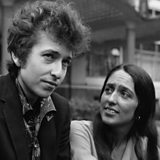 “Well, I'll be damned, Here comes your ghost again - ? Joan Baez, also known as the 'Queen of Folk', is halfway through writing a song one day when she gets a call from Bob Dylan. It's 1974; almost 10 years after their relationship ended. The song went on to become the iconic ‘Diamonds and Rust', an outpouring of memories from their time together in the early sixties. Music writer Kevin EG Perry tells the story behind Baez and Dylan's relationship, how they shaped each other's worlds, and how this song came into being a decade later. Folk legend Judy Collins, also a good friend of Joan Baez, shares old memories of Newport Folk Festival alongside more recent memories of performing ‘Diamonds and Rust' with Baez at her 80th birthday. And we hear from people whose lives have been touched by the song. Classicist Edith Hall listened to ‘Diamonds and Rust' on repeat when she ended her first marriage, on the night that the Berlin Wall fell. And writer John Stewart looks back on a heady relationship from his early twenties, which was always bound up with the lyrics of this song. Decades later, this formative time in his life continues to resonate with diamonds, rust, and gratitude. Producer: Becky Ripley Stories of love and loss surrounding the song Diamonds and Rust by Joan Baez. Stories of love and loss surrounding the song Diamonds and Rust, written by Joan Baez about her relationship with Bob Dylan. |
| 39 | 02 | Tender | 20241019 |  Tender is the night lying by your side / Tender is the touch of someone that you love too much...' - Chris Lightfoot will always associate Blur's song 'Tender' with his first big love. A relationship he moved across the world for, with someone he loved deeply and who changed the course of his life. A relationship he ultimately couldn't make work. The song came on, and they held each other - knowing they had to let each other go. Tender is the day the demons go away / Lord, I need to find someone who can heal my mind...' - Music writer Jason Draper explains how the song was born out of a period of huge change and turmoil for Blur. Lead singer Damon Albarn's relationship with Justine Frischmann of Elastica had come to 'a spectacularly sad end'; while guitarist Graham Coxon was tackling his own demons and taking steps towards sobriety. Living alone in a one-bedroom flat in West London and listening to a lot of Otis Redding, Damon had begun writing lyrics for a new song. Not a bitter break-up song, but one 'that paid tribute to how important something was in my life... a celebration of love found and lost but not forgotten'. Across town, Graham woke up one morning - still half dreaming - with a refrain circling in his head - 'oh my baby, oh why, oh my' and captured a fragile guitar line on his dictaphone. These elements came together in studio, with the help of Producer William Orbit and 40 singers from the London Community Gospel Choir, to create a cathartic anthem that feels like a secular hymn. Come on, come on, come on / Get through it...' - Catherine Anne Davies, who makes music as The Anchoress, has loved Blur since she was a teenager. Tender has been there for her through break ups and times of difficulty. She talks about her experience of covering the song and explains how the structure creates its emotional impact. Oh my baby, Oh my baby...' - For Sarah, the song will always be associated with the arrival of her first child, after it came on in the taxi on the way to hospital on the way to give birth. The song carried her through the overwhelming contractions and has gone on to become a cherished family lullaby. 'Tender is the night, lying by your side....' That's it isn't it? The love that you feel for the people closest to you, is almost too much... because of the risk involved, but it's a risk we're willing to take'. Come on, come on, come on / Love's the greatest thing, that we have...' - For Naomi Chiffi, the song provided a powerful outlet for grief and an opportunity for communion, after losing both her father and cousin to suicide. For her, it's a reminder to give out love every chance we get - 'love is the only thing that really matters'. Produced by Mair Bosworth for BBC Audio Stories of what Tender, from Blur's 1999 album 13, means to people around the world. Emotional true stories of what Tender, from Blur's 1999 album 13, means to people around the world. | |
| 39 | 03 | Lovely Day, By Bill Withers | 20241026 |  Lovely Day' was released in 1977. Its simple blissful melody masks profound lyrics which on closer examination offer hope and solace to many fans of the song. Some of them share their stories here of what it means to them, including two people who had the privilege of meeting and working with Bill Withers. Taro Alexander was a shy insecure young man with a stutter who founded an organisation for children like him who struggled with speaking in public. As a boy he would listen to Lovely Day in his bedroom. Often it was the only way he could get himself out of that bedroom and off to school. To his surprise he learned that Bill Withers had also had a difficult time throughout his childhood because of his stutter and invited him to meet the young people of SAY (The Stuttering Association for The Young). Taro was deeply moved by Bill Withers' reaction to the young people and says the song speaks to so many of us in our daily struggles. Bass player John Inghram met and worked with Bill twice at the Music Hall of Fame in West Virginia where both men are from. He organised a tribute concert to him on his 80th birthday and played Bill Withers songs exclusively to honour the man he describes as generous and 'utterly hilarious'. Sunita Harley had Lovely Day on her playlist when she went into hospital for the birth of a much longed for IVF baby. On a snowy April day after a long arduous labour she held her daughter in her arms for the first time and the sun shone through the window as Lovely Day came on the playlist. Philippa King and her daughter Milly have a special place in their hearts for the song. It came on the car radio on a beautiful sunny drive along the coast near Brighton. It was Milly's first trip outside of the hospital where she'd been for many months dangerously ill with Crohns Disease. The song gave mother and daughter hope that things would get better and it became their victory anthem when Milly was finally able to leave hospital. Karen Gibson MBE founded the Kingdom Choir and has conducted and mentored many young singers. Their gospel version of Lovely Day is a thrillingly uplifting reminder that we can all choose to make it a lovely day no matter what else is going on in our lives while we either listen to or sing that song. Producer: Maggie Ayre The deceptively simple song that is a mantra for people. | |
| 39 | 04 | America | 20241102 | America is Anita's all singing, all dancing number from the musical West Side Story. The Puerto Rican Sharks gang argue over whether America is a great place to live, an argument still being played out by migrants today. With contributions from young migrants to the US as well as an actress who has performed the song in a UK production and a Puerto Rican man who watched Rita Moreno performing the role growing up, and went on to study the musical as an academic in the United States. Including an interview with Rita Moreno originally broadcast on BBC 100 Women in Conversation in 2023 Produced for BBC Audio Bristol by Sally Heaven America, Anita's big number from the musical West Side Story. In Anita's number from the musical West Side Story, the Puerto Rican Sharks gang argue over whether America is a great place to live. It's an argument still being played out today. | |
| 39 | 05 | Benedictus | 20241109 | 20241110 (R4) 20251110 (R4) |  Sir Karl Jenkins' Benedictus is the penultimate movement from his anti-war mass, The Armed Man. Written twenty-five years ago this year and performed over three thousand times, Sir Karl dedicated it to the victims of the 1998-1999 Kosovo war. It was originally commissioned by The Royal Armouries Museum and premiered for the millennium. The Armed Man as a whole reflects the descent into war, but the movement of Benedictus' emerges as a message of hope and peace in the aftermath. Benedictus is recognised for its haunting cello theme, in a register unusually high for this resonant instrument. The cello solo gradually expands into a full choir and orchestra. Benedictus has given solace to listeners through some of the most difficult moments of their lives. We hear some of their stories. Featuring: British Armed Forces Veteran Michael Wright, who served in Kosovo, Iraq and Afghanistan; Reverand Charles Thody, Priest in Lincolnshire and chaplain for the NHS; Dane Coetzee, cellist in Cape Town, South Africa; And the composer of Benedictus himself, Sir Karl Jenkins and his wife, Lady Carol Jenkins. Producer: Eliza Lomas for BBC Audio Bristol Sound Engineer: Ilse Lademann Editor: Emma Harding With its message of peace, Karl Jenkins's Benedictus brings solace in hard times. Benedictus is a movement composed by Sir Karl Jenkins from his work The Armed Man and has brought solace in some of the most difficult moments of peoples' lives. British Armed Forces Veteran Michael Young, who served in Kosovo, Iraq and Afghanistan; Benedictus is a movement composed by Sir Karl Jenkins from his work The Armed Man. It's a piece that has brought solace in some of the most difficult moments of peoples' lives. |
| 40 | 01 | I Feel Love | 20250405 | 20250407 (R4) 20251012 (R4) | Stories of love, loss and legacy surrounding Donna Summer's iconic 1977 hit. Producers Giorgio Moroder and Pete Bellotte wanted to make something which sounded like the future, and sure enough 'I Feel Love' went on to revolutionise disco and pave the way for electronic dance music. Almost 40 years on, it still sounds fresh to this day: the pumping arpeggiated bassline, the synthesized drones, and Donna's soaring multi-tracked vocals. Writer and AIDS activist Mark S. King reflects on what the song meant to him back when it was first released, and then later through the HIV/AIDS crisis. Retail consultant and author Mary Portas shares how the song got her through a difficult time of loss, taking her to a place beyond grief. A place of freedom and dance. Singer-songwriter Bruce Sudano, Donna Summer's husband of 32 years until her death in 2012, remembers the heady days when they first met. It was 1977, the same year that I Feel Love was written and released. And music journalist Danyel Smith, author of 'Shine Bright: A Very Personal History of Black Women in Pop', celebrates the incredible legacy of Donna and the power of this pioneering track. A track that still, decades later, gets people on the dance floor. Producer: Becky Ripley |
| 40 | 02 | Ae Fond Kiss, By Robert Burns | 20250412 | 20260123 (BBC7) 20260124 (BBC7) 20250414 (R4) 20251019 (R4) | Burns began a correspondence with Agnes McElhose, also known as Clarinda and Nancy, a married woman he was besotted with. When she left Scotland to reunite with her husband he wrote Ae Fond Kiss as a heartfelt farewell. It was later set to music and is one of his most famous 'songs' along with Auld Lang Syne and My Love Is Like A Red Red Rose. Karen Matheson the singer with Capercaillie talks about its meaning to her and how performing it at the Commonwealth Games in Glasgow in 2014 was a very special moment. Joan Donaldson from Michigan grew up with Scottish music and has called her latest historical novel Ae Fond Kiss. She says she channelled her grief into the characters as a way of dealing with a devastating loss. Sir Geoff Palmer discovered the song when he arrived in Edinburgh in the 1960s. He has traced Burns' and the song's connection to his home country of Jamaica and feels proud of the links he discovered. For film maker Karen Guthrie from Ayrshire - Burns' birthplace - coping with and caring for her estranged parents meant long drives home through the countryside he inhabited. It was a journey of rediscovering Scotland's national poet and relating her family's story to Ae Fond Kiss. Musician Seonaid Aitken plays both versions of the song on the violin and explains how the music conveys the feelings of longing after an unresolved love affair. Producer: Maggie Ayre The story of one of Robert Burns's most famous poems set to music. The story of Robert Burns's love affair with a married Edinburgh woman from high society. Robert Burns began a correspondence with Agnes McElhose, also known as Clarinda and Nancy, a married woman he was besotted with. From America to Jamaica, singer Karen Matheson, writer Joan Donaldson and others explain what the song means to them. From 2025. |
| 40 | 03 | May You Never | 20250419 | 20250421 (R4) 20251027 (R4) |  'May you never lay your head down without a hand to hold / May you never make your bed out in the cold.' A perfect folk song of brotherly affection, with simply voice and guitar, John's Martyn's May You Never has captured listeners' hearts since 1971. John Martyn was born in Surrey in 1948 and grew up in Glasgow. Part of the potent London folk scene in the late 60s early 70s, John's style evolved from these folk roots. Written in his early 20s, the enduring version of May You Never was recorded in one take in the early hours of recording his beloved 1973 album, Solid Air. The lyrics encapsulate something of the essence of John Martyn: sweet, joyful and affectionate, yet with a hint of danger ('And may you never lose your temper / If you get in a bar room fight'). John's life was beset by substance abuse and addiction and he died in 2009, age 60. May You Never, perhaps his most famous song, is remembered by those whose lives became entwined with the song, and by others who knew John or have covered it. Featuring: Michael Volpe, Executive Director of If Opera; Lauren Bensted, a writer based in London; Graeme Thomson, author of Small Hours: The Long Night of John Martyn; Spencer Cozens, keyboard player and Musical Director in John Martyn's band from 1990-2009; Blythe Pepino, Kit Hawes, Pete Josef and Sam Brookes from The John Martyn Project. With thanks to Kit Hawes and Spencer Cozens for the instrumental recordings. John Martyn's most enduring song, from 1971. A song of brotherly affection, a secular blessing, an appeal to peace and goodwill: stories of what John Martyn's enduring folk song May You Never means to people. |
| 40 | 04 | Besame Mucho | 20250426 | 20250428 (R4) 20251103 (R4) |
Composer and conductor Odaline de la Martinez remembers hearing the song on the radio as a child in Cuba. She translates the Spanish lyrics - 'Kiss me, kiss me passionately, as if tonight was the last time... Kiss me, because I'm afraid to lose you, afterwards'. It's an achingly romantic bolero that has been translated into more than 20 languages and recorded by hundreds of artists, including João Gilberto, Frank Sinatra, Cesaria Evora, Diana Krall, Josephine Baker, Trio Los Panchos and The Beatles. Music writer Richard Williams talks about the eternal appeal of the melody and how it creates its emotional impact. German singer and composer Roland Kunz tells the tragic story behind the melody which inspired Consuelo to write the song: a piece by the Catalan composer Enrique Granados, who died the year Velázquez was born. At the height of WWI, Granados and his wife were on their way home to Spain from New York, when their passenger ship was torpedoed by a German U-boat. The story goes that Enrique was picked up by a lifeboat but saw his wife struggling in the water and dived in to save her. They perished, along with 50 other passengers. We hear stories of three very different couples who loved to dance to the song. Peter and Dorothy Tozer met at a dance school in Acton in 1962 when they were 17 and 16 years old. When the song played during the lesson on the night they met, the dance instructor suggested that - as it was Valentine's Day - everyone should give a kiss to whoever they were dancing with at that moment. The two complete strangers shared a kiss, and have been together ever since. When Stephen Miller met his Mexican wife Maria, love wasn't on either of their minds. Stephen was in his fifties and had lost his first wife to cancer. Maria had been a single mum for many years. He didn't speak much Spanish, and she didn't speak much English, but they fell in love and had many wonderful adventures together. One day Stephen was backing the car out of the driveway when he hit the wall. He had begun to lose his sight. As the couple were still adjusting to their new reality, Stephen realised that Maria's memory was beginning to slip. He talks about navigating blindness and dementia, and how they would drop everything to dance together to Bésame Mucho, the lyrics of which grew ever more poignant over time. And Denis Ledoux remembers his wife Martha, who died at 56. They loved to dance to the Cape Verdean singer Cesária Évora's version of the song, practicing their dance steps in the living room. After Martha's death, he would listen to the song all the time, sometimes every day. The song became a way to hold onto her and the life they has shared. Denis reflects on how the song's lyric 'kiss me, as if tonight was the last time' made him think of all the last times with Martha that he didn't know were last times. Produced by Mair Bosworth Mixed by Ilse Lademann Soul Music is a BBC Audio Bristol production for BBC Radio 4 Stories of one of the most recorded Spanish-language songs of all time. The Mexican pianist and composer Consuelo Velázquez was only 16 when she wrote Bésame Mucho. It would go on to become one of the most recorded Spanish-language songs of all time. |
| 41 | 01 | Porcelain, By Moby | 20260103 | 20260105 (R4) 20260216 (R4) |  A song that was everywhere after it was released as a single in 2000. Moby's Porcelain has been used in films, TV and adverts yet remains a much-loved melancholic, downbeat electronic ballad. Reportedly written about the fragility of love after a break-up, it's a track that has a place in many people's hearts. Producer: Maggie Ayre The ethereal sound of Moby's massive hit from 2000. The people featured are: Felicia Narhi aka DJ Damselfly Steve O'Brien Gyu Ola Mazzuca John E Roy Michael Weinhardt |
| 41 | 02 | Yellow, By Coldplay | 20260110 | 20260112 (R4) 20260223 (R4) |
True stories of what Yellow, one of Coldplay's most iconic songs, means to people 25 years on from its release. It's December 1999 and a relatively unknown band called Coldplay are midway through recording their debut studio album, Parachutes, at Rockfield Studios in Wales. The days are long, often working late into the evening. One night after a recording session, they step outside with their producer Ken, and look up to a sky full of stars. The rest, as they say, is history... Featuring, in order of appearance: Dylan Bode, musician and coma survivor Ken Nelson, music producer on Coldplay's Parachutes album Debs Wild, fan liaison for Coldplay and co-author of Life In Technicolor: A Celebration of Coldplay Neil Brand, composer, writer and broadcaster Katherine Ho, singer of the Mandarin version of Yellow for the film Crazy Rich Asians Producer: Becky Ripley Debs Wild, fan liaison for Coldplay and author of Life In Technicolor: A Celebration of Coldplay |
| 41 | 03 | Cranes In The Sky, By Solange | 20260117 | 20260119 (R4) 20260302 (R4) | 
“I tried to drink it away... I tried to run it away... ? Solange's hit song, written in 2008 and released eight years later, muses on themes of isolation, loneliness, and depression. She penned the lyrics to Raphael Saadiq's instrumental in a Miami hotel room, gazing out at the cranes filling the skyline during the onset of the housing crisis and financial crash. Solange Knowles released her debut album in 2002 at the age of 16. This single appears on her third album, A Seat at the Table. She's the younger sister of Beyoncé. Featuring: Journalist Douglas Markowitz; music writer Kiana Fitzgerald; author of Why Solange Matters and Big Joanie guitarist Stephanie Phillips; and Rebecca McNeil. Producer: Eliza Lomas Solange's hit song from 2016 muses on themes of isolation and depression. I tried to drink it away... I tried to run it away...' Solange wrote her hit song looking out at the Miami skyline. It muses on themes of isolation, loneliness and depression. “I tried to drink it away... I tried to run it away... ? Solange's hit song, written in 2008 and released eight years later, muses on themes of isolation, loneliness, and depression. She penned the lyrics to Raphael Saadiq's instrumental in a Miami hotel room, gazing at cranes filling the skyline during the onset of the housing crisis. Solange Knowles, the younger sister of Beyoncé, released her debut album in 2002 at the age of 16. This single appears on her third album, A Seat at the Table. Featuring: Kiana Fitzgerald, Rebecca McNeil, Stephanie Phillips (author of Why Solange Matters and guitarist in Big Joanie) and Douglas Markowitz. Solange's hit song, released in 2016, muses on themes of isolation and depression. I tried to drink it away... I tried to run it away...' Solange's hit song, began in 2008 and released eight years later, muses on themes of isolation, loneliness and depression. |
| 41 | 04 | Make You Feel My Love | 20260124 | 20260126 (R4) 20260309 (R4) | 
Written by Bob Dylan for his Time Out of Mind album, 'Make You Feel My Love' went on to become a huge hit for Adele and has been covered by Billy Joel, Ane Brun and many more. With its promise of unfaltering love, we find out what the song means to different people around the world. Featuring music writer Annie Zaleski, musicians Ane Brun and Dyagula, organist and conductor Anna Lapwood, Howard Simons, Aly Halberstadt, and Adele's manager Jonathan Dickins. Produced by Mair Bosworth A BBC Audio production for BBC Radio 4 A huge hit for Adele, the song was written by Bob Dylan and has rapidly become a standard. Emotional stories of the Bob Dylan song, covered by Adele, Billy Joel, Ane Brun and more. Written by Bob Dylan, and covered by Adele, Billy Joel, Ane Brun and more. Stories of what the song means to different people around the world. With its promise of unfaltering love, we find out what the song means to different people around the world. It has inspired a translation into a 65,000 year old language and a choral version with the comfort of a psalm; it has soundtracked heartbreak and grief; and become a lullaby of parental love. |
 Ghost Town' was recorded by British two-tone band The Specials as a comment on urban decay and social unrest. It was released in June 1981 as riots were springing up around the UK and with the help of an iconic video it topped the UK singles charts. It was also be the band's final single.
 'Look at the stars, look how they shine for you...'